

After your skin is burned by hot water or oil, or prolonged sun exposure, the first concern that comes to mind is, "Will it leave a scar?" To put it simply, how you respond in the first few minutes after a burn greatly influences the extent of the subsequent scar.
Hello, this is Yonsei Star Dermatology Sinchon. Many people visit our dermatology clinic after suffering burns while cooking, from summer sun exposure, or winter heating appliances. Today, we will summarize the initial responses you can take at home and the basic principles for reducing scars before visiting a burn scar clinic.
Burns are more common than you think

Burns don't only happen in special accidents. It's common for hot water to splash or for steam or oil to come into contact with the skin while cooking at home. Sunburns can also occur from prolonged sun exposure during water activities. Understanding that causes are present everywhere in daily life is the starting point for effective response.
1st, 2nd, 3rd Degree: Burn Depth Determines Scarring

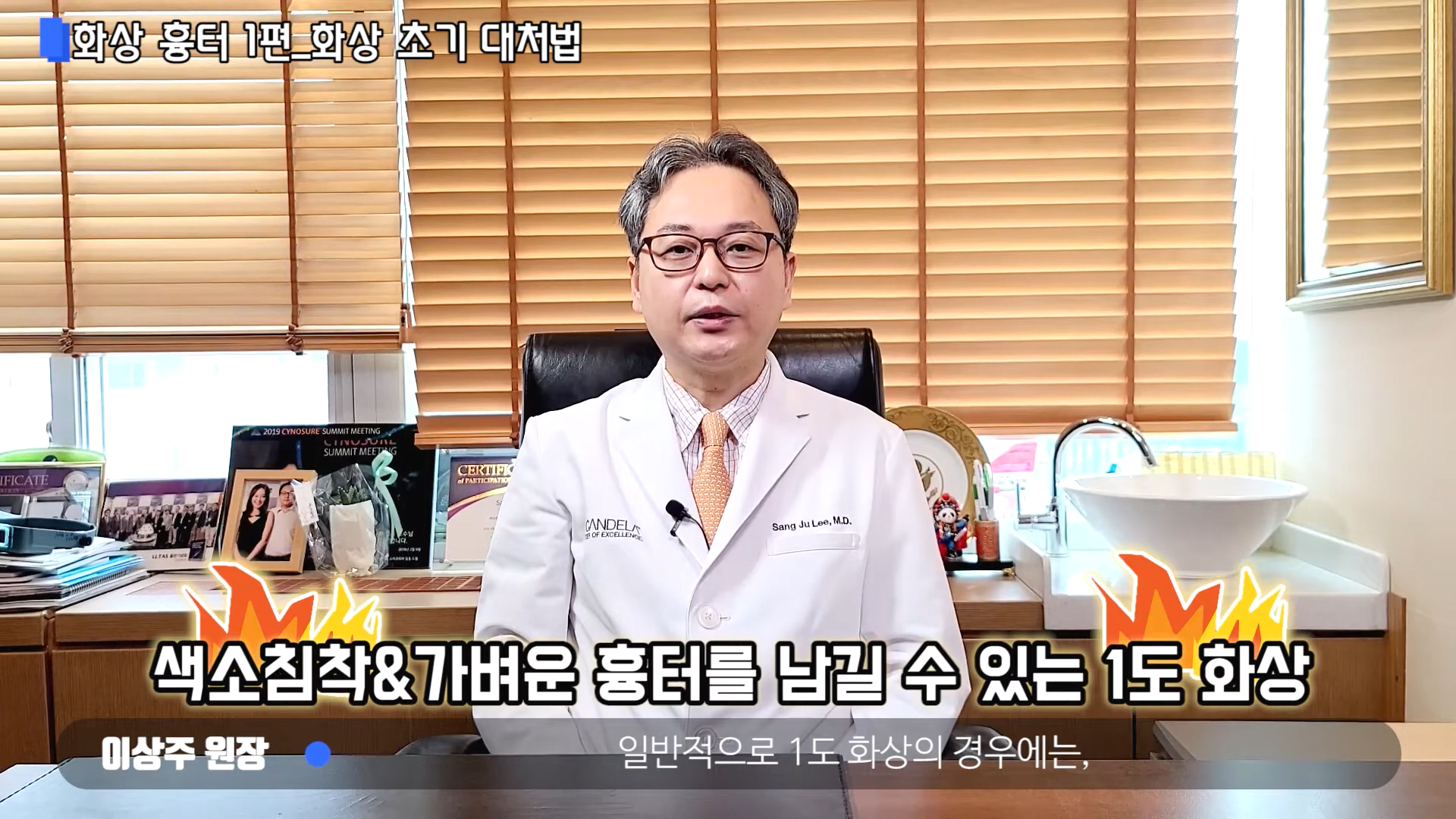
Burns are classified into 1st, 2nd, and 3rd degrees based on the depth of damage. A 1st-degree burn causes redness and pain.

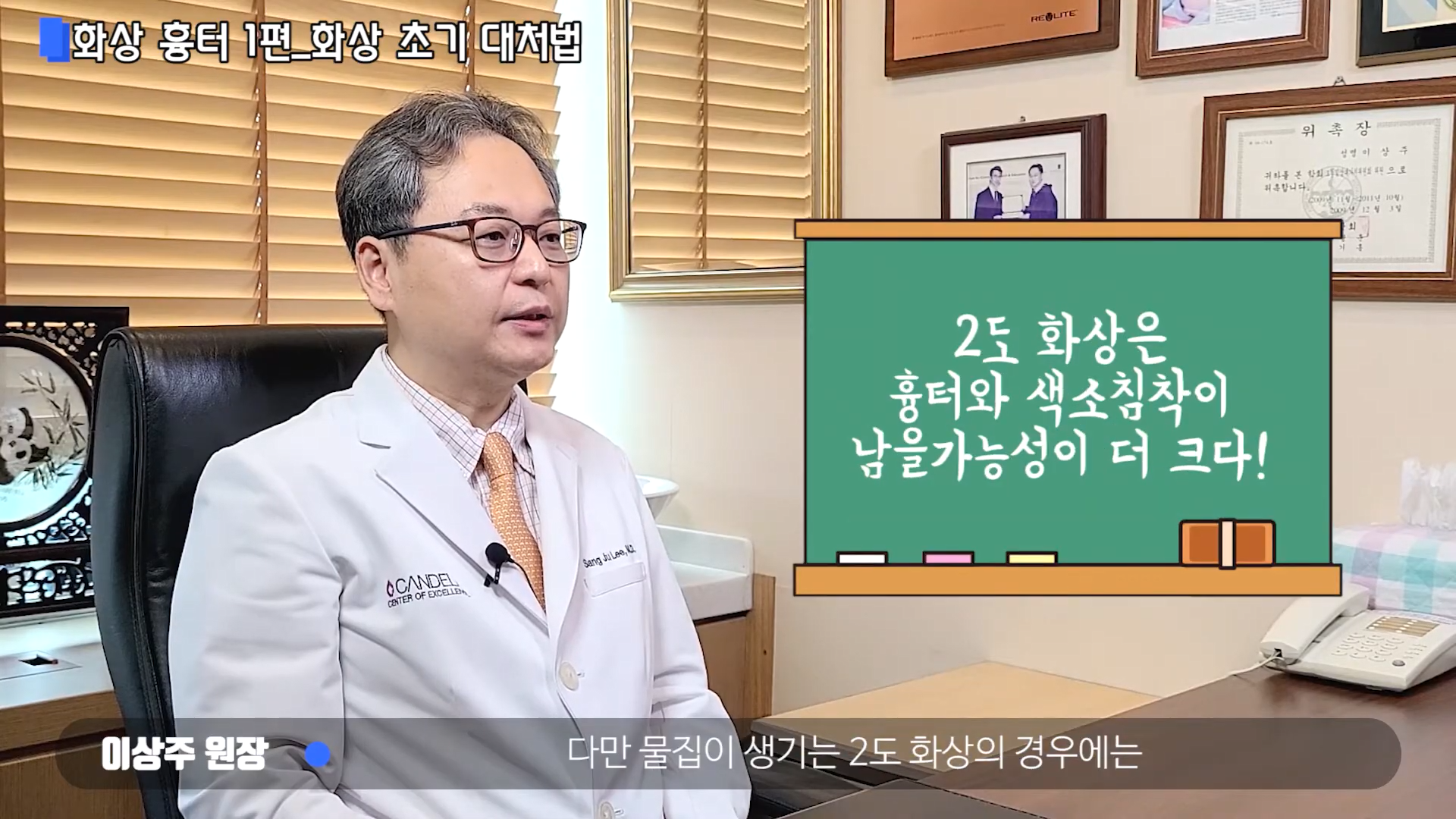
If blisters form, it's classified as a 2nd-degree burn. This indicates damage extending deeper than the epidermis, into the dermis.

A 3rd-degree burn involves damage extending beyond the epidermis and dermis, into the underlying skin layers. In such cases, it's crucial to receive treatment quickly at a burn scar clinic. The remaining marks according to depth are summarized in the table below:
| Burn Stage | Extent of Damage | Potential Marks |
|---|---|---|
| 1st Degree | Epidermis | Mild pigmentation, faint surface marks |
| 2nd Degree | Up to the dermis | Pigmentation, potential for burn scar |
| 3rd Degree or more | Beyond the skin layers | Deep scars, requires intensive treatment |
For 2nd-degree or deeper burns where blisters occur, there is a reported possibility of not only pigmentation but also scarring. Therefore, early treatment at a burn scar clinic is recommended.
For Deep Burns, Seek Medical Attention First
For deep burns of 3rd degree or more, do not attempt to treat them at home. Instead, seek an emergency room or a burn scar clinic for intensive treatment of the burn area. Delaying treatment with self-diagnosis can lead to further damage.
In the clinic, we often see that individuals who cool the burn appropriately in the early stages and visit quickly tend to have much smoother scar management later on.
Immediate Emergency Care After a Burn
The immediate response after a burn is simple, but the order is important. Please remember the checklist below:
- First, remove the cause of the burn. If clothes are on fire, put out the fire quickly.
- Cool the burned area with cool water for 20 to 30 minutes, or up to 50 minutes, to remove the heat.
- You can also cover it with a cool gauze or towel, or if that's difficult, cool it under running tap water.
- Avoid anything too cold, like ice. This can cause secondary damage like frostbite.
- If the area is severe, seek medical attention immediately after cooling.

Applying ice directly can quickly remove heat, but it can also cause frostbite in that area. It is preferable to use a cool gauze or towel at a low enough temperature to slowly draw out the heat.
If you are unsure how to respond to a burn or scar, you can easily ask through chat consultation regarding initial burn response and scar treatment.

For severe areas, it is recommended to seek appropriate medical treatment at a healthcare facility without hesitation after emergency care.
What Determines the Extent of Scarring?

Many factors contribute to how much scarring remains after a burn. First, the depth and size of the burn play a role. Individual constitution also matters, and finally, the extent of the mark depends on how well the post-burn care was managed. Deeper and wider damaged areas are reported to have a higher possibility of leading to burn scar.
Beyond the Initial Stage, New Tissue Induction and Infection Management are Key

After cooling the heat, there are two main points in treatment. The first is to help new tissue grow well in the burned area. Moist dressings that reduce exudate and keep the area hydrated can aid recovery. The second is infection management. The burned area has a compromised skin barrier, making it susceptible to secondary bacterial infections, so appropriate antibiotic treatment should be combined to expect good results.
If a scar has already formed, the approach varies depending on the nature of the damage. For deep burn scars, Surgical Scar Revision may be considered, sometimes along with Hyperbaric Oxygen Chamber to assist tissue regeneration. When hypertrophic changes, such as raised and hardened scars, are present, Triamcinolone Scar Injection may be considered, and the appropriate method is determined through consultation as it varies by individual.
Today, we looked at the basic principles of initial burn response and scar treatment. Please remember that immediate emergency care after a burn, followed by new tissue induction and infection management, are crucial in reducing scars.
If you are wondering what stage your burn is at and what treatment is right for you, you can consult directly below.
💬 Consult Now
Chief Director Dr. Sang-Joo Lee (MD, PhD, Yonsei University College of Medicine and Graduate School, completed dermatology residency at Severance Hospital, President of the Korean Dermatological Association) Chief Director Dr. Sang-Joo Lee's Profile First published 2024-07-10 / Last reviewed 2026-06-16 Since the nature of burns and scars varies from person to person, please confirm the exact diagnosis and treatment direction through consultation with medical staff.