
![What to Check if Keloid Scar Injection Recurrence Occurs - [Yonsei Star Dermatology Sinchon]](/_next/image?url=https%3A%2F%2Fagqdgbuateknhwpocrgu.supabase.co%2Fstorage%2Fv1%2Fobject%2Fpublic%2Fsources%2Fbbf3bebe-45b6-4415-bd04-bda18b2cac0f%2Fblog-images%2F223611581885_00_fc148d1f7af0.png%3Ftype%3Dw966&w=3840&q=75)
Keloid scars are not scars that are gone after one treatment; they often swell up again in the same spot even after treatment is completed. If you feel the scar lumping up again after multiple injections, the first thing to check is not the recurrence itself, but how the recurrence is being managed.
Based on the treatment philosophy of Yonsei Star Dermatology Sinchon, this article summarizes what to check when keloid scar recurrence is repeated, the limitations of steroid injection monotherapy, and why vascular laser treatment should be considered. Understanding the characteristics of keloid scars first will change your approach to recurrence.
Keloid Scars: Why Does Recurrence Happen So Often?

Keloid scars are scars that swell beyond the original wound area due to excessive collagen production during the healing process. To be precise, it is realistic to consider keloid scars as having a high probability of recurrence.
However, recurrence is not 100% predetermined. It is much easier to start treatment quickly if signs of recurrence appear after treatment is completed, while carefully observing for recurrence.
In other words, accepting the possibility of recurrence but catching its signals early is key to management.
Early Signs of Recurrence: How to Recognize Them
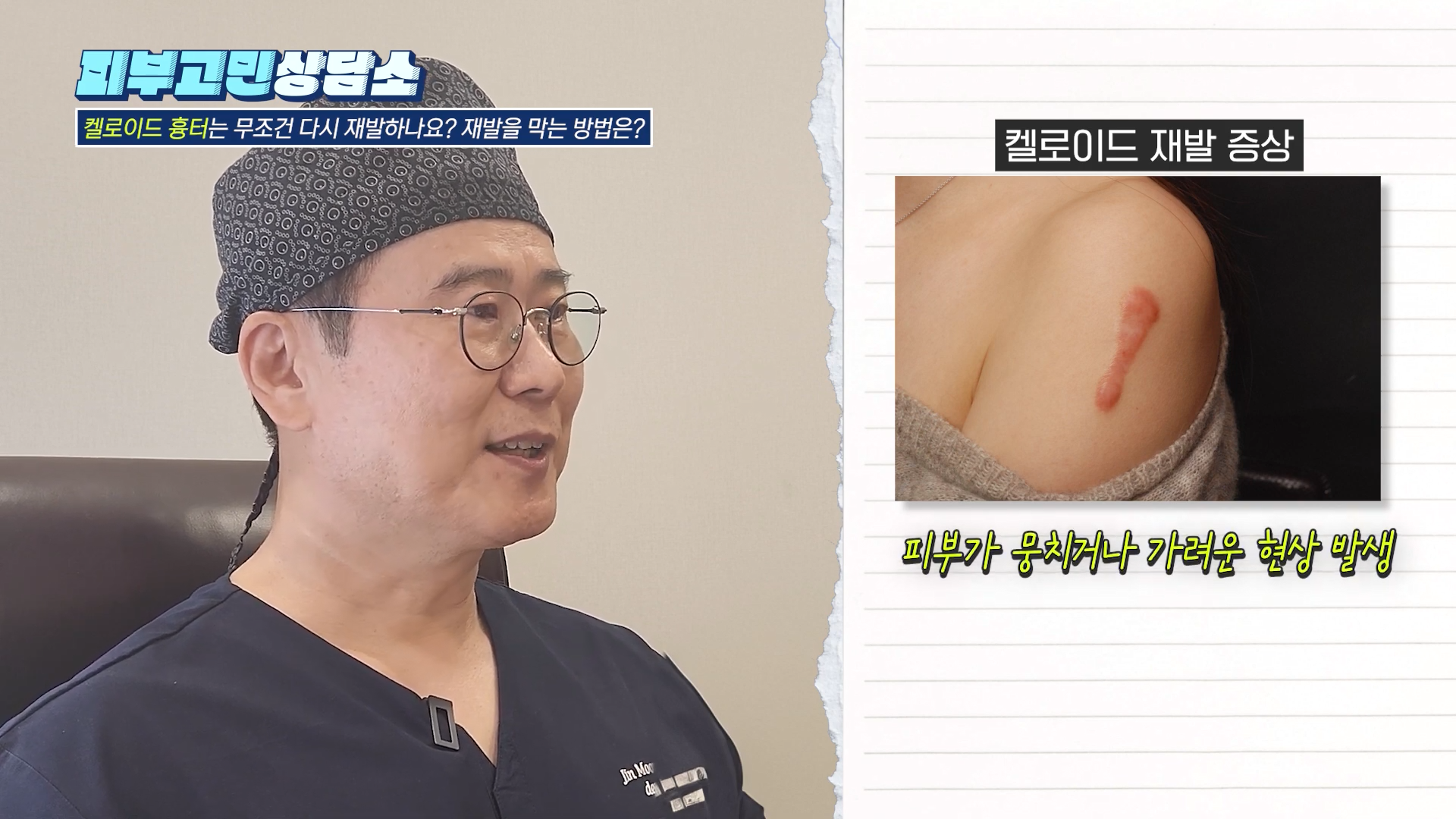
When a keloid scar reactivates, relatively subtle changes appear first. If you notice the following signs, it's advisable to check them rather than dismiss them lightly:
- The previously subsided scar area feels hard and lumpy again.
- The skin feels slightly itchy or experiences repeated stinging sensations.
- The edges of the scar gradually widen or show changes in redness.
- When pressed, it feels thicker and more elastic than before.
In the clinic, we often see that those who visit during these early symptom stages have a much lighter management burden than those who come after the scar has significantly swollen.
Standardized Treatments: Steroid Injections and Vascular Lasers

There are several globally standardized treatments for keloid scars, among which steroid injections and vascular lasers are the most common.
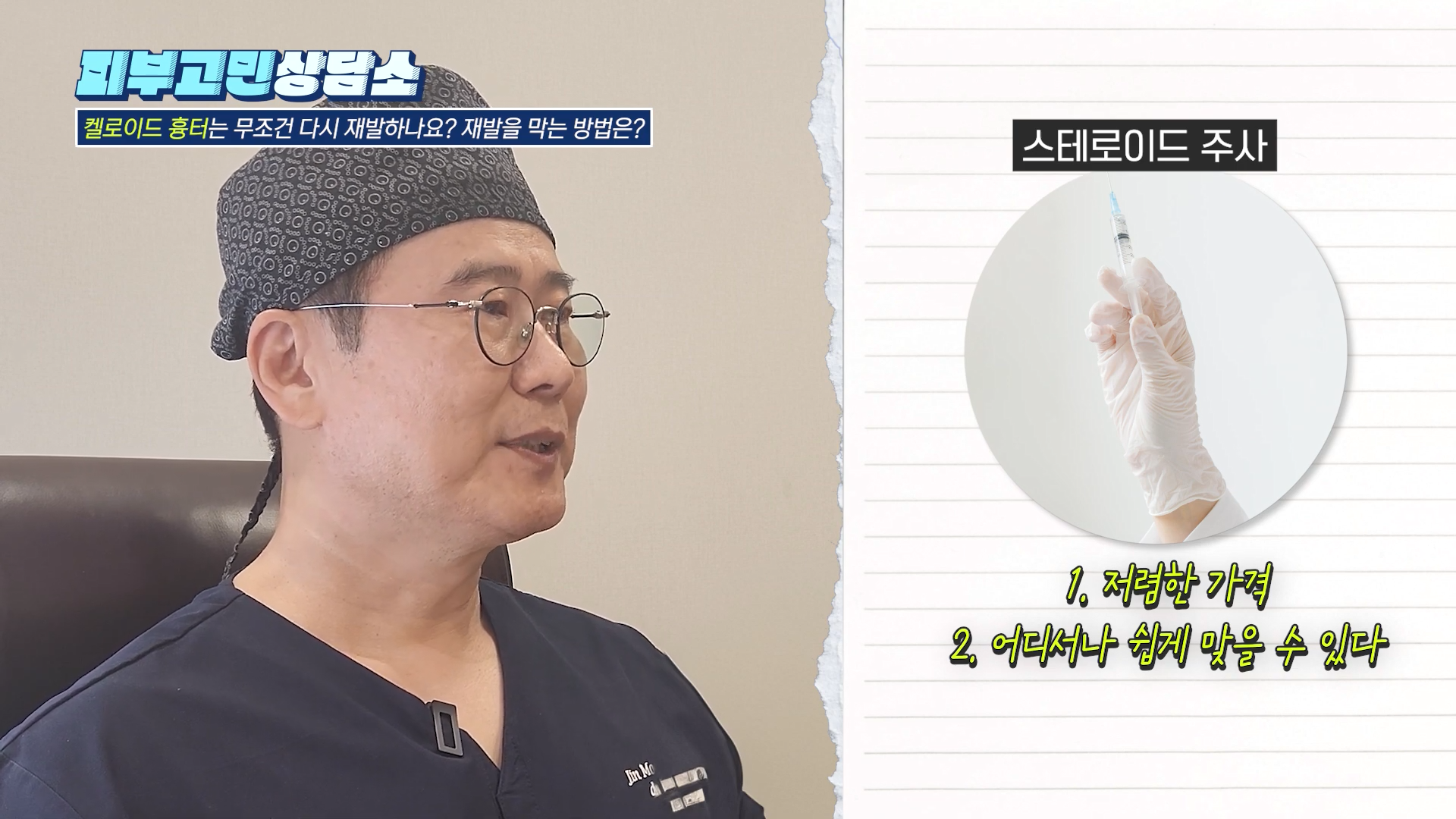
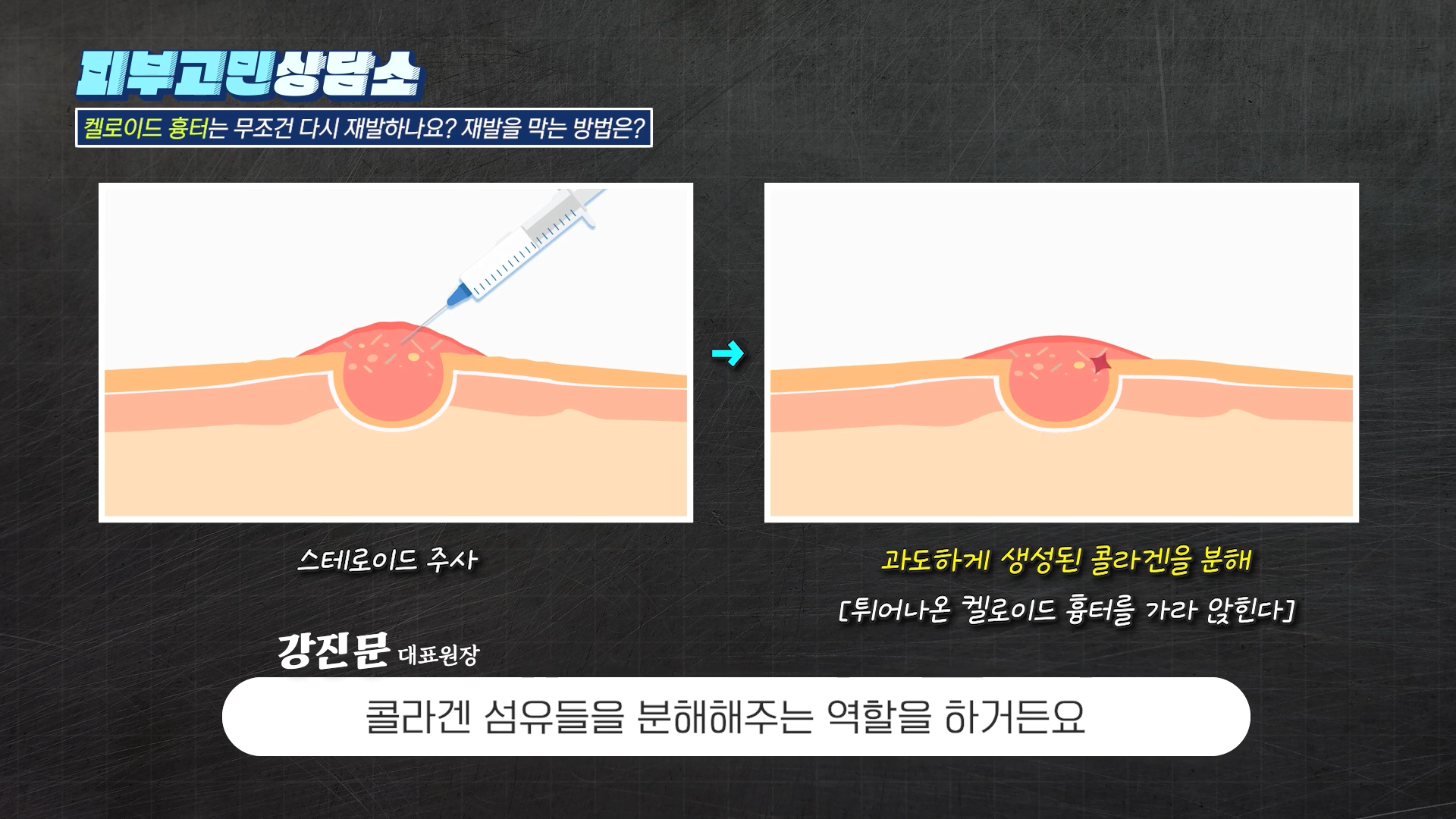
The roles of the two treatments are summarized in the table below.
| Treatment Method | Main Role | Characteristics |
|---|---|---|
| Steroid Injection | Decomposes already excessively produced collagen fibers | Relatively inexpensive and easily accessible |
| Vascular Laser | Blocks blood vessels that supply nutrients to the scar | Works to reduce excessive collagen production |
Why Steroid Injections Alone Are Insufficient

When you receive a Triamcinolone Scar Injection, the lesion may subside and feel like it's improving. However, since the fundamental cause of keloid scars is not yet clearly understood, simply decomposing existing collagen may be somewhat insufficient. Therefore, steroid injections alone are not considered to have a significant effect in reducing recurrence.
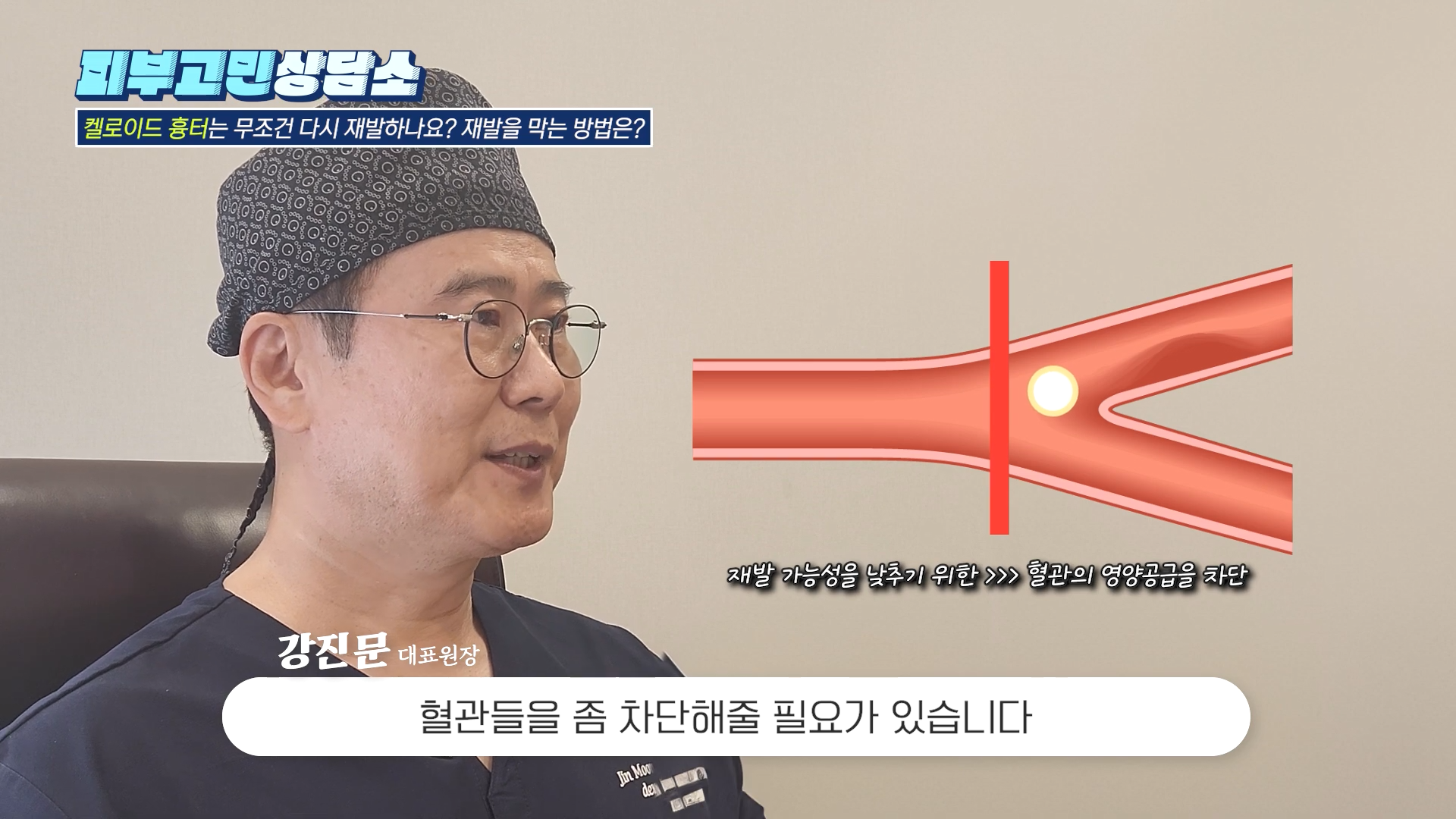
Therefore, to lower the recurrence rate, it is necessary to block the blood vessels that supply nutrients to the scar itself, and for that purpose, vascular lasers are used in conjunction.
If you have any questions, please feel free to ask via chat consultation about keloid scar treatment directions.
Problems Arising from Repeated Injections
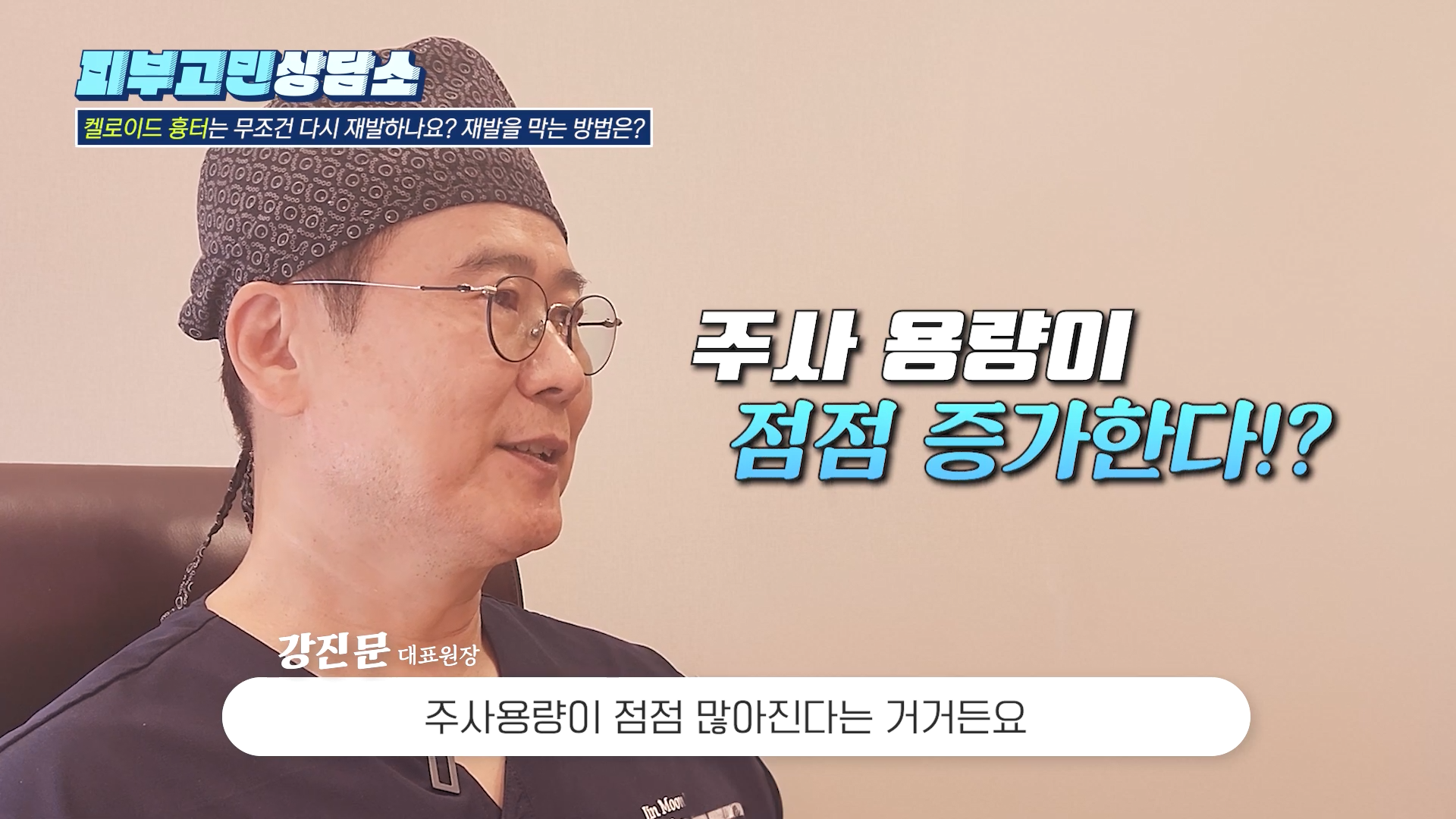
The biggest problem with relying solely on injection treatment is that the dosage of injections in the same area gradually increases.
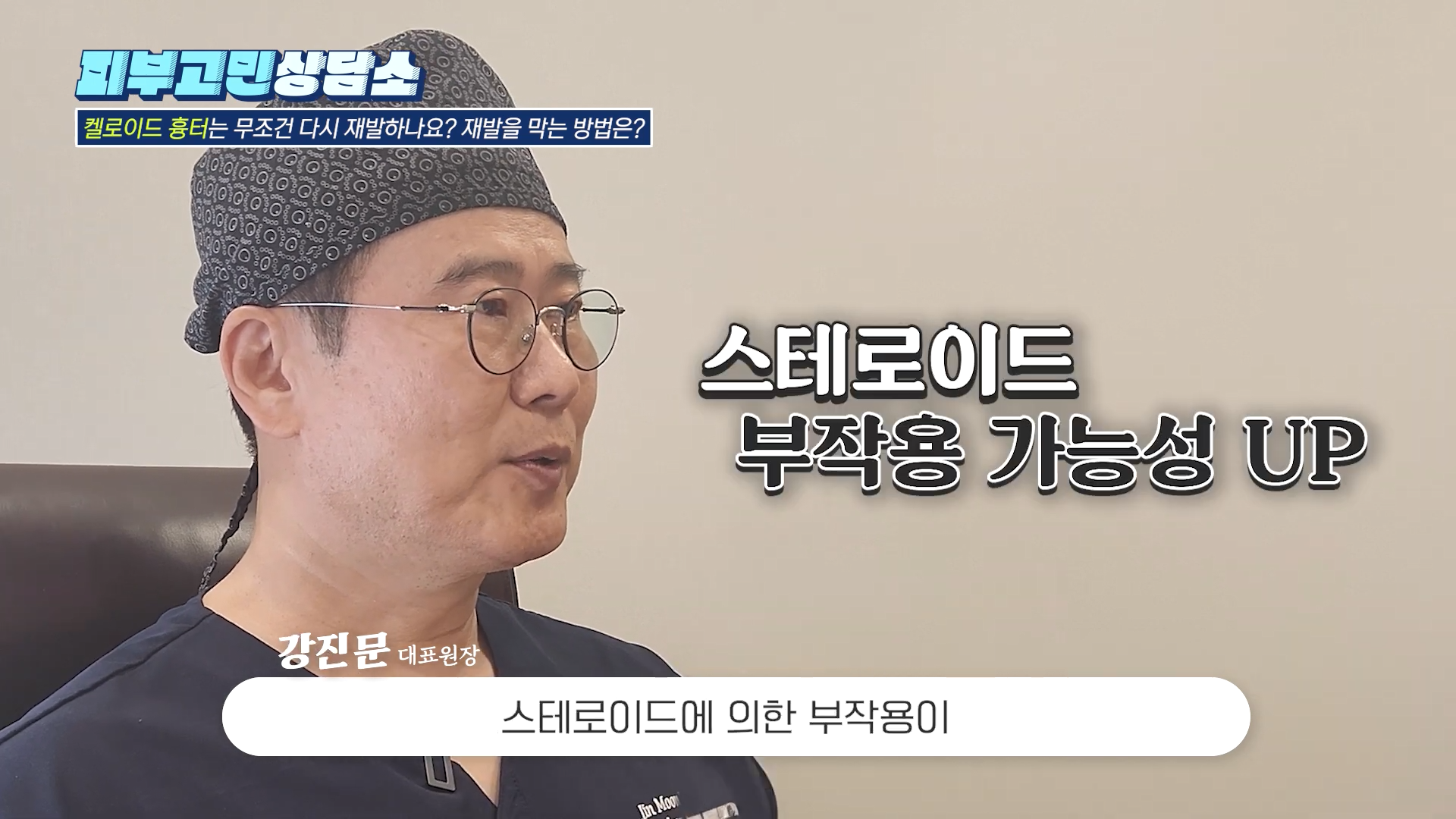
As injections are repeatedly administered, the probability of steroid-induced side effects also increases. As the dosage increases, reactions such as skin indentation or pigment changes have been reported, so it is advisable to approach the direction of indiscriminately increasing the number and dosage of injections with caution.
Reasons to Consider Laser and Injection Together

The concept of combining laser and injection treatment is summarized as follows: a laser is used to block blood vessels to prevent excessive collagen production, and existing collagen is broken down with steroid injections.

Overall, we believe that combining laser and injection to reduce the injection dosage can lead to better results than long-term steroid injections alone. Of course, the application method may vary depending on the location, size, and recurrence pattern of the scar, so there may be individual differences. For extensive or deep scars, Surgical Scar Revision may also be considered.
Points to Remember for Recurrence Management
To reduce keloid scar recurrence, keeping the following in mind can be helpful:
- Continuously observe the scar area after treatment, assuming the possibility of recurrence.
- Seek medical attention quickly if early signs such as lumping or itching appear.
- Discuss the possibility of combining laser with injections with your medical team, rather than relying solely on injections.
- Do not increase the injection dosage and frequency yourself; proceed according to the plan.
Rather than repeatedly using injections simply because they are inexpensive, designing a strategy that also aims to lower the recurrence rate is a more stable choice in the long run. The same principle applies to scar treatment with similar concerns.
If you have any questions, we recommend checking your current condition first through a keloid scar recurrence consultation before making a decision.

Representative Director Lee Sang-joo (MD, PhD, Yonsei University College of Medicine and Graduate School, completed dermatology residency at Severance Hospital, President of the Korean Dermatological Association) Representative Director Lee Sang-joo's Profile First published 2024-10-08 / Last reviewed 2026-06-16
This article provides general information, and as scar conditions and treatment responses can vary from person to person, please consult with a medical professional for an accurate diagnosis and treatment plan.