

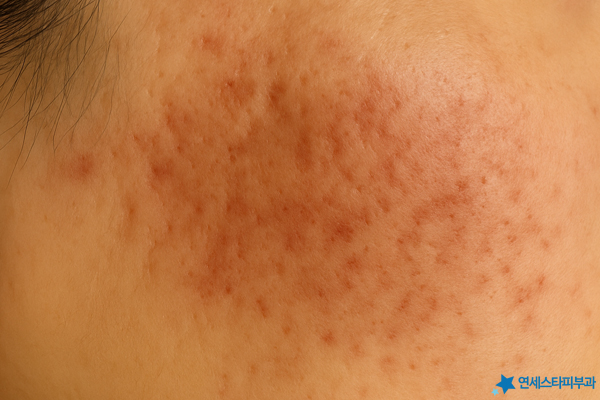
Skin pigmentation refers to the phenomenon where a specific area of the skin becomes noticeably darker. Many people experience seeing a dull spot every time they look in the mirror. The first question that usually comes to mind is, "Can this just be lightened with a whitening cream?" To answer directly, light surface discoloration may be lightened with care, but pigmentation deeply embedded in the dermis requires an approach that breaks down melanin itself.
Why does skin pigmentation only occur in one area?
Skin pigmentation is often not a grand disease but rather starts with daily habits. When the skin receives repeated stimulation, it increases melanin production as a defense mechanism. At this point, the affected area gradually darkens and solidifies into pigmentation. This is why pigmentation tends to concentrate in areas that are frequently touched or rubbed.
Four causes of skin pigmentation
In the clinic, the pigmentation patients complain of generally falls into the following four categories:
- Repeated irritation and friction: Areas frequently touched, such as the forehead, chin, and sides of the nose, or friction from clothing, accessories, and masks, stimulate melanin.
- Post-inflammatory hyperpigmentation (PIH): This is pigmentation that remains after inflammation subsides, such as from acne, wounds, contact dermatitis, or scratches, due to excessive melanin production. It is the most common and longest-lasting type.
- UV exposure: UV stimulates melanin production, making existing pigmentation darker or causing new pigmentation.
- Cosmetic and drug irritation: Incorrect use of whitening agents, strong exfoliants, or cosmetics unsuitable for the skin can actually worsen pigmentation.
In particular, marks left after acne or traces after scratches are prone to leading to post-inflammatory hyperpigmentation, so it is important to manage them by reducing irritation from the recovery stage.

Why are whitening creams not enough?
Many people first try whitening creams or ointments. While they may help to some extent with light pigmentation in the epidermal layer, there are clear limitations for old skin pigmentation or post-inflammatory hyperpigmentation. The reasons are as follows:
- Melanin already deeply embedded in the dermis is difficult to remove with topical products alone.
- Incorrect use of products can lead to secondary inflammation, potentially causing darker pigmentation.
- Pigmentation accumulated from repeated irritation requires an approach that breaks down melanin itself.
Management that cleanses the surface and treatment that breaks down pigment particles operate on different principles. For older pigmentation, the latter should be combined.
If skin pigmentation starts to bother you, distinguishing the cause comes before self-diagnosis. If you are unsure of the type, you can easily check by inquiring about pigmentation management via chat consultation.
Why PicoWay is gaining attention for pigment treatment
Recently, many dermatology clinics have been focusing on pigment treatment with picosecond lasers, and with technological advancements, the types of picosecond devices are also increasing. Among them, PicoWay is considered a notable device.
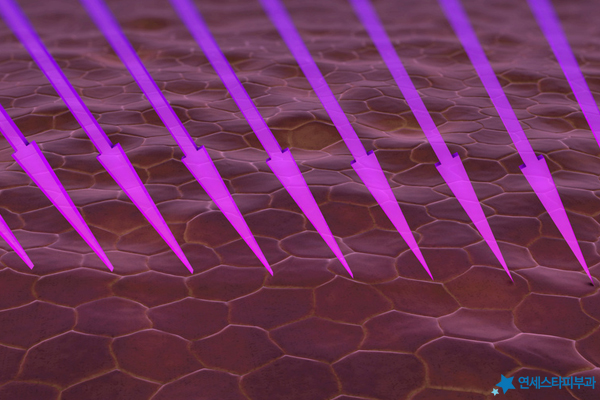
The principle by which laser treatment is used for skin pigmentation can be explained in three main ways:
| Feature | Mechanism of Action | Expected Effect |
|---|---|---|
| Picosecond ultra-short pulse | Energy delivery in trillionths of a second | Selectively micro-fragment melanin pigment |
| Minimal damage to surrounding skin | Creates almost no thermal energy impact | Lowers risk of repigmentation, gentle on sensitive skin |
| Improvement of pigmentation at various depths | Accesses from epidermis to dermis with multiple wavelengths | Addresses old pigmentation and pigmentation from repeated irritation |
PicoWay can utilize multiple wavelengths in one device, offering a wide treatment range for both depth and color, and is reported to enable efficient procedures. If you are also concerned about pores or skin texture in addition to pigmentation, discussing pore concerns during the consultation can help in setting the right direction.
Rather than strong once, appropriate multiple times
Dermatology clinics usually recommend a method of performing multiple treatments with low output. If the output is too strong, skin irritation increases, raising the risk of inflammation or additional pigmentation caused by the laser, i.e., another risk of pigmentation.
Therefore, even with the same equipment and principles, the results vary depending on the method, intensity, and number of treatments. A toning method that repeats with appropriate intensity rather than excessive strength is desirable for refining pigment problems. In a similar vein, Epidermal Pigment Removal for blemishes, age spots, and freckles is also approached step-by-step according to the skin condition.

Management that is good to take care of in daily life
Lifestyle management before and after treatment is as important as the treatment itself. Adhering to the following can help reduce the darkening of pigmentation again:
- Apply sufficient sunscreen before going out, and pay attention to UV rays even indoors.
- Avoid habitually touching or rubbing the pigmented area.
- Refrain from using strong exfoliants or unverified whitening products.
- When acne or wounds occur, do not squeeze or scratch them; let them subside.
- Discuss the treatment cycle and recovery period with medical staff to proceed without overdoing it.
Skin pigmentation has limitations with simple whitening management, and PicoWay laser treatment, which breaks down problematic melanin from old irritation to inflammation or UV exposure, is steadily gaining attention as a solution. Laser toning, performed multiple times with low output, shows gradual improvement even in old pigmentation, minimizing irritation and gradually refining the tone evenly.

Change created by consistency
Even stubborn skin pigmentation may have the potential to return to a cleaner and brighter tone with consistent treatment and management. However, the required number of sessions and intensity may vary depending on the depth and cause of pigmentation, as well as skin type, so individual differences may occur.
It's not too late, so understanding what type of skin pigmentation you have is the starting point. If you are curious about the direction of treatment, feel free to ask through chat consultation for skin pigmentation treatment.


Sang-Joo Lee, Chief Director (MD, PhD, Yonsei University College of Medicine and Graduate School, completed dermatology residency at Severance Hospital, President of the Korean Dermatological Association) Chief Director Sang-Joo Lee Profile First published 2025-12-09 / Last reviewed 2026-06-16
This content is for general information purposes only, and treatment effects and recovery patterns may vary by individual. Please consult with a dermatologist for an accurate diagnosis and treatment plan.