


Tattoo removal lasers are a method that can be continued steadily without significant impact on daily life, which is why many people still choose them to remove tattoos. However, because the laser needs to be applied to the skin regularly, there's concern about the irritation and wounds it can cause.
How can we remove tattoos quickly while minimizing skin irritation? Hyperbaric Oxygen Therapy is often mentioned as a supportive method to aid recovery in response to this question.
Recovery Speed Determines the Interval for the Next Session
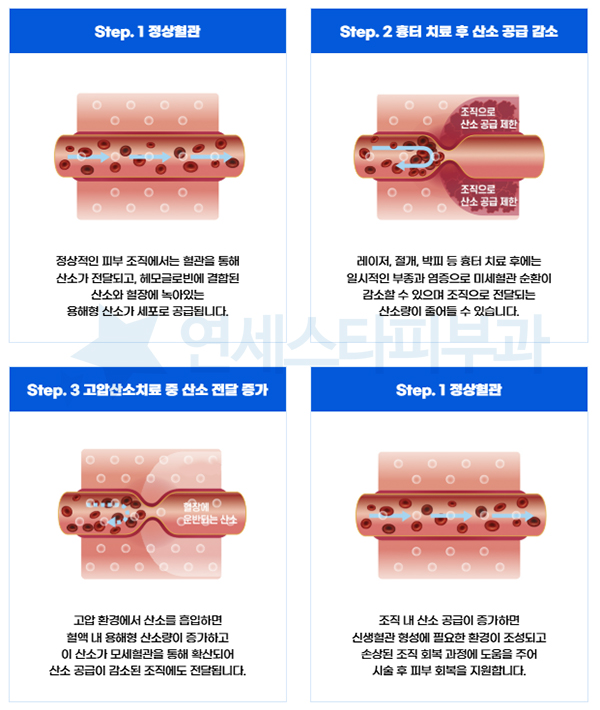
Laser procedures cause a certain amount of irritation to surrounding tissues while destroying pigment particles within the skin. How quickly one recovers from this irritation affects the treatment results and also plays a role in reducing the interval until the next treatment.
In other words, recovery is not a supplementary process after the procedure is finished, but a crucial factor that determines the speed of the entire schedule.
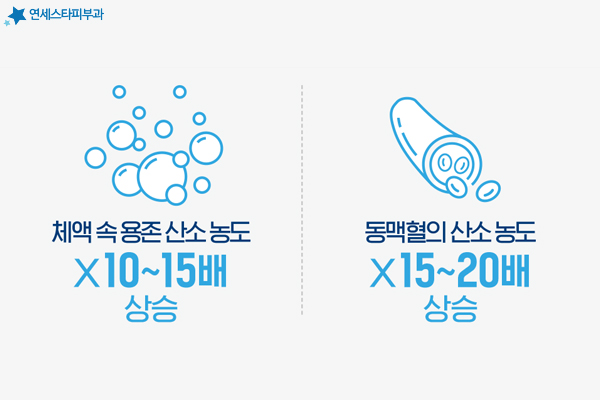
What is Hyperbaric Oxygen Therapy?
It is a method of inhaling pure oxygen in a sealed space while maintaining a pressure higher than atmospheric pressure. While the oxygen concentration in normal air is about 21%, the amount of oxygen dissolved in the blood significantly increases in a hyperbaric environment.
This increased oxygen can reach deep into tissues that are normally difficult to access. It is used to aid the recovery of damaged tissues and to supplement cellular environments where function has declined due to lack of oxygen. It is known as a meaningful method because oxygen supply can play a key role in areas with restricted blood flow or in wounds where recovery is delayed.
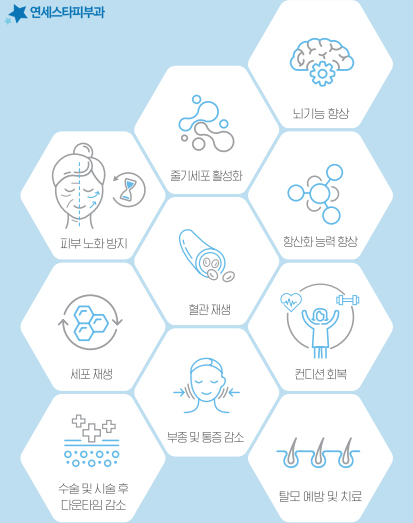
Four Ways Oxygen Contributes to Skin Recovery
Hyperbaric Oxygen Therapy can be beneficial for skin recovery because it affects the basic metabolic environment of skin cells themselves. Oxygen is the most fundamental raw material in all processes where cells create energy and heal wounds.
| Point of Action | How it Contributes |
|---|---|
| Collagen Production | Oxygen acts as a key activating factor when fibroblasts produce collagen, and its smooth supply promotes production activity. |
| Inflammatory Response | Helps reduce the secretion of cytokines, which are signaling substances that cause inflammation, creating an environment for stable recovery of the skin barrier. |
| Microvessel Formation | An oxygen-rich environment stimulates cell growth factors, inducing the formation of new microvessels and increasing nutrient supply. |
| Oxygen Transport Function | Helps normalize the unstable oxygen transport function in the blood within irritated tissues. |
After the procedure, temporary swelling and inflammatory reactions may appear in the treated area, and the four points above are reported to collectively change the conditions during this period.
Cases Where Concomitant Treatment May Be Considered
This process is not necessary for everyone. If skin irritation needs to be consistently managed, as in the situations below, it may help accelerate recovery:
- If recovery is slow, such as prolonged swelling after the procedure.
- If you want to maintain skin condition during long-term procedures.
- If the tattoo area to be removed is large or the color is dark, requiring multiple sessions.
If the laser's role is to break down pigment, Hyperbaric Oxygen Therapy can be seen as having the role of recovery, clearing debris and reconstructing the skin.
Treatment plans expecting multiple sessions can be found in the Tattoo Removal Treatment Guide, and equipment configurations can be checked in the R-Zero Pico-Frectat Tattoo Removal and Nd:YAG Tattoo Removal guides.
Sense of Discomfort in the Treatment Room
There is one point to note. During the treatment, the amount and quality of oxygen are different from what is normally encountered, so some individuals may find this sense of discomfort challenging.
Temporarily, ears may feel muffled, nausea may occur, and vision may become blurry for a moment. In some cases, concomitant treatment may be difficult depending on the disease, so a thorough verification process is necessary. The degree of sensation may vary from person to person.

Decomposition and Reconstruction Are Different Processes
The purpose of adding Hyperbaric Oxygen Therapy to tattoo removal is to accelerate the skin's recovery process after pigment destruction and to improve the quality of recovery.
However, to expect synergy, it is necessary to carefully check the individual's health and skin condition to determine whether to proceed with concomitant treatment. Hyperbaric Oxygen Therapy may not be suitable for certain systemic diseases or health conditions, so please consult with a specialized medical professional for diagnosis and consultation in advance.
If you are curious whether concomitant treatment is right for you, please let us know your condition via Chat Inquiry Now.
Authored · Medically Reviewed by Representative Director Dr. Jinmoon Kang (Dermatologist) Graduated from Yonsei University College of Medicine · Resident in Dermatology at Severance Hospital · Former Professor at Bundang CHA Hospital Member of the Korean Dermatological Association · Korean Society for Aesthetic and Dermatologic Surgery View Medical Staff Profile
First Published 2026-06-04 · Last Reviewed 2026-07-29
This article contains general medical information and does not substitute for individual diagnosis and treatment. Results and recovery progress may vary from person to person.