

Lentigo, which appears as dark spots on the face, is a pigment that does not naturally fade over time. Many people often wonder, "Is this melasma, seborrheic keratosis, or lentigo?" when they look in the mirror. To put it simply, lentigo can be neatly resolved only after accurately identifying its cause and form, and then selecting the appropriate laser.
Why Does Lentigo Keep Getting Darker?
UV radiation and aging play a significant role in the formation and darkening of lentigo. In particular, UVA rays, which penetrate deep into the dermis, are known to enter even through windows, meaning you're not entirely free from pigment stimulation even indoors.
Individuals with naturally low melanin in their skin have a weaker protective barrier against UV rays, making them more susceptible to irritation from the same amount of sunlight. This accumulated irritation can lead to various pigment issues, one of which is facial lentigo.
Lentigo rarely disappears naturally over time. It's advisable to identify the cause and begin management before the color deepens further.
Anyone Can Develop It

Lentigo is closely related to aging and commonly appears after the age of 40 on areas frequently exposed to sunlight, such as the face, back of the hands, and shins. However, recently, it's not uncommon for younger individuals to seek treatment for lentigo. Rather than feeling secure due to youth, it's safer to consider it a pigment issue that can affect anyone.
It's important to note that even seemingly ordinary lentigo can sometimes be accompanied by inflammation. If a laser is applied too strongly to an inflamed area, there's a reported risk of the pigment darkening or recurring, and individual differences may also occur.
How Do Lentigo, Melasma, and Seborrheic Keratosis Differ?
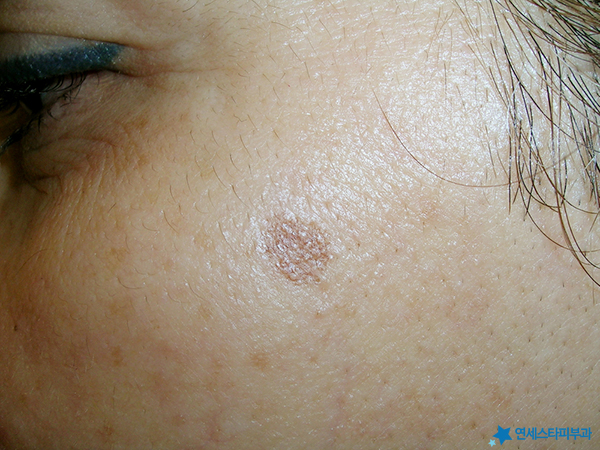
Although pigmentary disorders may appear similar upon closer inspection, their forms and characteristics differ slightly. Since the choice of equipment, intensity, and treatment cycle vary during the treatment process, distinguishing them well first is the initial step towards good results.
| Classification | Form | Distribution |
|---|---|---|
| Lentigo | Flat | Primarily occurs on one side |
| Melasma | Flat | Occurs symmetrically on both sides |
| Seborrheic Keratosis | Raised and bumpy | Various areas |
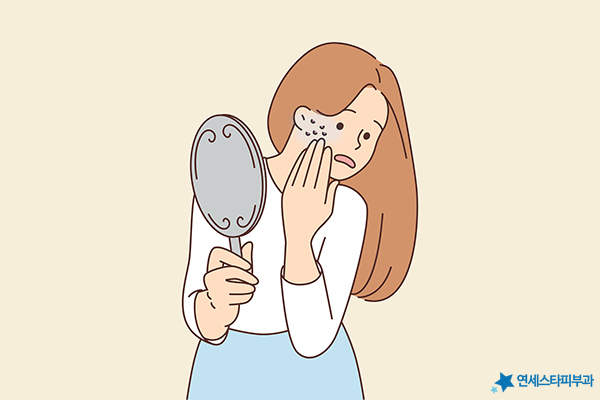
Lentigo typically appears on one side of the face, distinguishing it from epidermal pigment like melasma which occurs symmetrically on both sides. Also, unlike seborrheic keratosis which is raised and bumpy, lentigo appears flat, allowing for some distinction based on form alone. In the examination room, we often see cases where patients mistakenly identify their pigment as melasma when it is actually lentigo.
Self-Checking for Lentigo Signs
When looking in the mirror at home, referring to the items below can be helpful:
- Is there a flat, dark spot on one cheek or cheekbone?
- Is it asymmetrical, leaning towards one side rather than both?
- Does it not fade over time, but rather darkens?
- Does it feel flat to the touch, without a raised sensation?
- Has it appeared on areas frequently exposed to sunlight?
If several of the above items apply, we recommend considering the possibility of lentigo and seeking an accurate diagnosis. When the form is confusing, self-diagnosis is less safe than a medical consultation, as the approach varies depending on the lesion, such as with Laser Lesion Removal.
If you have any questions, you can easily ask them through chat consultation about lentigo and pigment differentiation.
Limitations of Existing Toning Treatments

In the past, pigment laser treatments like toning were widely used to remove lentigo. This method involved repeatedly applying a weak laser beam to gradually lighten the pigment, offering the advantage of low burden management. However, the long treatment time was often a drawback.
Furthermore, lentigo is often firmly established, making weak lasers insufficient. Conversely, if the intensity was increased excessively, the risk of skin damage would increase along with the effect, making it a challenging pigment issue to treat.
Approaching Lentigo with RePott Laser



Nowadays, RePott Laser, which shows a good response to epidermal pigmentary disorders like lentigo and seborrheic keratosis, has become established as a lentigo removal laser. The characteristic Vascular Sparing Laser System (VSLS) of RePott Laser is designed to protect blood vessels while using powerful laser wavelengths, reducing skin damage while targeting pigment.
Additionally, a high-performance cooling system helps reduce the rapid increase in skin temperature during or immediately after the procedure, thereby alleviating the burden of facial redness or severe heat sensation and pain.
Treatment Sessions and Recovery Management
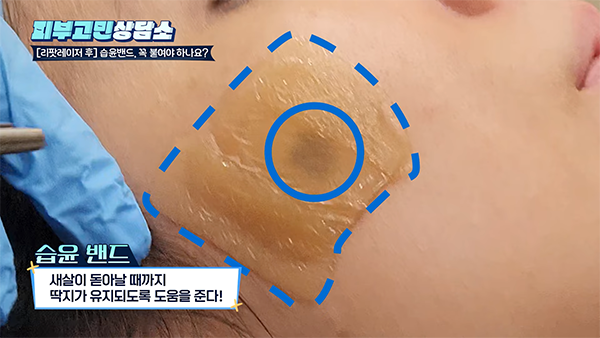
Compared to toning, which typically involves around 10 sessions at regular intervals, RePott lentigo laser is reported to show changes in lentigo with a relatively short number of sessions, typically 1-2. Of course, the number of sessions and the progress may vary depending on the depth and condition of the pigment, as well as individual skin characteristics.
During the recovery period after the procedure, the following management can be helpful:
- Avoid irritating or scratching the treated area with your hands.
- Minimize external irritation with patches like DuoDERM.
- Consistently manage the area for about 2 weeks until it stabilizes.
- Pay attention to UV protection when going out.
By managing in this way, you can expect a relatively clean outcome with fewer sessions. If pigment management after the procedure feels challenging, you can also consider combining it with a Customized Whitening Solution to even out the skin tone.
Identifying the Cause of Lentigo is Key

Since facial lentigo is formed by the accumulation of UV radiation and skin irritation, basic lifestyle management to reduce these causative factors is essential. On top of that, selecting a laser appropriate for the form and condition of the lentigo can help manage the problem without exacerbating it.
Even for the same lentigo, the treatment direction varies depending on the individual, and the cause and condition of the pigment. Rather than rushing into strong treatments based on self-diagnosis, we recommend a step-by-step approach based on an accurate diagnosis.
If you're curious about your type of lentigo or which treatment is right for you, try using chat consultation about lentigo treatment direction.
Sang-Joo Lee, Chief Director (MD, PhD, Yonsei University College of Medicine and Graduate School; Completed Dermatology Residency at Severance Hospital; President of the Korean Dermatological Association) Dr. Lee Sang-Joo's Profile First published 2025-08-11 / Last reviewed 2026-06-16
This content provides general information for understanding and may not reflect individual differences in pigment types and treatment responses. For an accurate diagnosis and treatment plan, please consult with medical staff.