


What people worry about most when considering tattoo removal is ultimately scarring. If a tattoo is removed but another trace remains in its place, it deviates from the original purpose.
We have summarized how laser irradiation and scarring are connected, and how our clinic secures treatment speed while reducing the burden of scarring.
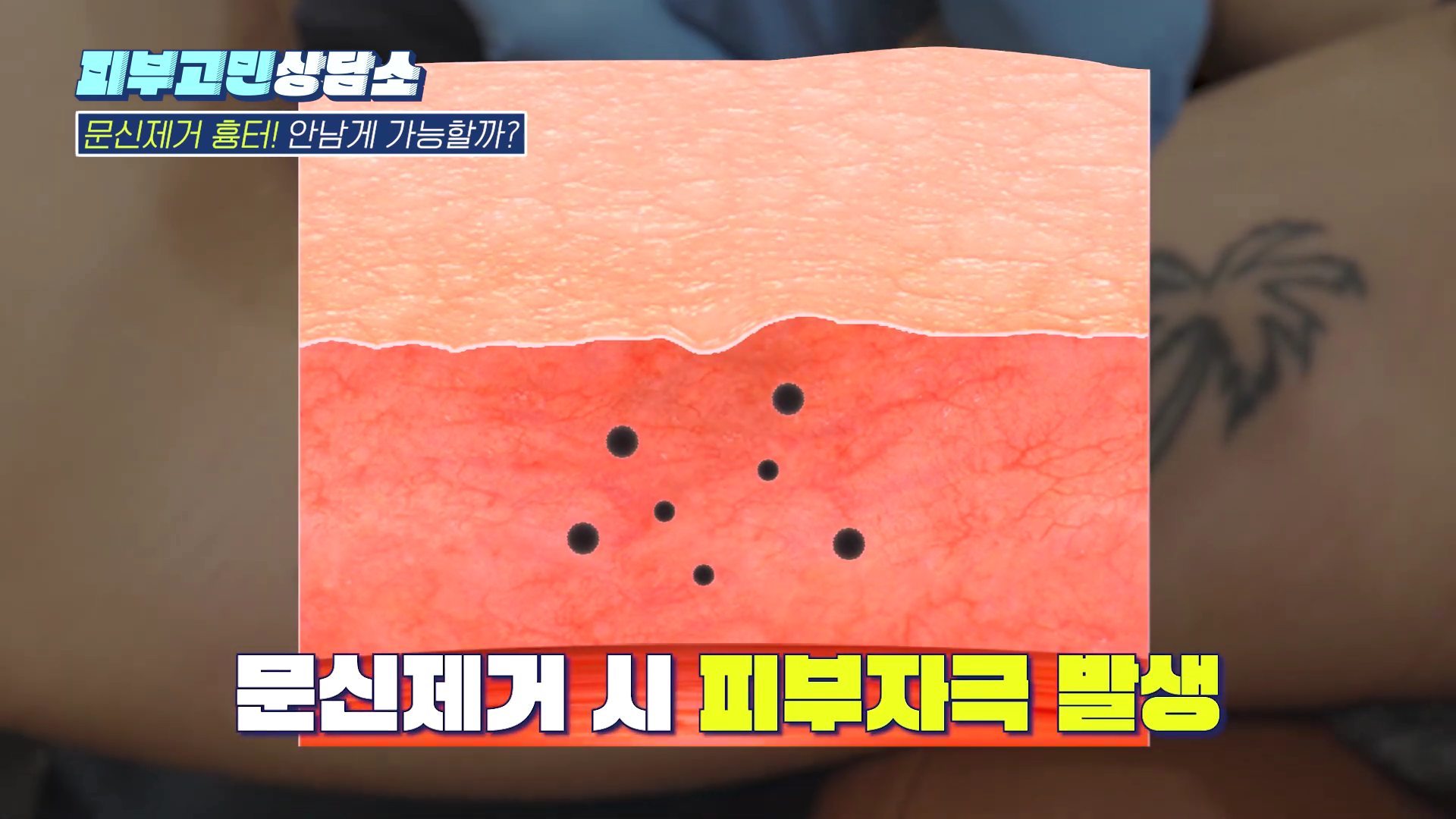
When pigment bursts, the skin is also stimulated
When a laser is irradiated on the tattooed area, the tattoo pigment in the skin bursts. This process also causes irritation to the skin.
In severe cases, the skin can be damaged, leading to blisters, which can then lead to scars. This is because the power to break down pigment and the skin's tolerance limit meet at the same spot.
What happens when power is excessively increased
What happens if the practitioner excessively increases the laser power to enhance the treatment effect? The pigment reaction becomes stronger. However, the probability of scarring also significantly increases.
This is like trying to remove one lump only to add another. To effectively remove tattoos with less scarring, the laser should be irradiated at an appropriate intensity, neither too strong nor too weak, tailored to each individual's skin condition.

The limitations created by white bubbles
When a laser is irradiated, the pigment in the skin bursts and breaks into tiny pieces, creating white bubbles on the skin surface. These bubbles block laser penetration.
Therefore, traditional tattoo removal could only involve one laser irradiation per visit. Even if more treatment was desired, there was no way to proceed as the light could not penetrate.

The approach of R-Zero Pinhole Technique
Our R-Zero Pinhole Technique removes these bubbles with a special medication. Once the bubbles are gone, the laser can be irradiated again.
| Category | Traditional Tattoo Removal | R-Zero Pinhole Technique |
|---|---|---|
| Bubble Treatment | Wait for them to subside | Removed with special medication |
| Irradiations per visit | 1 time | Up to 4 repetitions |
| Treatment Speed | Relatively slow | Relatively fast |
This structure secures speed by increasing the number of irradiations without increasing power. Detailed treatment configurations can be found in the R-Zero Pico-Frectat Tattoo Removal Guide.
Why we use the Pinhole Technique together
Pinhole Technique is a method that creates precise, microscopic holes deep in the skin to treat scars. If you've been interested in scar treatment, you might have heard of it.
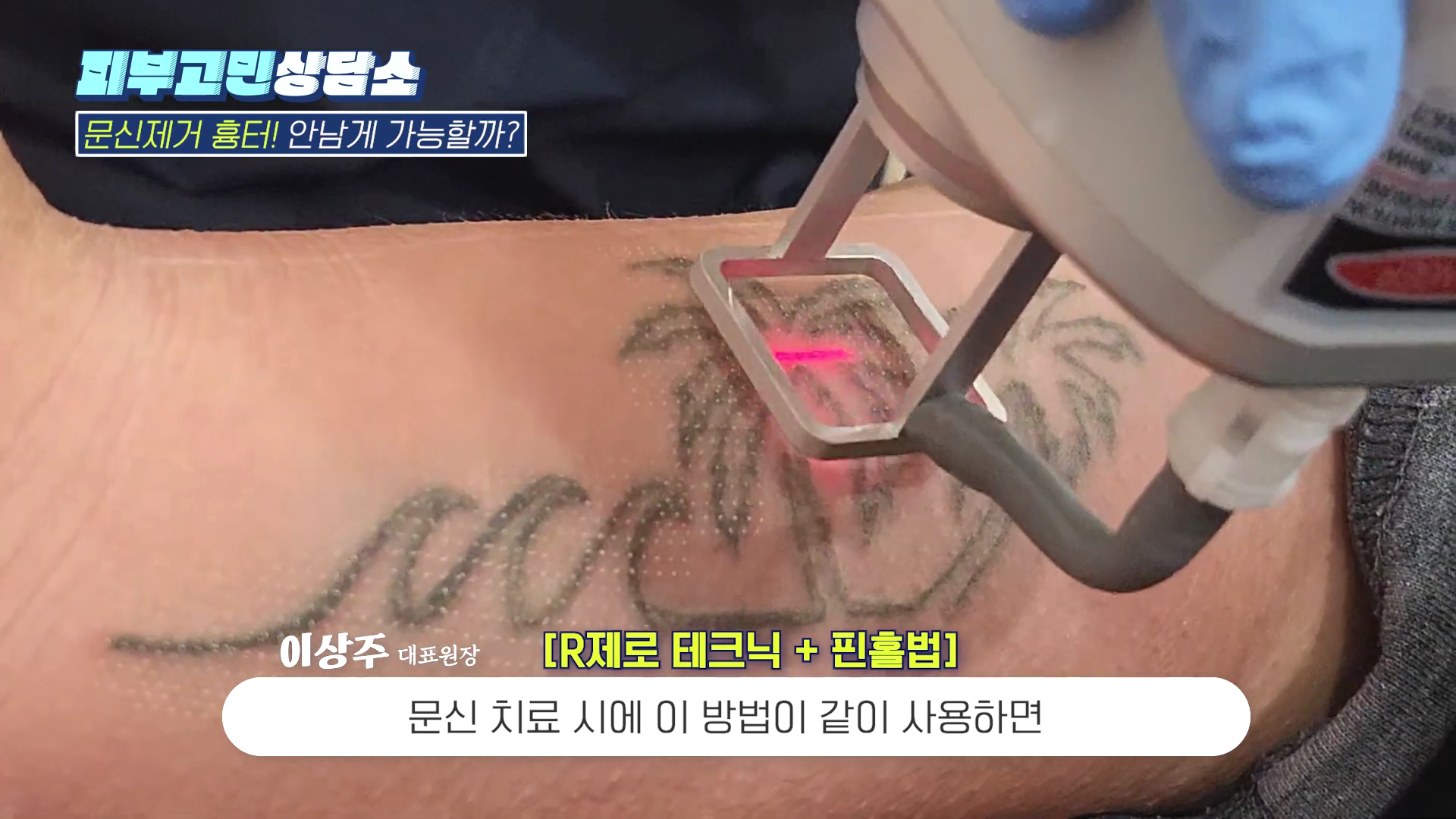
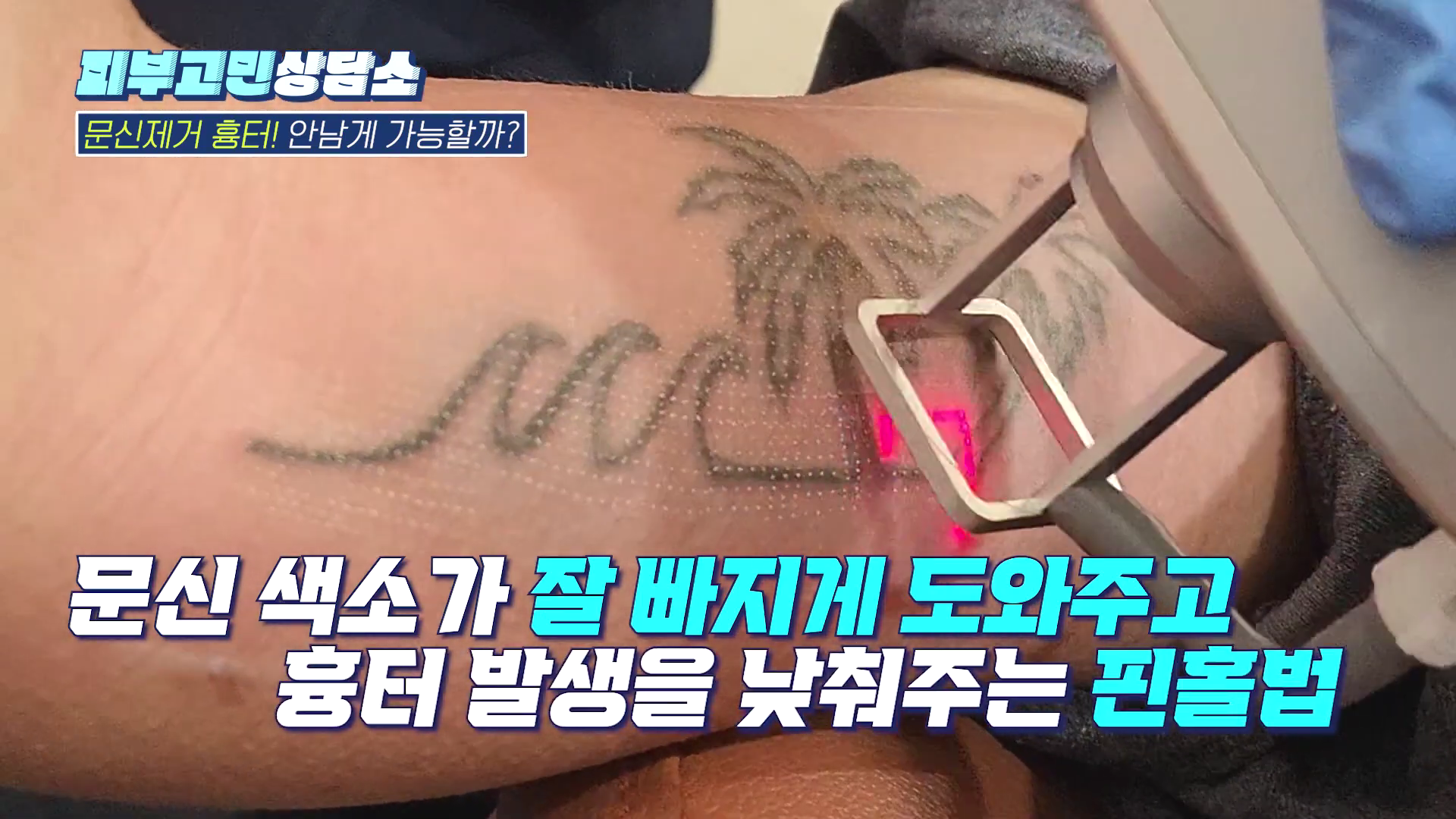
When this method is used in conjunction with tattoo removal, two effects are expected:
- Tattoo pigment can be removed more effectively through microscopic channels.
- It helps to reduce the possibility of scarring.
An explanation of the Pinhole Technique itself is provided in the Pinhole for Burn & Surgical Scar Guide.
The difference made by where you get it removed
Tattoo removal is a procedure that requires both pigment removal techniques and skin protection techniques. To avoid getting scars from removal at just any place, we recommend checking everything from diagnosis to laser intensity design before starting. Individual results may vary.
The overall treatment flow can be seen in the Tattoo Removal Treatment Guide.

Authored and Medically Reviewed by Dr. Jinmoon Kang, Chief Director (Dermatologist) Graduated from Yonsei University College of Medicine · Resident in Dermatology at Severance Hospital Former Professor at Bundang CHA Hospital · Current Adjunct Professor at Yonsei University College of Medicine, Department of Dermatology Author of Medical Body Care View Medical Staff Profile
First Published 2025-02-03 · Last Reviewed 2026-07-29
This article contains general medical information and does not substitute for individual diagnosis and treatment. Results and recovery may vary by individual.