


When dealing with multiple tattoo removal cases every day, there are certain tattoos that are truly difficult to erase. There are many moments when one wishes they had chosen differently when getting the tattoo.
So today, we've compiled tips on how to choose a design and location, keeping in mind the possibility of future removal.

Choose colors other than white
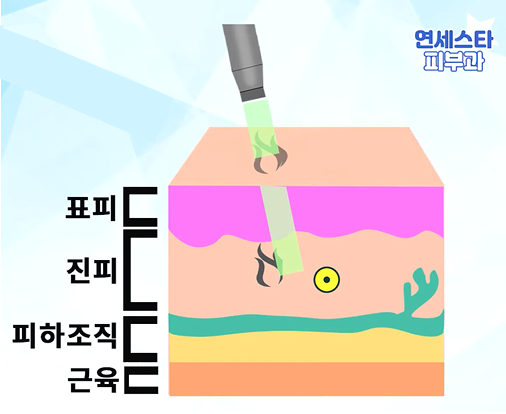
If you want a color tattoo, we recommend choosing colors other than white. The reason lies in the principle of laser tattoo removal.
When a laser is used to break down pigments in the skin, our body's macrophages engulf the broken pigments and transport them through the lymphatic vessels to eliminate them. The more finely the pigment is broken down, the easier its movement, and thus, the faster the removal.
The variable of titanium
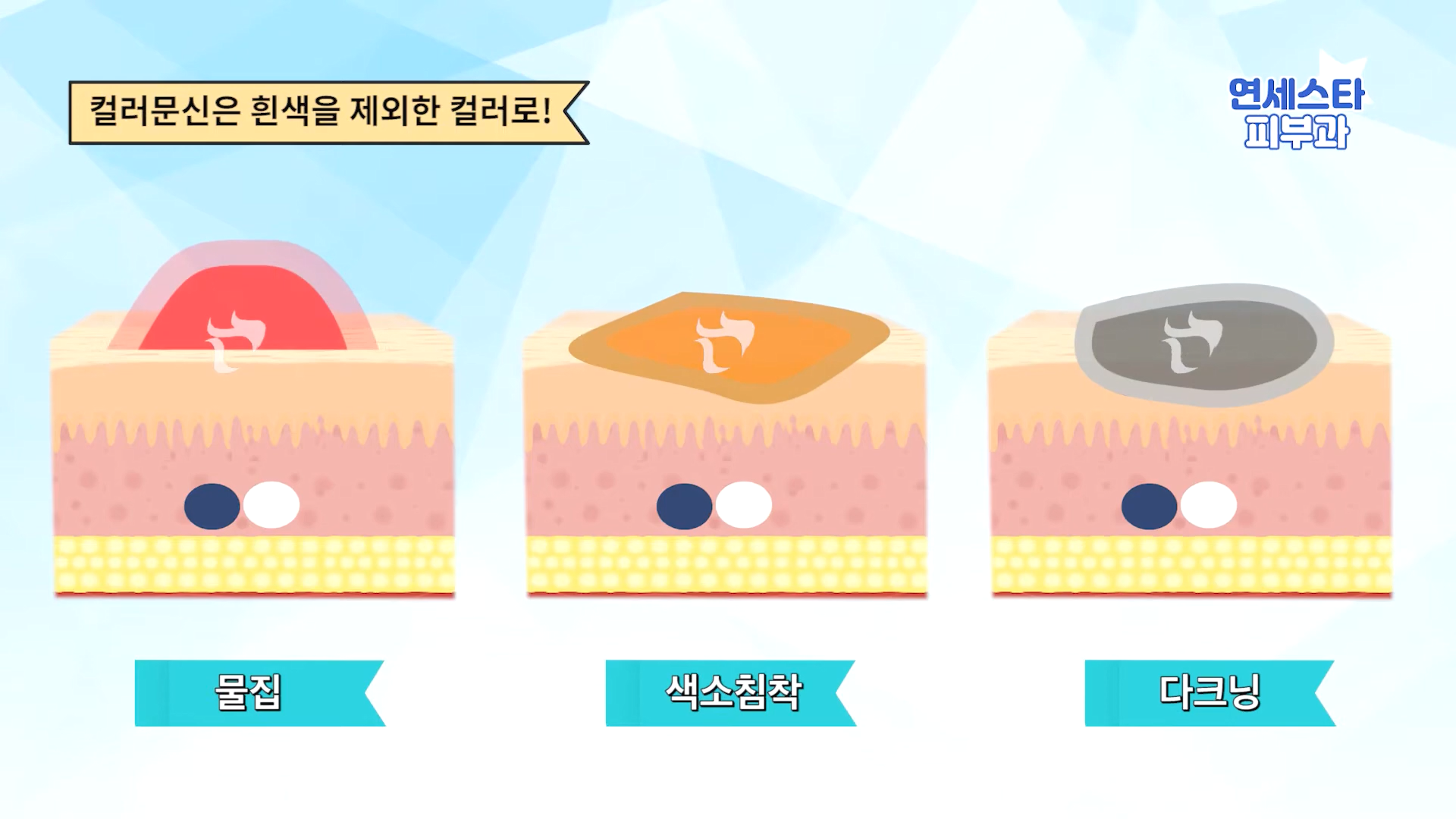
When creating white color tattoos, titanium is used to produce the color. Titanium is extremely strong, to the extent of being used in weapon manufacturing, and does not break easily even when exposed to a laser.
Therefore, it becomes the most challenging color to remove.
 .mp4_000117483.png?type=w966)
It's even more problematic when mixed
When attempting to remove a tattoo mixed with white by applying a laser, even with low energy, the adjacent white tattoo can react very strongly due to its titanium content.
- Blisters are prone to forming.
- Pigmentation may remain.
- It can lead to side effects like darkening.
Pastel-toned tattoos mixed with white, or white shading used intermittently to emphasize black designs, no matter how beautiful, can cause difficulties later on, so please decide carefully.
On the other hand, black, light blue, and red are relatively easier to remove compared to other colors. The method of using different wavelengths for each color is summarized in the R-Zero Pico-Frectat Tattoo Removal guide.
Avoid exposed areas for placement
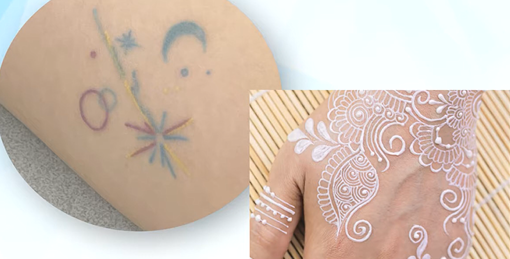
Tattoo removal can take anywhere from several months to several years. During the gradual fading process, tattoos can become aesthetically unpleasing.
If the tattoo is in an exposed area, these changes can be noticeable to others throughout the removal period, often causing stress. In some cases, depending on an individual's skin type or immune response, scars may form unexpectedly.
Therefore, if you are getting a tattoo, we recommend choosing a less visible location rather than an exposed area. If you absolutely want it in an exposed area, it's better to choose a light design with colors that are relatively easy to remove, such as black, very light blue, pink, or red, with a small amount of ink injected shallowly.


Thin lettering vs. wide, light designs
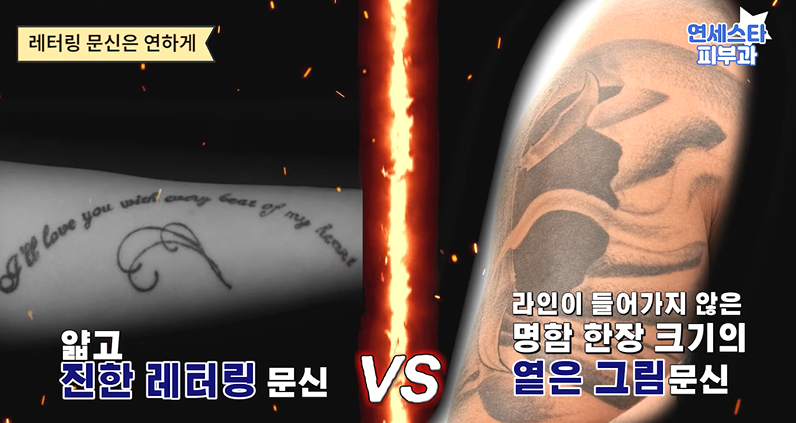
Which would require more sessions: a thin, dark lettering tattoo, or a light tattoo the size of a business card without outlines?
The answer is the thin, dark lettering tattoo.
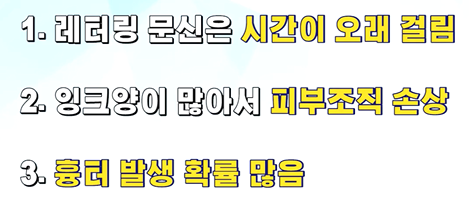
While you might think a larger area would take longer, to make lettering clear in a small space, ink must be injected deeply.

More ink means more scars
Tattoos with a large amount of injected pigment don't just take a long time; the greater the ink volume, the stronger the reaction, increasing the likelihood of scarring due to damage to surrounding skin tissue.
| Situation | Resulting Outcome |
|---|---|
| High and deep pigment | Strong reaction, damaging surrounding tissue |
| Scarring occurs | Pigment beneath the scar does not react to the laser |
| Intensity increased | Hypopigmented spots may appear |
| Result | Uneven and mottled marks |
If you are getting a lettering tattoo, we recommend choosing a design without outlines, rather than a dark design that injects a lot of pigment deeply into a small space. Procedures for treating scars can be found in the Pinhole for Burn & Surgical Scar guide.
If I had to pick one thing to avoid
Finally, what you should avoid is cover-up tattoos. Because removal takes a long time and can be costly, many people cover up tattoos they don't like with another tattoo.
In such cases, the pigment from the original tattoo is layered with the cover-up tattoo, making removal take longer and become more difficult.
Some people also try to hide scars with tattoos instead of treating them. Scar tissue is not normal skin, so laser penetration may not be effective, and even if it is, macrophages may not efficiently transport the broken pigment, making it difficult to achieve satisfactory results.
Instead of a cover-up tattoo, we recommend removing the original tattoo with a laser or treating the scar first. The treatment flow is available in the Tattoo Removal Treatment Guide, and if you have any concerns about designs or areas, please inquire via chat now. Individual results and recovery may vary.



Authored and Medically Reviewed by Chief Director Dr. Lee Sang-Joo (Dermatologist) Resident in Dermatology at Severance Hospital · Ph.D. in Medicine from Yonsei University College of Medicine Currently, Adjunct Professor at Yonsei University College of Medicine, Department of Dermatology · Author of Medical Skincare View Medical Staff Profile
First Published 2024-05-14 · Last Reviewed 2026-07-29
This article contains general medical information and does not substitute for individual diagnosis and treatment. Results and recovery may vary by individual.