
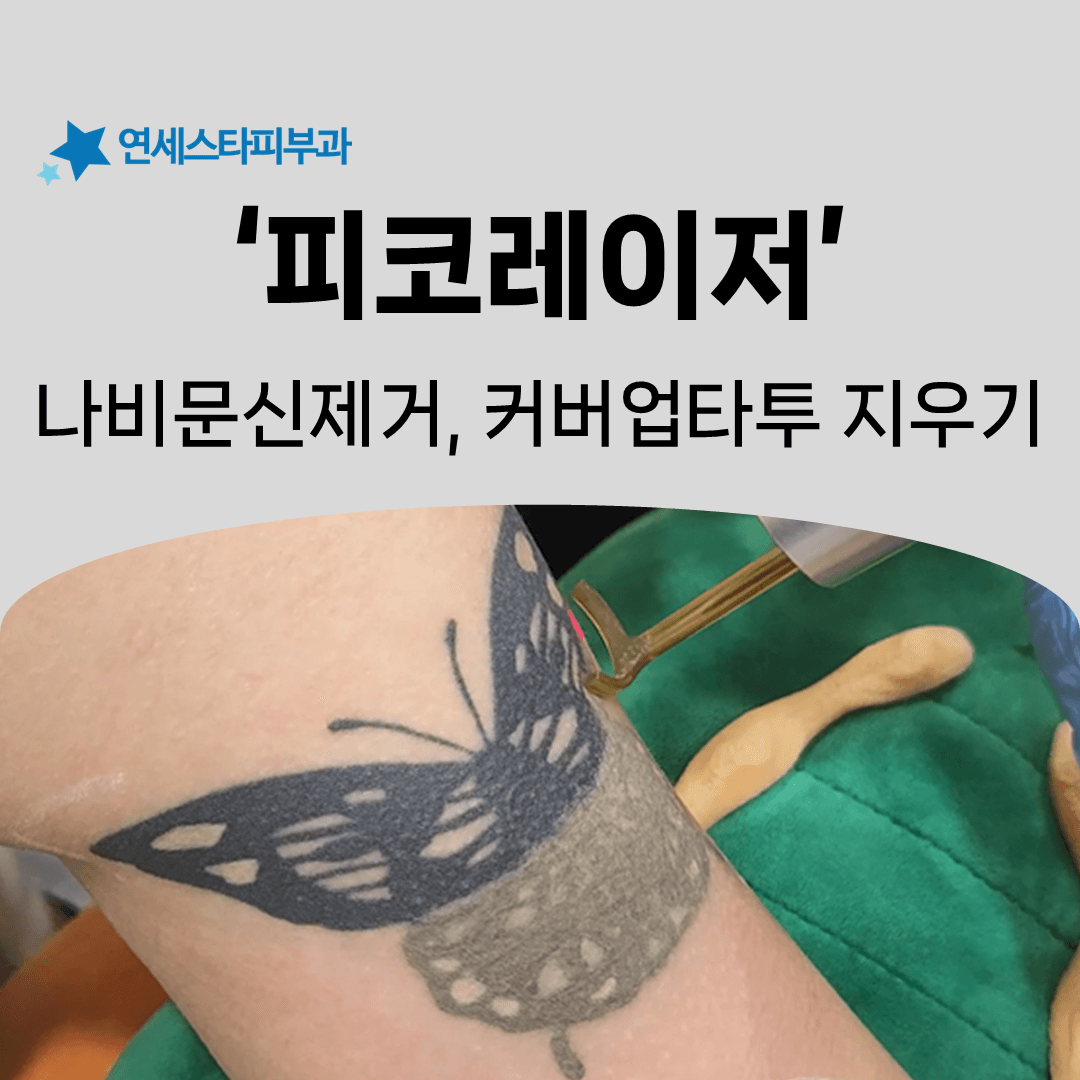
Some people visit to remove butterfly tattoos. Among these, some are not simple butterfly tattoos, but cover-up tattoos that have covered an existing tattoo with a butterfly shape.
Let's follow the actual treatment flow to see how a state where pigment is layered on top of pigment is handled.
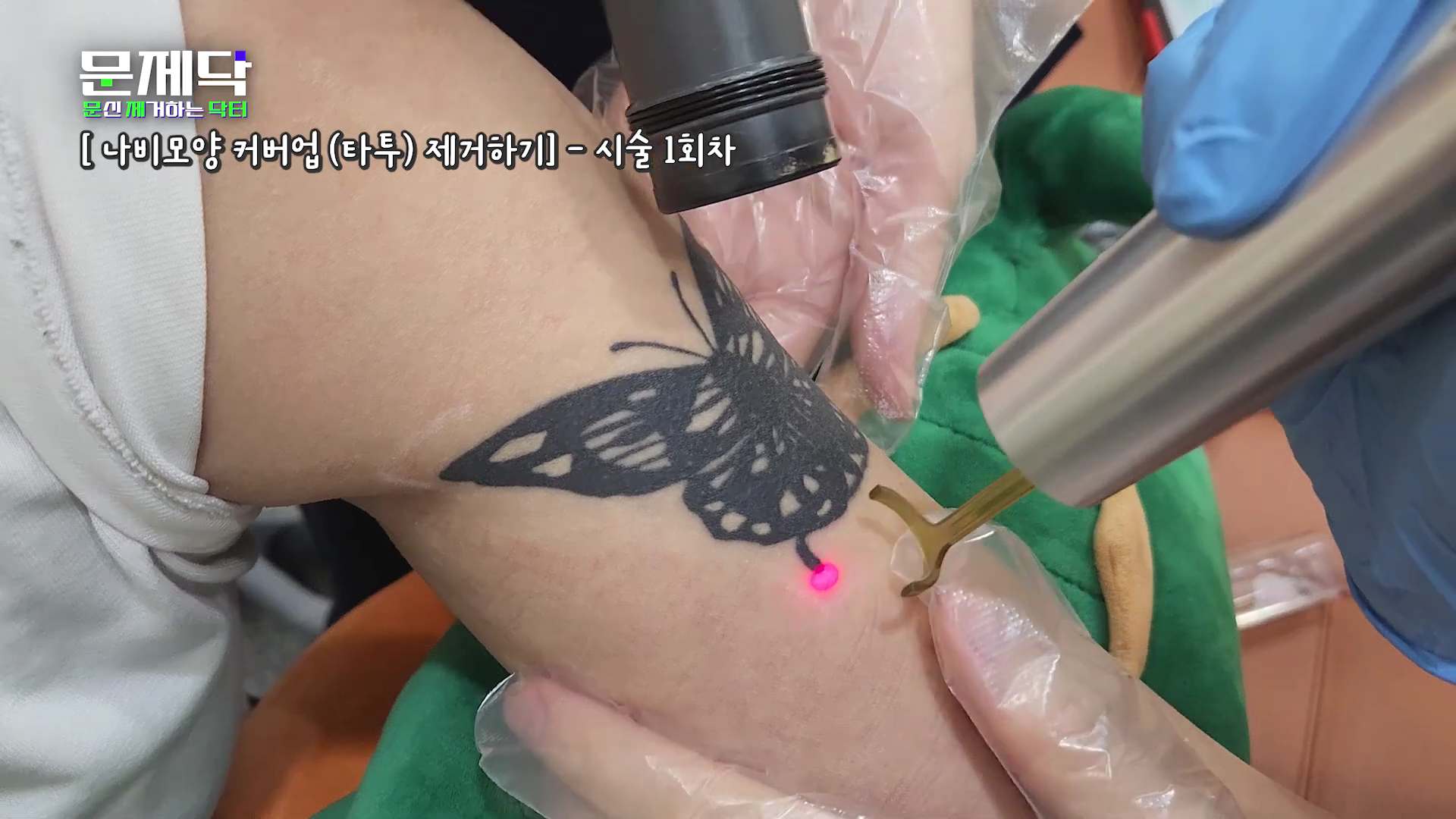
Starting with lowering the temperature
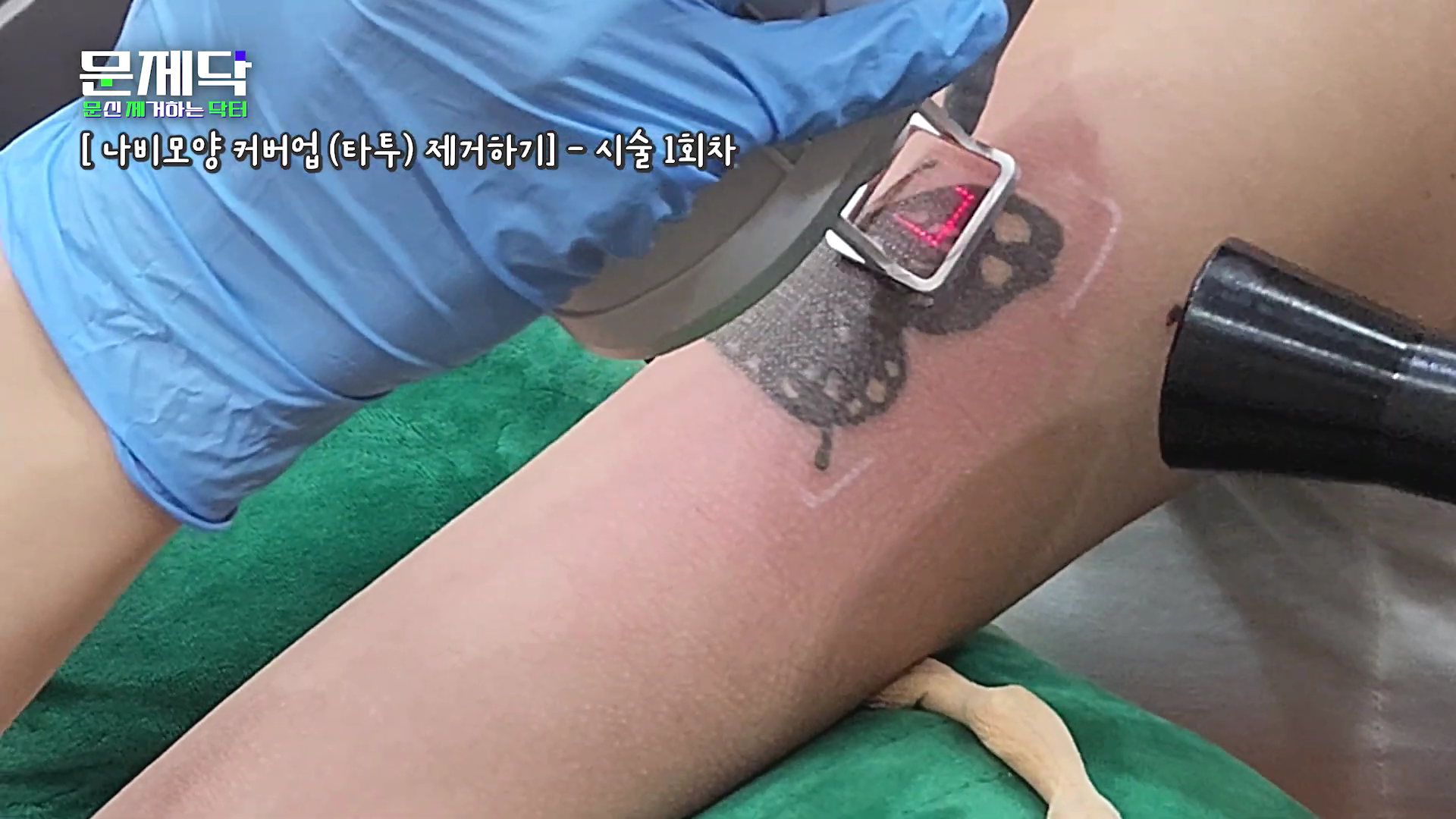
Cover-up butterfly tattoo removal begins with cryo-anesthesia using an air cooler. This method alleviates pain by delivering cold air deep into the skin.
Lowering the skin temperature before applying the laser can reduce the perceived discomfort even with the same irradiation.
Irradiating to selectively target pigment
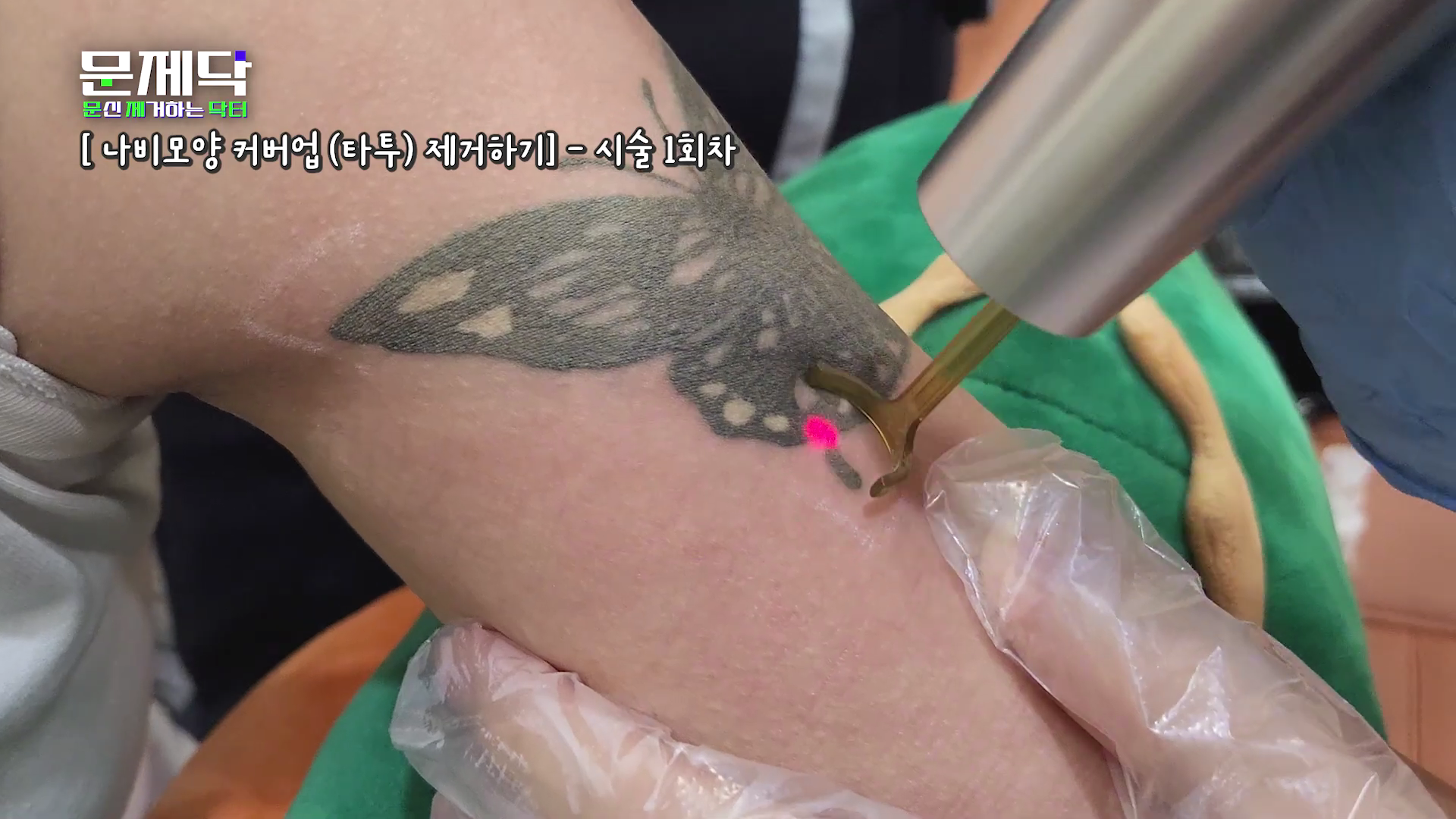
Simultaneously with air cooling, the PicoWay Laser is irradiated. This device uses picosecond units, which are one trillionth of a second, with the aim of selectively destroying pigment.
The equipment configuration and principle are detailed in the R-Zero Pico-Frectat Tattoo Removal guide.
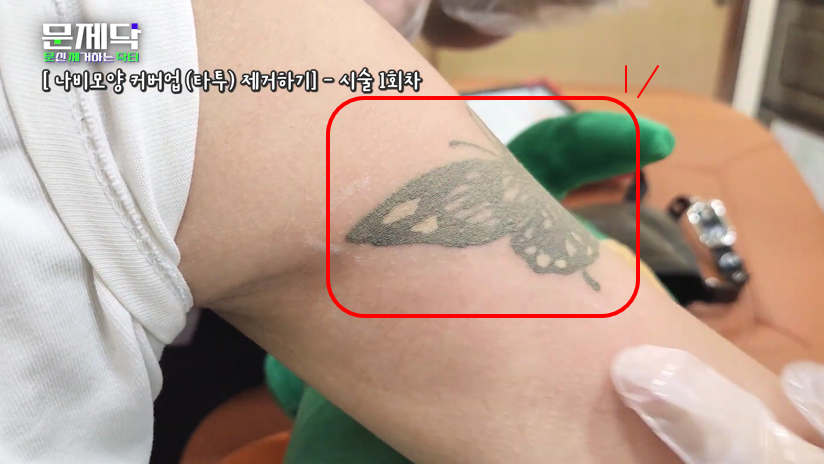
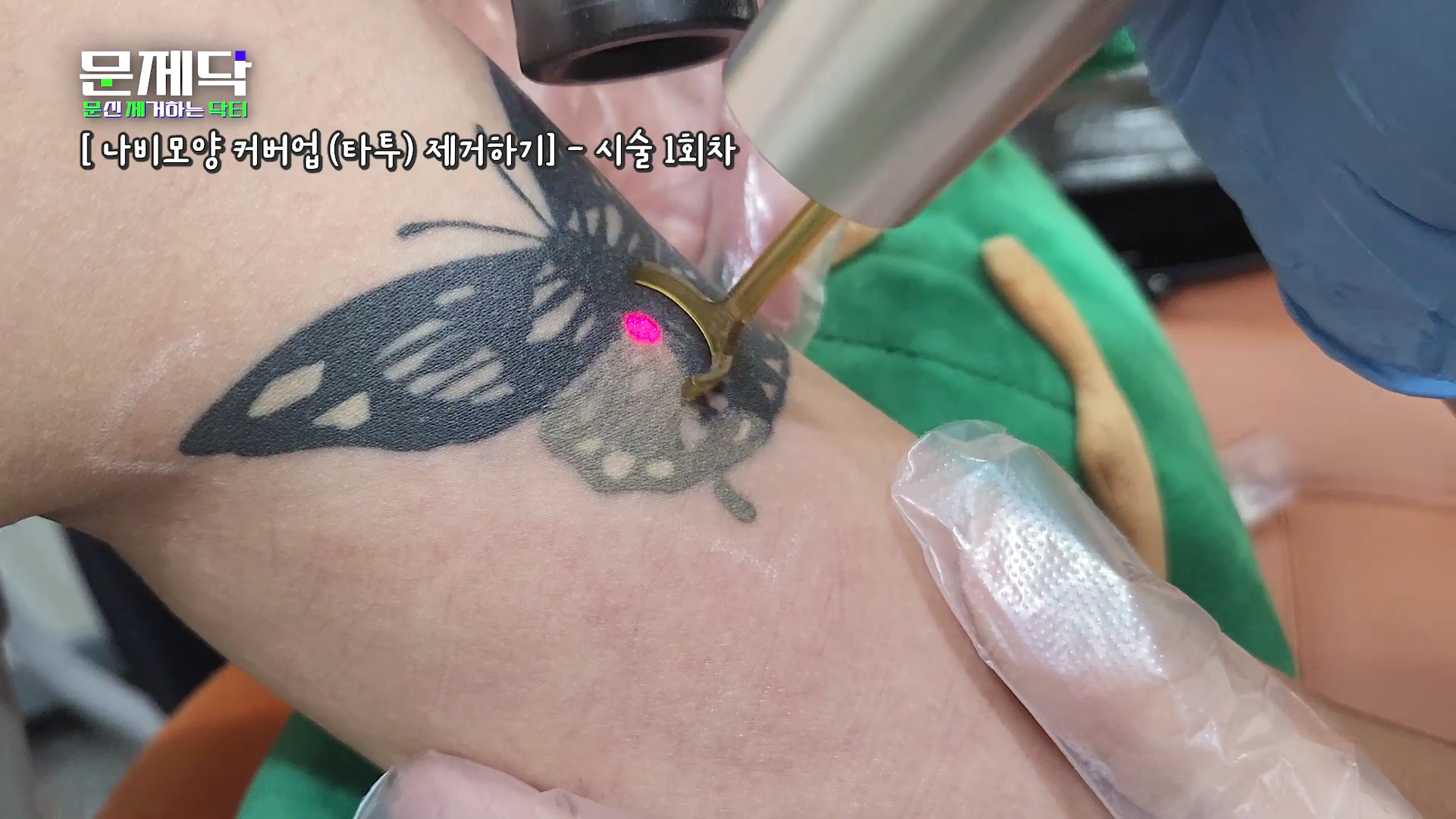
The point where white bubbles appear
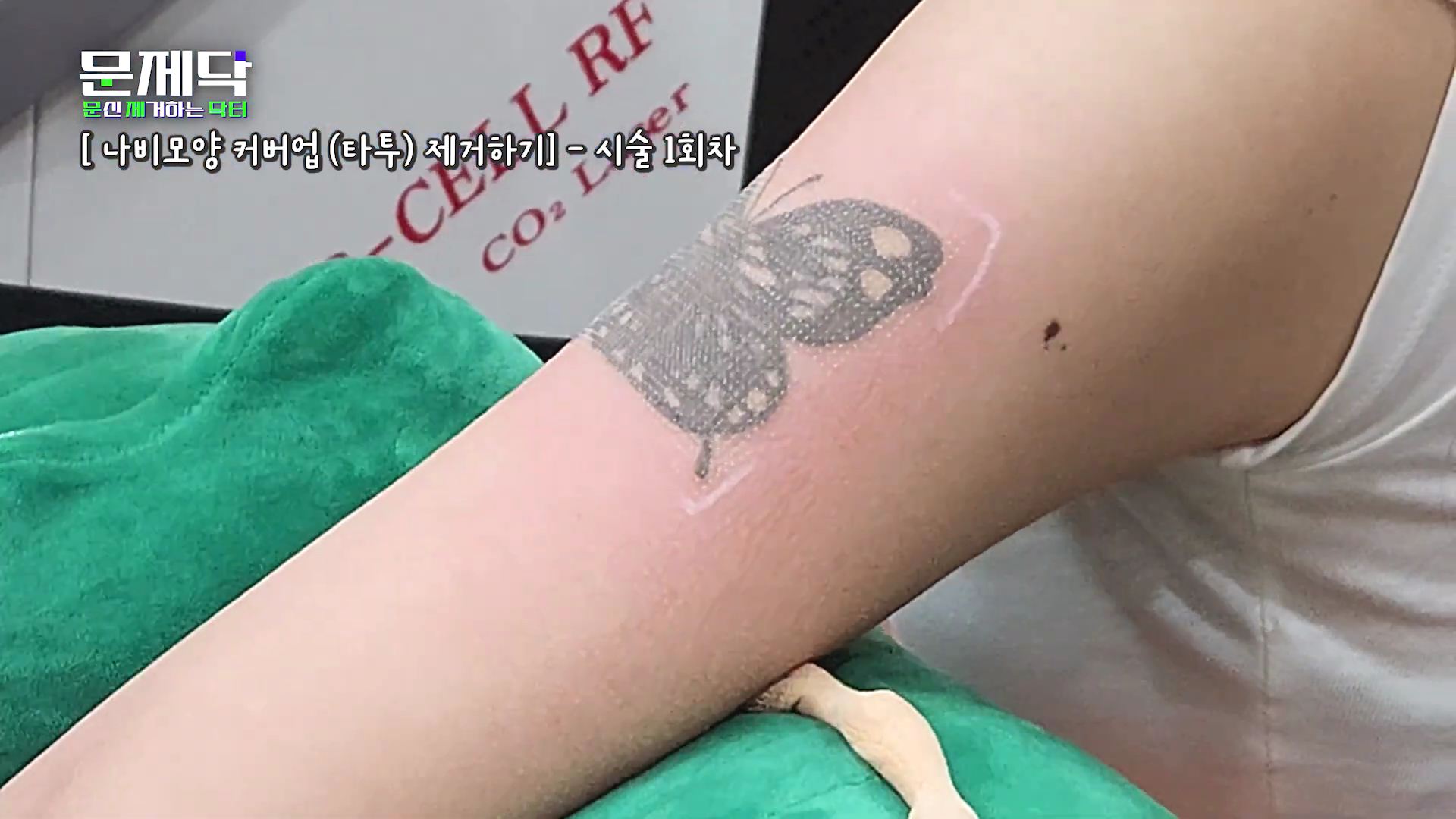
As irradiation progresses, white bubbles appear on the skin. These bubbles interfere with laser penetration, so normally, only one irradiation per visit is possible.
The R-Zero Technique, which originated in the United States, involves applying medication when white bubbles appear to make them disappear. This allows for up to four irradiations per visit.
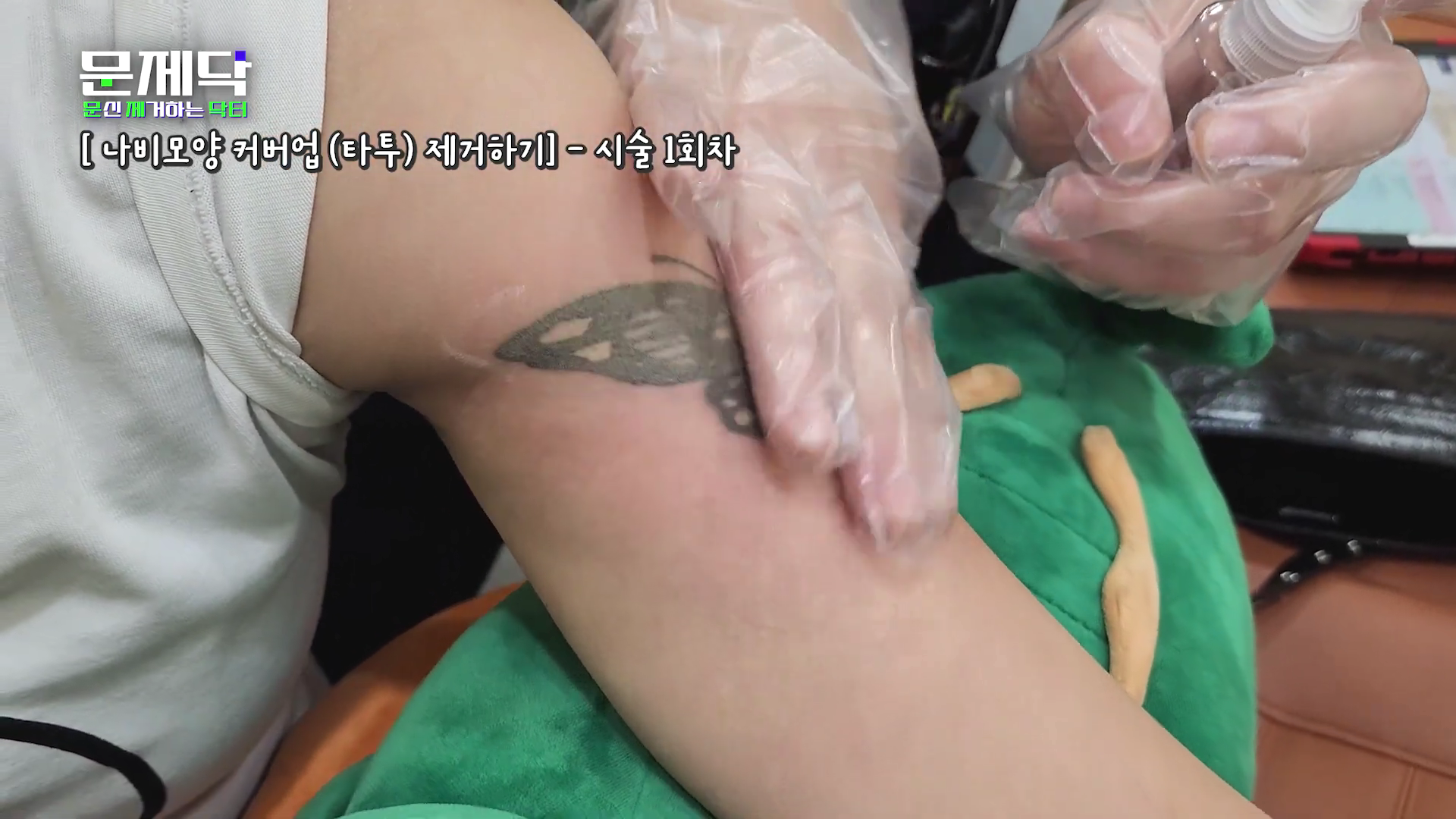
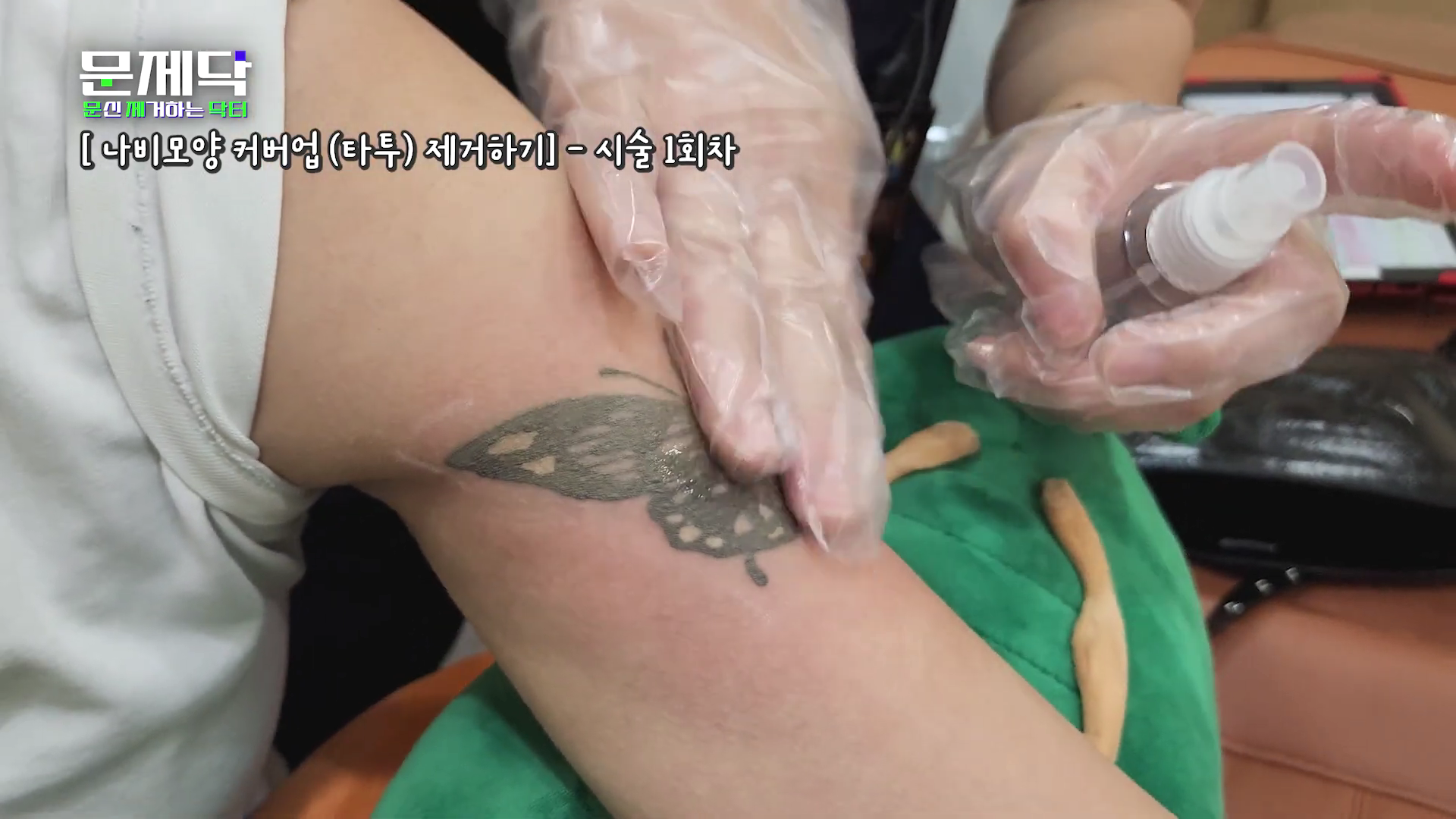
The actual sequence of four passes
The steps taken within a single treatment are as follows:
- First PicoWay Laser irradiation after cryo-anesthesia
- Medication application to remove white bubbles
- Second irradiation with air cooling
- Medication application again
- Third irradiation when bubbles have almost disappeared
- Repeat the same process for the fourth irradiation
Air cooling for pain relief is performed with each pass.
The reason for adding CO2 laser at the end
After completing the four repeated treatments, a CO2 laser is used in conjunction to prevent scarring. This step creates space for blisters to drain.
| Step | Action | Purpose |
|---|---|---|
| Before treatment | Air cooling cryo-anesthesia | Pain relief |
| 1st to 4th pass | Repeated PicoWay Laser irradiation and medication application | Pigment breakdown |
| After treatment | Combined CO2 laser | Secure drainage pathway for blisters |
It is paramount to perform the procedure with minimal scarring. An explanation of the Pinhole Technique can be found in the Pinhole for Burn & Surgical Scar treatment guide.
Erasing instead of covering
Cover-up butterfly tattoos can also be removed. We recommend erasing them with a dermatologist's R-Zero Technique rather than covering them again. The number of sessions and progress may vary individually.
The overall treatment flow can be seen in the Tattoo Removal Treatment Guide.

Authored and medically reviewed by Jinmun Kang, Chief Director (Dermatologist) Graduated from Yonsei University College of Medicine · Resident in Dermatology at Severance Hospital Currently an adjunct professor in the Department of Dermatology, Yonsei University College of Medicine Member of the Korean Society for Medical Lasers · Korean Society for Aesthetic and Dermatologic Surgery View Medical Team Introduction
First published 2025-03-25 · Last reviewed 2026-07-29
This article contains general medical information and is not a substitute for individual diagnosis and treatment. Results and recovery progress may vary individually.