
![Surgical Scar Treatment Cost: When is the Golden Time for Laser Treatment? | [Yonsei Star Dermatology Sinchon]](/_next/image?url=https%3A%2F%2Fagqdgbuateknhwpocrgu.supabase.co%2Fstorage%2Fv1%2Fobject%2Fpublic%2Fsources%2Fbbf3bebe-45b6-4415-bd04-bda18b2cac0f%2Fblog-images%2F223842947661_00_6e2a086483c9.jpg%3Ftype%3Dw966&w=3840&q=75)
Surgical marks are natural traces left as the skin heals after incision and suturing. The first question patients usually ask in the consultation room is often similar: "When is the best time to start managing this scar to make it fade?" To answer directly, the earlier treatment begins, before the scar becomes deeply established, the higher the reported chances of recovery.
If you are prone to easy bruising or skin swelling, opting for another surgical method to remove the mark might feel burdensome. In such cases, you can first consider Surgical Scar Laser Treatment, which proceeds without incision, to aid the recovery process.
When is the Golden Time for Scar Management?

The ideal time to start intensive management is immediately after the stitches are removed. Typically, after about 1 to 2 weeks post-surgery, the skin has healed to some extent. This period is known as the optimal timing to attempt relatively quick recovery, before the scar settles and develops significantly.
Early scar management is reported to determine the subsequent outcome. The number of treatments and costs required can vary depending on when treatment begins, even for the same area.
Therefore, how you manage it initially can affect the overall length of the treatment process and the surgical scar treatment cost. It is often easier to approach the scar in its early, changing stages rather than after it has hardened and darkened in color.
When Redness Remains

Immediately after surgery, the regeneration process is still ongoing, and redness often remains on the skin. This redness can also appear due to the excessive development of newly formed blood vessels.
At this time, using the Vbeam Prima laser to manage overly dilated blood vessels can alleviate redness and help prevent the scar from becoming more prominent. If persistent red marks are a concern, considering Facial Redness and Red Mark Management alongside this approach can be helpful.
When Bruising Lingers

Sometimes, bruising gradually darkens a day or two after surgery. Depending on one's constitution, it might not fade for over a month. When the color of a bruise is slow to lighten, you can consider using the Vbeam Prima vascular laser to shorten the time it takes for the bruise to disappear.
It tends to respond relatively well to dark purplish bruises, and often does not require many sessions, which can lead to a relatively lower cost burden. If you wish to reduce bruising quickly, it is recommended to check the Bruise Treatment Without Damaging Surrounding Tissue information.
Changes that appear during the post-surgical recovery period can be categorized as follows:
- Redness: A stage caused by increased new blood vessels, approached with vascular laser.
- Bruising: When dark and persistent, attempt to shorten the duration with a vascular laser.
- Elevation: A raised form, combining Triamcinolone Scar Injection and laser.
- Depression: A sunken form, proceeding with regeneration and skin layer refinement.
If you have any questions, you can easily ask them via Chat Consultation about Surgical Scar Treatment Timing.
How to Manage Raised Scars
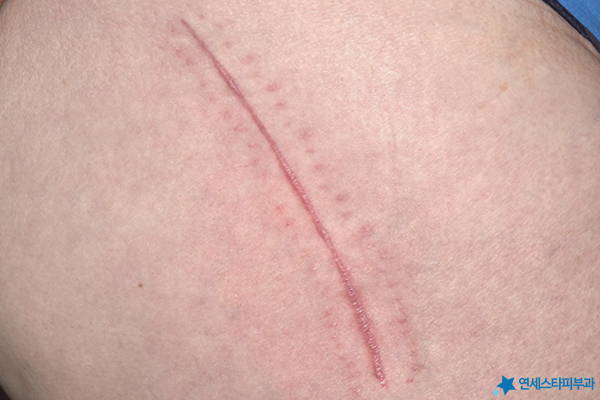
For scars that swell due to constitutional reasons, like keloids, you can first consider Triamcinolone Scar Injection to reduce their height. Adding laser treatment can further reduce the likelihood of recurrence and lead to a more stable outcome.
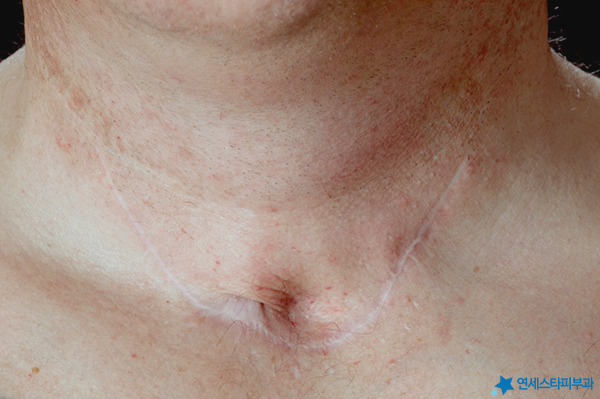
If a satisfactory response appears early, the treatment period tends to be shorter, which can ultimately reduce the cost burden. However, keloids show significant individual differences, so it is important to first understand Keloid Scar Characteristics and then plan a treatment suitable for your constitution.
When the Color Changes or It Becomes Depressed
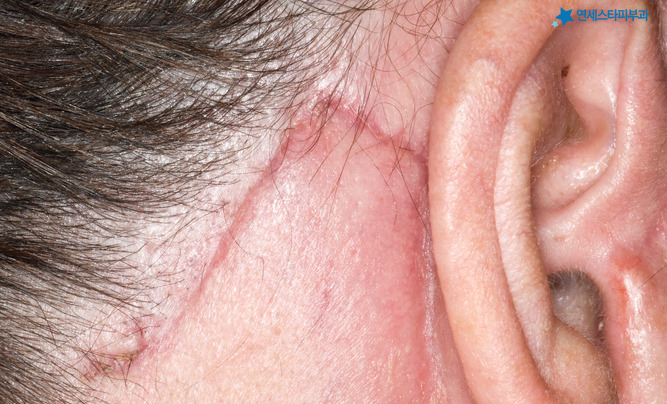
It is advisable to continuously observe changes in the area for about 3 months after surgery. Even with initial management, scars can sometimes turn white or remain as depressed forms.
In such cases, a combination of methods like Ultrapulse Encore laser or Subcision, which enhance skin regeneration and refine skin layers, can be used for correction. If the mark is deeply depressed, Surgical Scar Revision may also be considered. Since the approach varies depending on the scar's shape and depth, we recommend checking the method suitable for you.
Summary of Scar Type Approaches

The content so far is summarized at a glance below.
| Scar Type | Main Characteristics | Approach |
|---|---|---|
| Redness | Red marks due to new blood vessel development | Vascular laser |
| Dark Bruising | Dark and long-lasting bruises | Vascular laser |
| Raised Scars | Forms that swell, such as keloids | Combination of Triamcinolone Scar Injection and laser |
| Depressed Scars | Sunken or turned white | Regenerative laser, Subcision, etc. |
Even for the same surgical mark, the necessary treatment differs depending on its appearance. Planning after accurately assessing the form from the beginning is often more efficient in terms of both time and cost.
Pre-Scar Management Checklist
Before starting treatment, checking the following in advance can make the consultation much smoother:
- Date of stitch removal and surgical area
- Whether you are prone to bruising or keloids
- Current color (redness, dark purplish, white) and form (raised, depressed) of the mark
- History of previous scar-related treatments
Organizing this information beforehand can help you determine the right approach more quickly. If you have any questions, feel free to ask via Chat Consultation for Management Suitable for My Scar Type.
Concluding Remarks

We hope this article serves as a small guide for those who have surgery scheduled in the near future or are concerned about existing marks and are contemplating the timing of management. Since scars vary in approach and outcome depending on their form and stage, and individual differences exist, we recommend having them checked early before they harden.
Dr. Lee Sang-Joo, Chief Director (MD, PhD, Yonsei University College of Medicine and Graduate School; Completed Dermatology Residency at Severance Hospital; President of the Korean Dermatological Association) Dr. Lee Sang-Joo's Profile First Published 2025-04-22 / Last Reviewed 2026-06-16
This content is for general informational purposes only. Scar appearance and recovery progress can vary individually, and accurate diagnosis and treatment direction should be confirmed through consultation with medical staff.