

If a surgical scar doesn't fade over time, it could be a sign that the scar has settled into the skin. The most common question is simple: "When is the best time to start treating this scar?" To put it simply, the earlier you start managing the sutured area during its initial recovery phase, the higher the likelihood that the scar will remain faint.
Some surgeries are unavoidable due to sudden accidents, while others are elective for aesthetic improvement. In either case, the process of surgical scar formation is similar.

Why are surgical scars more prominent than other scars?
During surgery, incisions are made deep into the skin layers. Unlike superficial wounds, deep dermal damage is involved, which can result in more prominent scars and, in some cases, larger sizes compared to other types of scars.
Surgical scars tend to darken if left untreated. This often leads to concerns about treatment timing and cost. This article will systematically cover initial scar management after surgery, the timing and choice of laser treatments like Vbeam Prima, Ultrapulse Encore, and Subcision, and methods to reduce costs.

Tension determines the shape of the scar
The marks left after a wound heals from surgery are a natural part of the recovery process. However, if initial scars are left untreated, they can become thick and dark. The key variable here is the internal tension of the skin.
The stronger the pulling force on the incision site, the more likely it is that excessive collagen will be produced, resulting in a raised scar.
Especially in areas with frequent movement, the pulling force on the sutured area is greater, making scars more prone to becoming prominent. Representative areas include joints like the shoulders, chest, and knees. For such areas, it is advisable to consider scar treatment from the outset and carefully monitor the condition.
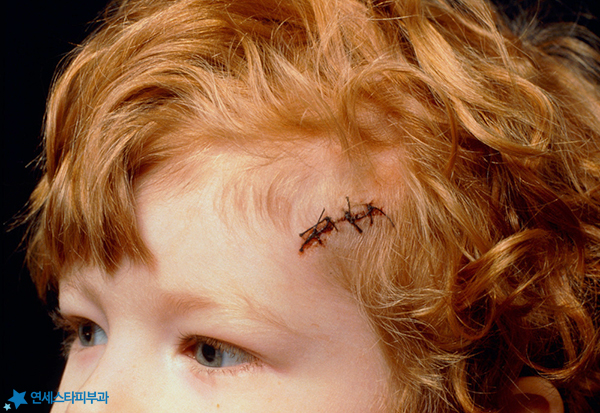
Immediate post-surgery: Initial home care to consider
Before starting laser treatment, it's necessary to manage the scar immediately after surgery to prevent it from worsening. Taking care of the following items will provide a much better starting point for subsequent treatment.
- Compression and fixation: Apply tape or silicone sheets to minimize tension on the sutured area.
- UV protection: UV rays can darken scar color, so consistent protection is needed.
- Prioritize rapid recovery: Laser treatment is only possible after bleeding has stopped and sutures are removed, so focus on wound healing first.
- Observe changes: Periodically check for any changes such as the scar rising or becoming red.
Immediately after surgery, it is most important to focus on rapid recovery while observing for any changes in condition.

Which laser should I choose?
Laser treatment can usually begin about two weeks to a month after suture removal. The equipment applied varies depending on the condition of the scar.
| Scar Condition | Application Direction |
|---|---|
| Red scars, vascular dilation | Vbeam Prima for redness and swelling reduction |
| Thick, firm scars | Ultrapulse Encore to promote collagen regeneration |
| Deeply depressed scars | Combined laser and Subcision to cut pulled tissue and restore flatness |
By combining treatments tailored to the condition, relatively rapid improvement can be expected in the early scar stage, and unnecessary treatments can be reduced, leading to more efficient use of costs. For deeply depressed or pulled scars, Surgical Scar Revision may also be considered. Starting treatment early tends to prevent scars from settling and shows a relatively quick improvement in issues.
If you are curious about the direction of surgical scar treatment, please use Chat Consultation for Surgical Scar Treatment.

If keloid is suspected, the approach changes
If a scar becomes red, raised, and progressively larger after surgery, the possibility of a keloid scar should be considered. Unlike typical hypertrophic scars, keloids are characterized by a high risk of recurrence. Therefore, home care alone, such as ointments or creams, has limitations, and a combined approach of injections and laser treatment is recommended.
In clinical practice, individuals with a tendency for keloids often require a combined approach rather than a single treatment.
- Triamcinolone Scar Injection suppresses excessive fibrous tissue formation.
- Lasers such as Ultrapulse Encore and Vbeam Prima are used in combination to improve both the skin surface and redness.
Such combined treatment is reported to be beneficial for both improvement and prevention of recurrence. For detailed injection treatment, please refer to the Triamcinolone Scar Injection guide.
What determines the cost?
The cost of surgical scar treatment varies depending on the size and condition of the scar, as well as the treatment method and number of sessions. Older scars often appear raised or have changed to a whitish color, and improving these requires more active skin regeneration, which tends to increase both the time and cost of treatment.
While treatment is not impossible, it is more realistic to approach it with the mindset of gradual improvement over time. Since scar treatment itself is difficult to complete in a short period, it is recommended to start as soon as possible. Starting treatment in the early stages significantly increases the potential to reduce both duration and cost.

Why you should start early
Scars tend to become more challenging to treat over time. Combining tension management from the early stages and applying customized treatments such as Vbeam Prima, Ultrapulse Encore, and Subcision can help with both recovery and cost savings.
Even for older scars, advancements in equipment, improved performance, and the development of complementary procedures are shifting the perception towards achieving natural, less noticeable improvement. Rather than accepting and neglecting surgical scars, applying treatments to refine skin texture as early as possible can reduce stress caused by scars in daily life. If deeply depressed marks are also a concern, reviewing the treatment principles for depressed scars may also be helpful.
Quickly identifying the treatment you need is the shortcut to smart spending. If you need a condition check, please contact us through Consult Now.


Chief Director Lee Sang-Joo (MD, PhD, Yonsei University College of Medicine and Graduate School, completed dermatology residency at Severance Hospital, President of the Korean Dermatological Association) Chief Director Lee Sang-Joo's Profile First Published 2025-08-12 / Last Reviewed 2026-06-16 As scar patterns and treatment responses vary individually, please consult with medical staff for an accurate diagnosis and treatment plan.