


Tattoo removal is a much more difficult procedure than getting a tattoo. Many people seek removal when their tattoo blurs over time or they are no longer satisfied with it.
When we ask those who visit us what their biggest concern is, surprisingly many answer pain.
Reactions to pain vary
Since the degree of pain felt varies slightly from person to person, reactions are also diverse.
Some people receive laser treatment without separate anesthesia, while others say it hurts much more than getting the tattoo. Therefore, we recommend choosing a method that matches the pain you feel.
Points where pain occurs
Tattoo removal is a procedure that irradiates the tattooed area with a laser to break down the pigment into tiny particles. This allows the body's macrophages to consume the fragmented pigment.
At this time, as the tattoo particles burst, you may feel a tearing sensation in the surrounding area. Also, since lasers use heat, the heat generated by the light passing through the skin surface is also known to be associated with pain.
Some people report a burning sensation in the treated area after the procedure. Since it is a procedure that creates microscopic wounds inside, an inflammatory reaction due to these wounds can cause pain, swelling, or red rashes.
Three types of anesthesia applied at our clinic
- This method involves applying Topical Anesthetic Cream to the skin surface. However, even if the top is anesthetized, it may not penetrate deep enough, so you may still feel pain.
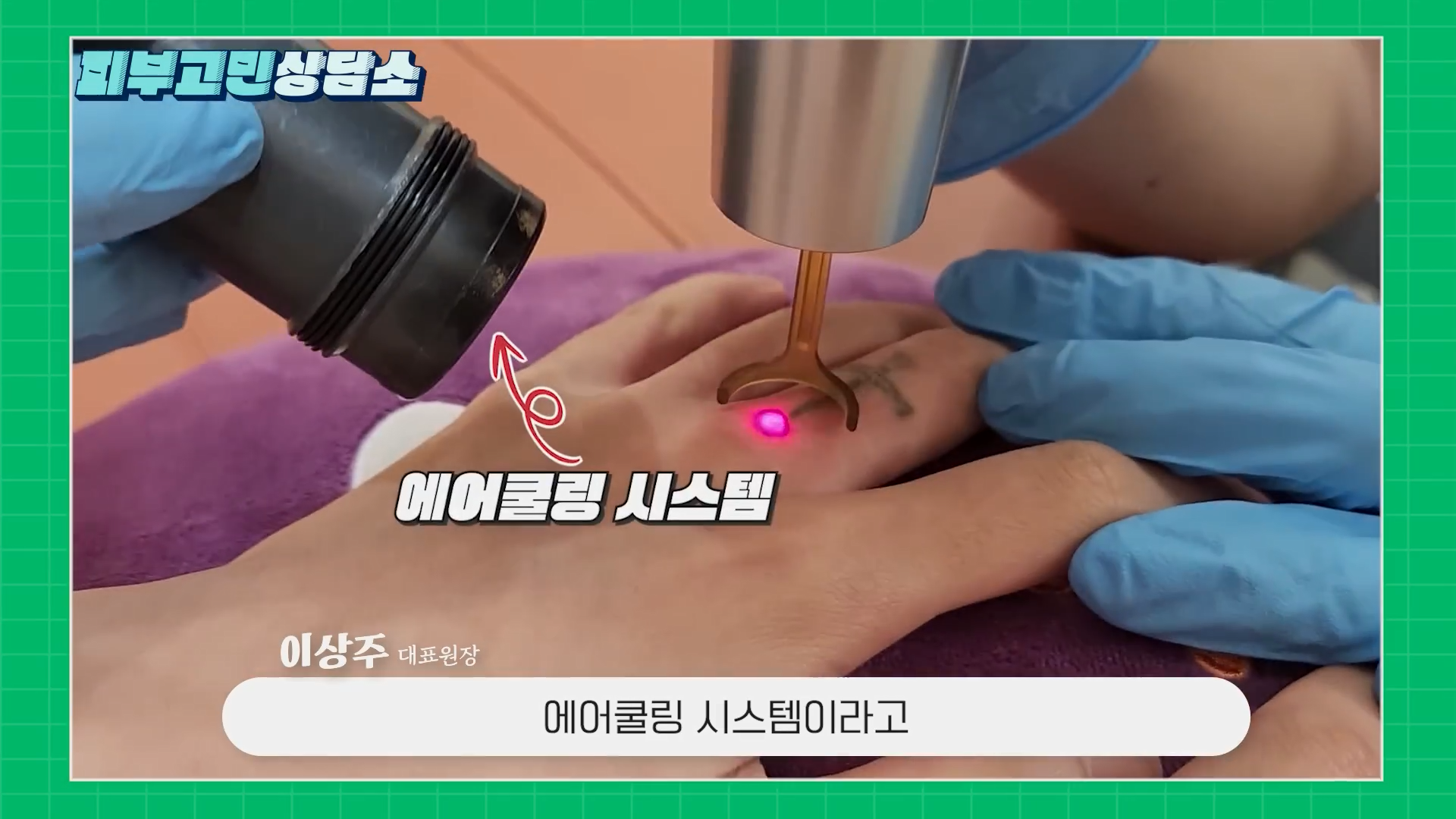
- This is an air cooling system, or cryo-anesthesia. Cold air is delivered to the skin to reduce pain and swelling in that area.
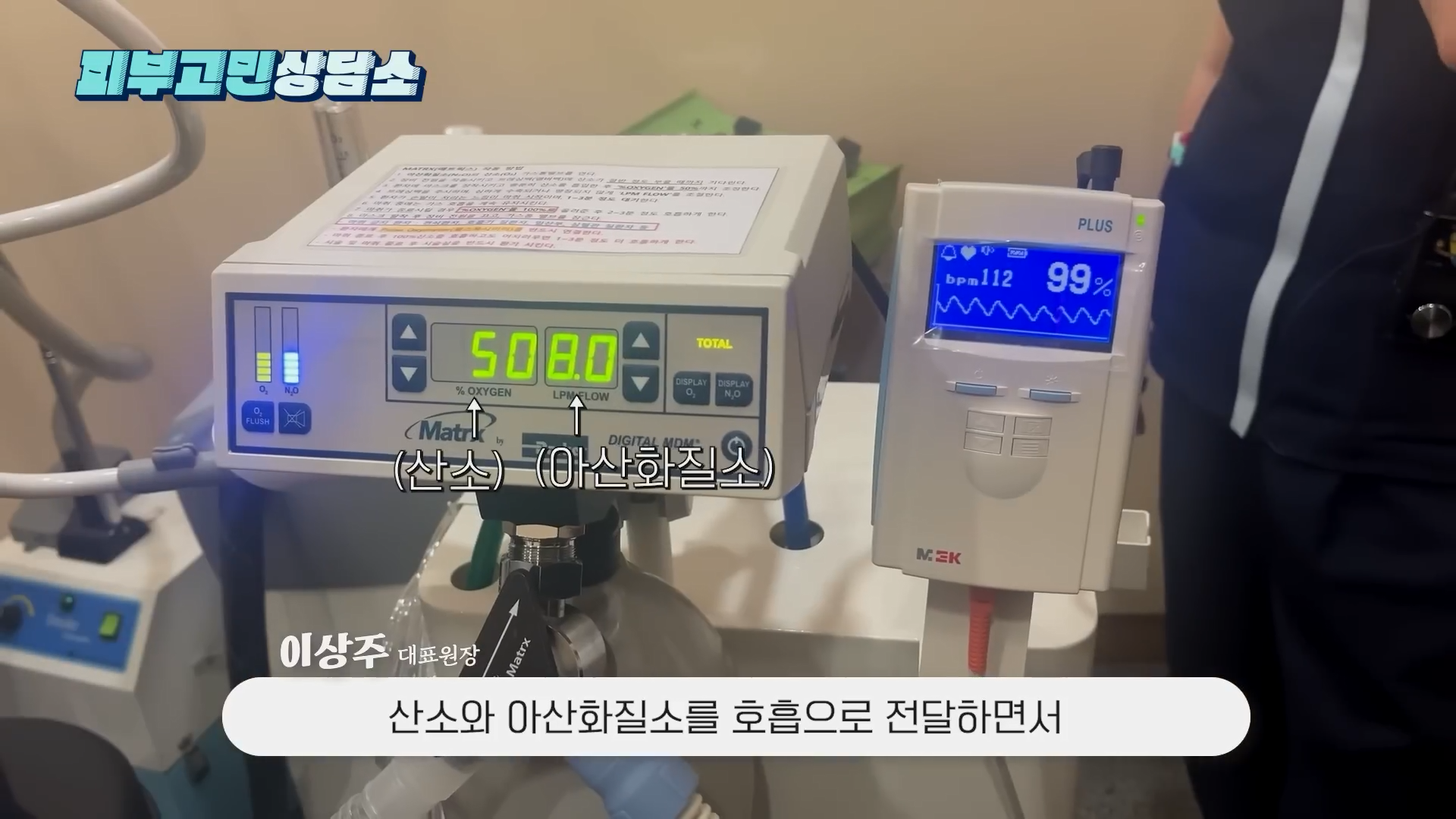
- This is non-sleep low-pain nitrous oxide anesthesia. Oxygen and nitrous oxide are delivered through respiration to reduce pain without inducing sleep.
Anesthesia also used for children
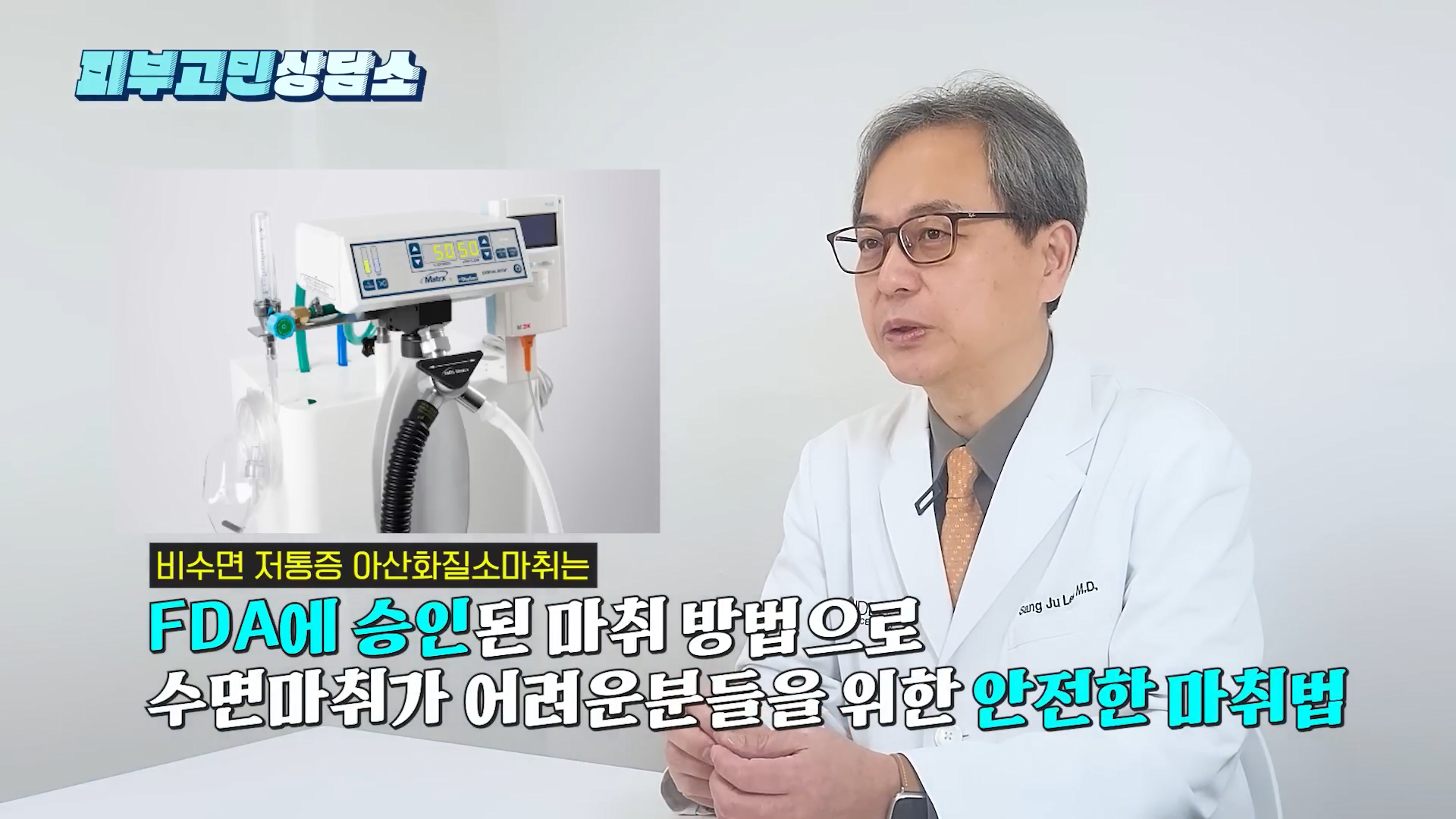
Our clinic's non-sleep low-pain nitrous oxide anesthesia is an FDA-approved method of anesthesia. It is used not only in dermatology but also in pediatrics, dentistry, and birthing centers for those who have difficulty with sleep anesthesia.
Its anesthetic effect and safety have been confirmed to the extent that it is used to alleviate pain in children who are sensitive to pain.
Where it differs from sleep anesthesia
Sleep anesthesia is a method of completely eliminating consciousness by administering drugs to induce deep sleep. While necessary for major surgeries, for minor procedures like laser treatments, it can lean towards risk.
The inability to communicate with medical staff during the procedure remains a safety risk.
| Item | Sleep Anesthesia | Non-Sleep Nitrous Oxide |
|---|---|---|
| Consciousness | Completely asleep | Awake |
| Communication during procedure | Difficult | Possible |
| Fasting before procedure | Required | Not required |
| Recovery time after procedure | Required | Not separately required |
Non-sleep anesthesia allows you to receive the procedure more comfortably by reducing pain, fear, and anxiety while you are conscious. Communication with medical staff is possible during the procedure, allowing for precise and safe progress.
To continue your schedule after the procedure
Unlike sleep anesthesia, there is no need to fast before the procedure, and no separate recovery time is required, so you can drive on the same day after the procedure.
The procedure methods are summarized in R-Zero Pico-Frectat Tattoo Removal and Nd:YAG Tattoo Removal, and the treatment flow is in Tattoo Removal Treatment Guide. If you have any questions, please leave them via Inquire via chat now. Individual differences in pain perception may occur.

Authored · Medically Reviewed by Chief Director Lee Sang-joo (Dermatologist) Former Resident in Dermatology at Severance Hospital · Former Chief of Dermatology at National Police Hospital Currently Adjunct Professor at Yonsei University College of Medicine, Department of Dermatology · President of the Korean Dermatological Association in 2026 View Medical Staff Introduction
First published 2024-03-22 · Last reviewed 2026-07-29
This article contains general medical information and does not substitute for individual diagnosis and treatment. Results and recovery progress may vary from person to person.