

Have you ever worried that a new mole or a wound that won't heal might be skin cancer? To put it simply, most skin cancers appear in visible areas, so if you notice changes quickly and seek dermatological care, it's a disease that can be addressed early.
This is Yonsei Star Dermatology Sinchon. Today, we will systematically review the causes, types, symptoms, and prevention methods of skin cancer, which is a malignant neoplasm that occurs on the skin. You are probably well aware that early detection and prompt treatment are crucial for any cancer, and skin cancer is no exception.
Why does skin cancer occur?

The most common cause of skin cancer is prolonged exposure to ultraviolet (UV) radiation. The second most common cause is family history, indicating that genetic factors also play a role.
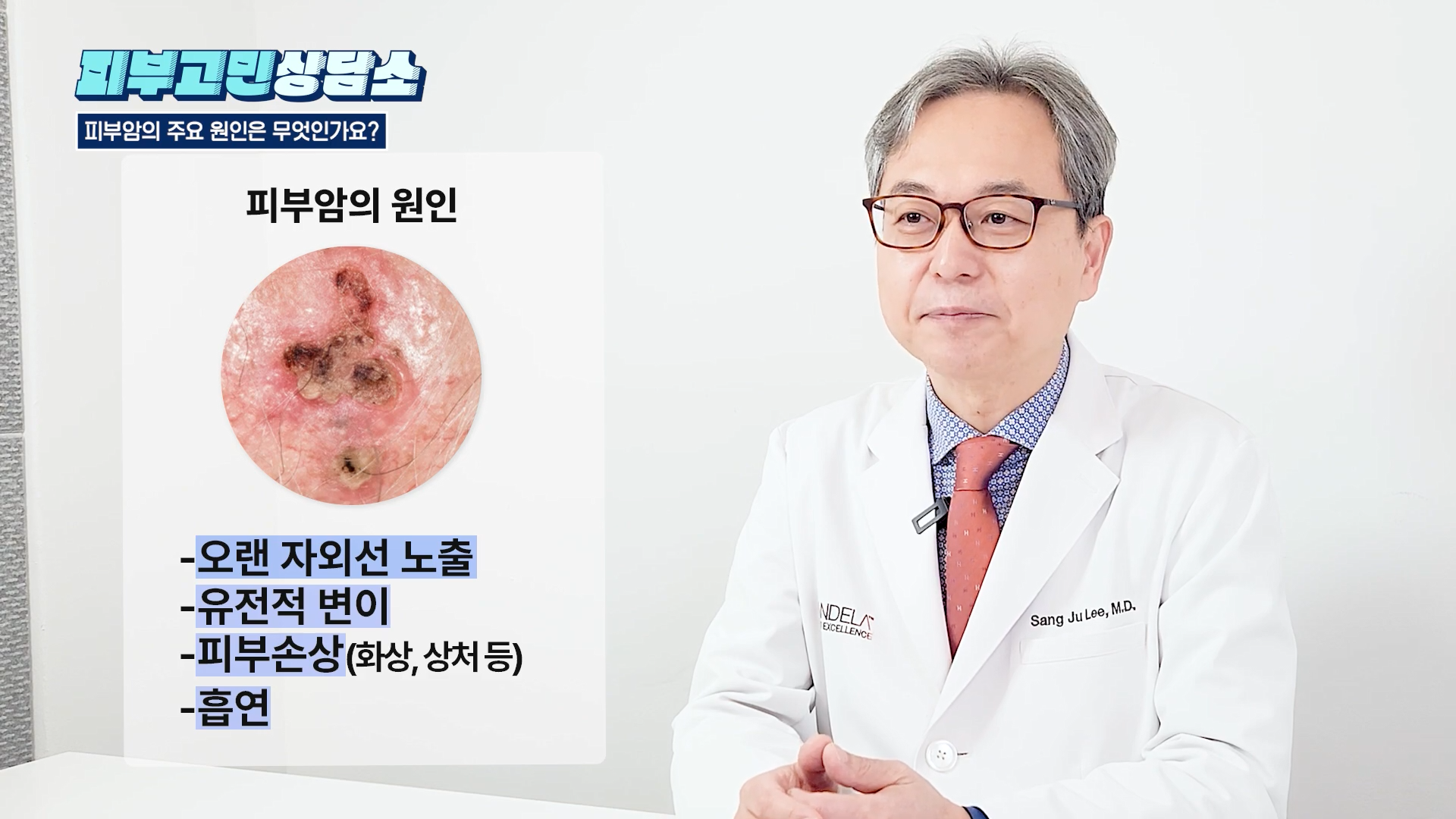
In addition, skin cancer is reported to occur frequently in areas where the skin has been damaged, such as from burns or injuries. Smoking is also known to have a negative impact on skin cancer development, so it is necessary to consider lifestyle habits as well.
Factors that increase the risk of skin cancer are summarized as follows:
- Prolonged and repeated exposure to UV radiation
- Family history of skin cancer among direct relatives
- Areas with previous burns or chronic wounds
- Lifestyle habits that burden skin health, such as smoking
What types of skin cancer are there?

Skin cancer can be broadly divided into two categories. One is basal cell carcinoma and squamous cell carcinoma, which originate from the epidermal layer of the skin, and the other is malignant melanoma, which originates from melanocytes. Even within skin cancer, the appearance and patterns differ slightly.
| Classification | Originating Cells | Typical Pattern |
|---|---|---|
| Basal cell carcinoma, Squamous cell carcinoma | Epidermal layer | Skin ulcers that do not heal well |
| Malignant melanoma | Melanocytes | Black lesions with irregular shape and color |

Basal cell carcinoma and squamous cell carcinoma are characterized by the formation of ulcers on the skin. If the skin has been ulcerated for a long time and does not heal well, skin cancer may be suspected.
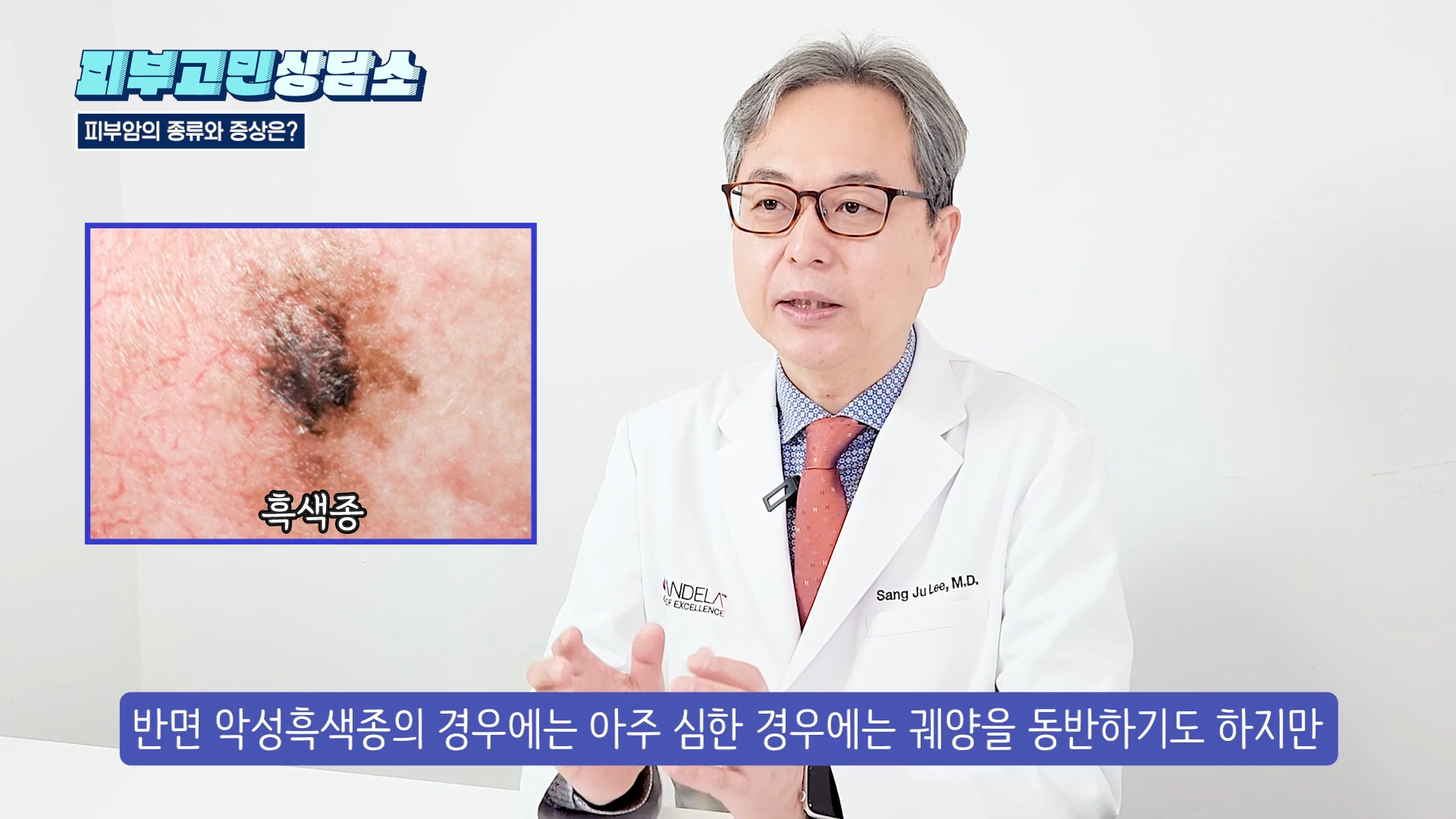
Malignant melanoma can be accompanied by ulcers in very severe cases, but generally, it appears as black lesions similar to moles with irregular shapes and colors. In particular, Koreans are known to frequently develop malignant melanoma on the palms and soles, so if the shape or color of moles on your hands and feet feels different from usual, we recommend getting a dermatological examination. It can be easily confused with simple Epidermal Pigment Removal like blemishes, age spots, or freckles, so moles that show changes should be observed more carefully.
I thought it was a mole, how do I distinguish it?

As mentioned earlier, if the skin has been ulcerated for a long time, it is necessary to suspect cancer. Basal cell carcinoma and squamous cell carcinoma are characterized by persistent ulceration of the lesion.
Malignant melanoma can usually be initially assessed based on its shape, size, and color.

It is commonly checked using the ABCD or ABCDE criteria. First, Asymmetry: if both sides are not round and are irregularly shaped. Second, Border: if the edges are irregular. Third, Color: if it is not a single tone but a mixture of several colors. Fourth, Diameter: if it is large, over 6mm. Finally, Evolution: if it is a mole that continues to grow in an adult whose growth has stopped. If these characteristics are observed, malignancy may be suspected.
Even if a black lesion looks like a mole, if its shape, color, and size change over time, it is safer to consult a dermatologist rather than leaving it alone.
We have summarized the important signs to remember when checking:
- Moles with irregular, asymmetrical shapes
- Moles with blurry or jagged borders
- Moles with multiple colors mixed within one spot
- Relatively large moles with a diameter exceeding 6mm
- Moles that continue to grow or change after adulthood
If you have any questions, please feel free to leave them via chat consultation regarding mole and pigment lesion differentiation.
How is skin cancer diagnosed?

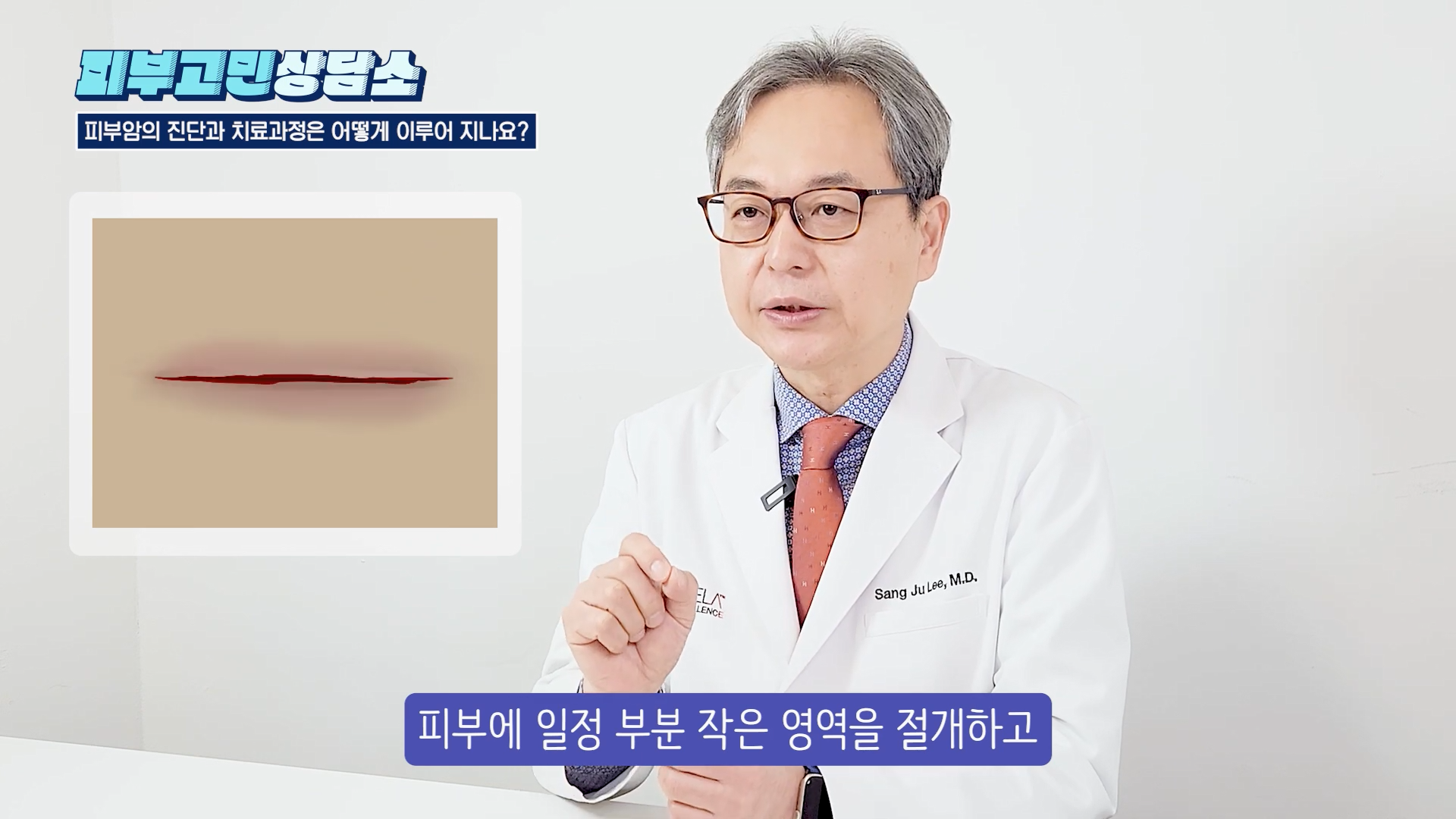
Precise diagnosis of skin cancer is made through tissue biopsy. This method involves excising a small area of skin and observing it under a microscope to check for malignant cells. Recently, dermoscopy, a skin magnifying glass, is also used to examine lesion information as a pre-biopsy step. In the examination room, it is not uncommon for lesions that patients consider simple moles to lead to further tests after dermoscopic observation.
Once skin cancer is diagnosed, the next step is treatment.
How does treatment proceed after diagnosis?

The most common treatment method is surgery. In particular, basal cell carcinoma and squamous cell carcinoma can be treated surgically, so surgery is the primary approach. While surgery is also fundamental for malignant melanoma, if the disease has progressed, chemotherapy or radiation therapy may be combined.
For reference, benign lesions such as common moles or warts, which are not cancerous, are often treated with Laser Lesion Removal. However, for lesions suspected of malignancy, an accurate diagnosis through tissue biopsy must take precedence.
How to prevent and manage it in daily life?
Since UV radiation is a major cause of skin cancer, it is important to consistently use sunscreen and sunblock in daily life. Smoking also has a negative impact, so quitting smoking can be helpful.
Despite these efforts, skin cancer can still occur in individuals with genetic predispositions. However, early detection is reported to lead to a high probability of successful treatment, so regular check-ups to identify changes early are key.
Skin cancer is often characterized by its mole-like appearance and lack of specific symptoms, making it easy to miss the optimal treatment time. If you have any suspicious lesions, we recommend seeking prompt diagnosis and early treatment from a dermatologist.
Please leave any questions you have via chat consultation for suspected skin cancer lesions. Thank you for reading.

Chief Director Lee Sang-joo (MD, PhD, Yonsei University College of Medicine and Graduate School, Completed Dermatology Residency at Severance Hospital, President of the Korean Dermatological Association) Chief Director Lee Sang-joo's Profile First published 2024-05-28 / Last reviewed 2026-06-16
This article aims to provide general information about skin cancer, and as symptoms and progression may vary individually, accurate diagnosis and treatment should always be decided through consultation with medical professionals.