


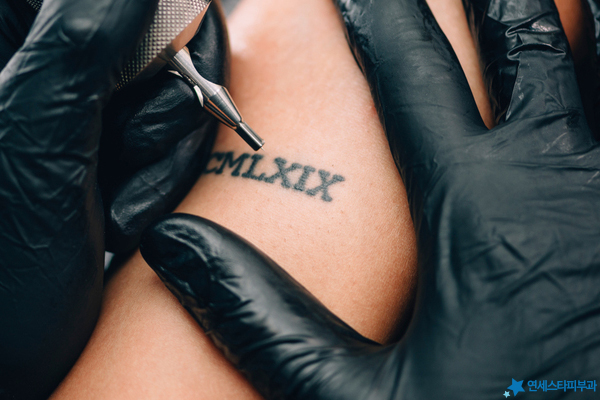
The feelings at the time of getting a tattoo may differ from current feelings. More people are deciding to remove tattoos before job interviews or marriage, or simply because their style has changed. Consequently, many are asking how much the choice of equipment affects the outcome.
Why doesn't ink disappear on its own?
Tattoos involve injecting pigment into the dermis, not the epidermis. While the epidermis constantly renews itself, the particles embedded in the dermis remain. This is why tattoos only fade over time but do not disappear.
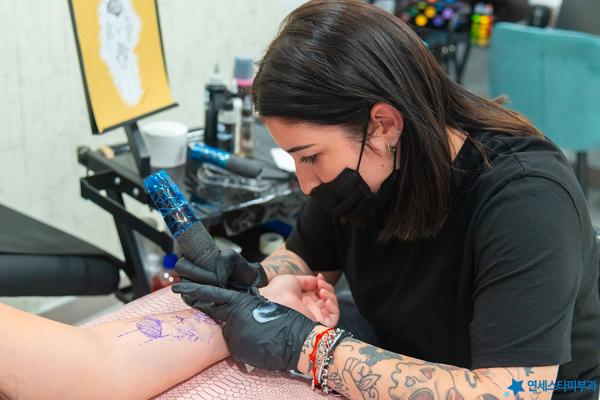
Lasers only serve to break down these particles. The body is what actually removes them. Immune cells carry away the fragmented pieces one by one. Therefore, how small the fragments become determines the speed of expulsion.
Why Pico is mentioned
The key difference lies in how quickly the energy is delivered. When struck with picosecond-unit pulses, which are a thousand times shorter than nanosecond devices, the instantaneous power is significantly greater, even with the same energy. This power acts through vibration, not heat, breaking down particles more finely.
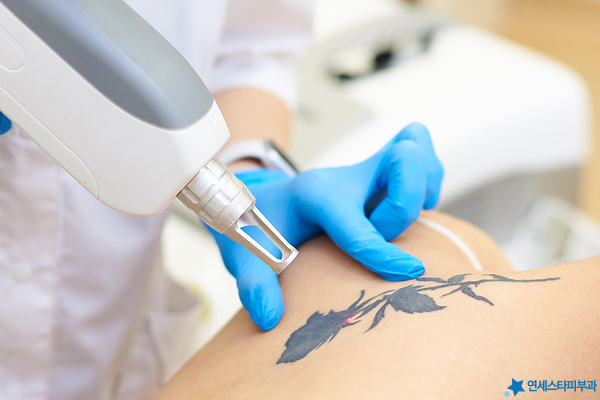
The short duration also means there is no time for heat to accumulate. Reduced heat spread to surrounding healthy tissue makes managing swelling or irritation after the procedure easier.
Color is also a variable. Black and blue, red and green, each respond well to different wavelengths. If a single device like PicoWay can use 532nm, 785nm, and 1,064nm, it can be combined to match the color composition.
There's one more thing. When a laser is fired, white bubbles form in the skin, which block subsequent shots. This used to limit treatments to one shot per visit. By combining this with the R-Zero Technique, which quickly removes bubbles with a special solution to allow more shots within the same timeframe, there is potential to reduce the overall number of sessions.
The question of how many sessions it takes
It usually takes five to ten or more sessions. It varies from person to person depending on the number of colors, depth of the ink, amount of ink, and the area. It is better to start at a place that assesses your condition and determines the scope rather than one that promises a fixed number of sessions from the beginning.
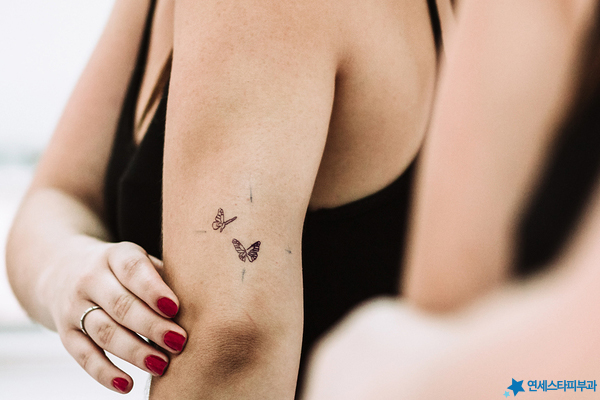
It is also difficult to say that it will disappear completely without a trace. The degree of remaining pigment varies depending on the color, depth, and skin condition, so it is advisable to discuss the expected outcome in advance.
In summary
While the characteristics of the equipment do affect the outcome, even with the same equipment, a plan requires the judgment to interpret color and depth. If you have decided to remove a tattoo, we recommend checking how many sessions are needed for your current condition.
Author · Chief Director Lee Sang-joo / Board-certified Dermatologist Chief Director of Yonsei Star Dermatology Sinchon, with extensive experience in treating pigment, wrinkles, and scars. He serves as the President of the Korean Dermatological Association in 2026 and an adjunct professor at the Department of Dermatology, Yonsei University College of Medicine. Detailed credentials can be found in the Medical Team Profile. · Last reviewed September 2, 2026
This article is intended for general medical information and the treatment methods and results may vary depending on the tattoo color and depth, and individual skin condition. For an accurate diagnosis and treatment plan, please consult with a board-certified dermatologist.