
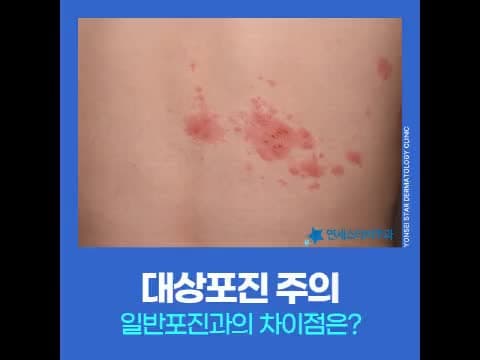
If you experience a red rash and blisters on only one side of your body, accompanied by severe pain, you should suspect shingles.
Many people initially mistake it for a simple skin problem or common herpes, missing the optimal treatment period. In severe cases, it can lead to long-term suffering with sequelae and complications, making it a skin condition that requires careful attention.
Why it's easy to dismiss as a simple skin problem
Shingles often begins with neuropathic pain before a skin rash appears, making early diagnosis difficult. In the early stages, when the rash is not distinct, it can easily be mistaken for muscle pain or a common cold.
In the clinic, it's not uncommon for patients to miss the golden window by considering early neuropathic pain as simple muscle pain.
What causes shingles?
Shingles is often caused by the chickenpox virus contracted in childhood. Even after recovering from chickenpox, the virus lies dormant in the spinal nerve ganglia in the body. When immunity weakens, the virus reactivates, leading to shingles symptoms.
How it progresses — from initial symptoms
Initially, one side of the body may feel prickly, numb, or burning, and the skin becomes sensitive. You might also experience fatigue along with mild chills, fever, or headaches, similar to cold or flu symptoms. Afterward, unlike common herpes, a red band-like rash of blisters forms on one side of the body. Typically, scabs form after about a week, and once it occurs, it usually lasts for 2-3 weeks. Severe neuropathic pain often occurs in the side or lower back and can appear in areas with nerves such as the face, around the eyes, arms, and legs. The pain can persist for several months even after the rash subsides.
Shingles vs. Herpes Simplex: What's the difference?
Both shingles and herpes simplex cause blisters due to viruses, making them easy to confuse. However, there are clear differences, from the causative virus to the affected area and the intensity of pain.
| Category | Shingles | Herpes Simplex |
|---|---|---|
| Affected Area | One side of the body, band-like along nerves | Primarily around the lips and genitals |
| Recurrence | Rare | Tendency to recur repeatedly in the same area |
| Pain | Accompanied by strong neuropathic pain | Relatively mild |
72 Hours: The Golden Window for Treatment
The most important aspect of shingles treatment is to start treatment within 72 hours of the rash appearing.
Administering antiviral medication during this period can offer the following benefits:
- Suppressing viral proliferation
- Shortening the duration of the rash
- Reducing pain
- Preventing spread to other areas
- Reducing progression to postherpetic neuralgia
Treatment primarily involves antiviral medications, along with painkillers and anticonvulsants for pain control. If symptoms are severe, or if the patient is a young child, elderly, or immunocompromised, it is crucial to visit a dermatologist for a consultation with a specialist. If you suspect symptoms, it is advisable to leave your symptoms via chat for a quick consultation to avoid missing the treatment window.
Prevention and Lifestyle Management
Shingles and common herpes are more likely to occur in individuals with conditions like diabetes or high blood pressure, or when immunity is weakened. It is helpful to avoid extreme stress as much as possible and maintain sufficient sleep and a regular lifestyle. If you are over 50, vaccination can help reduce the risk of onset and complications, so it's good to check beforehand before any problems arise.
Why you shouldn't delay
Shingles is a condition that can cause severe pain and prolonged sequelae. If you experience suspected symptoms, we recommend that you do not delay and book a specialist consultation via chat to promptly begin diagnosis and treatment. Adhering to the initial golden window is paramount.
Author · Representative Director Dr. Lee Sang-Joo View Profile He is a board-certified dermatologist and the representative director of Yonsei Star Dermatology Sinchon. He will serve as the president of the Korean Dermatological Association in 2026 and practices as an adjunct professor in the Department of Dermatology at Yonsei University College of Medicine. (First published 2026-07-03 · Last reviewed 2026-07-23)
This article provides general medical information about shingles, and the course and treatment methods may vary depending on symptoms and individual health status. If you suspect symptoms, do not delay and seek an accurate diagnosis from a dermatologist.