
![Self-Harm Scar Laser Treatment Review and Recovery Process, [Yonsei Star Dermatology Sinchon]](/_next/image?url=https%3A%2F%2Fagqdgbuateknhwpocrgu.supabase.co%2Fstorage%2Fv1%2Fobject%2Fpublic%2Fsources%2Fbbf3bebe-45b6-4415-bd04-bda18b2cac0f%2Fblog-images%2F223546724594_00_bc13e4c5b660.png%3Ftype%3Dw966&w=3840&q=75)
Self-harm scars are not just simple skin wounds; they are traces left on the skin from a person's past. The first question we hear is usually similar: "Can this scar also be lightened with a laser?" To give you the conclusion first, improvement has been reported depending on the depth and duration of the scar, as well as the accompanying care, and the earlier treatment begins, the smoother the progress tends to be.
This is Yonsei Star Dermatology Sinchon. Today, we will explain self-harm scars, which are more common in adolescents than adults, by summarizing the Q&A with Dr. Kang Jin-moon, our chief director, who has been treating scars for over 20 years.
What age group commonly shows self-harm scars?
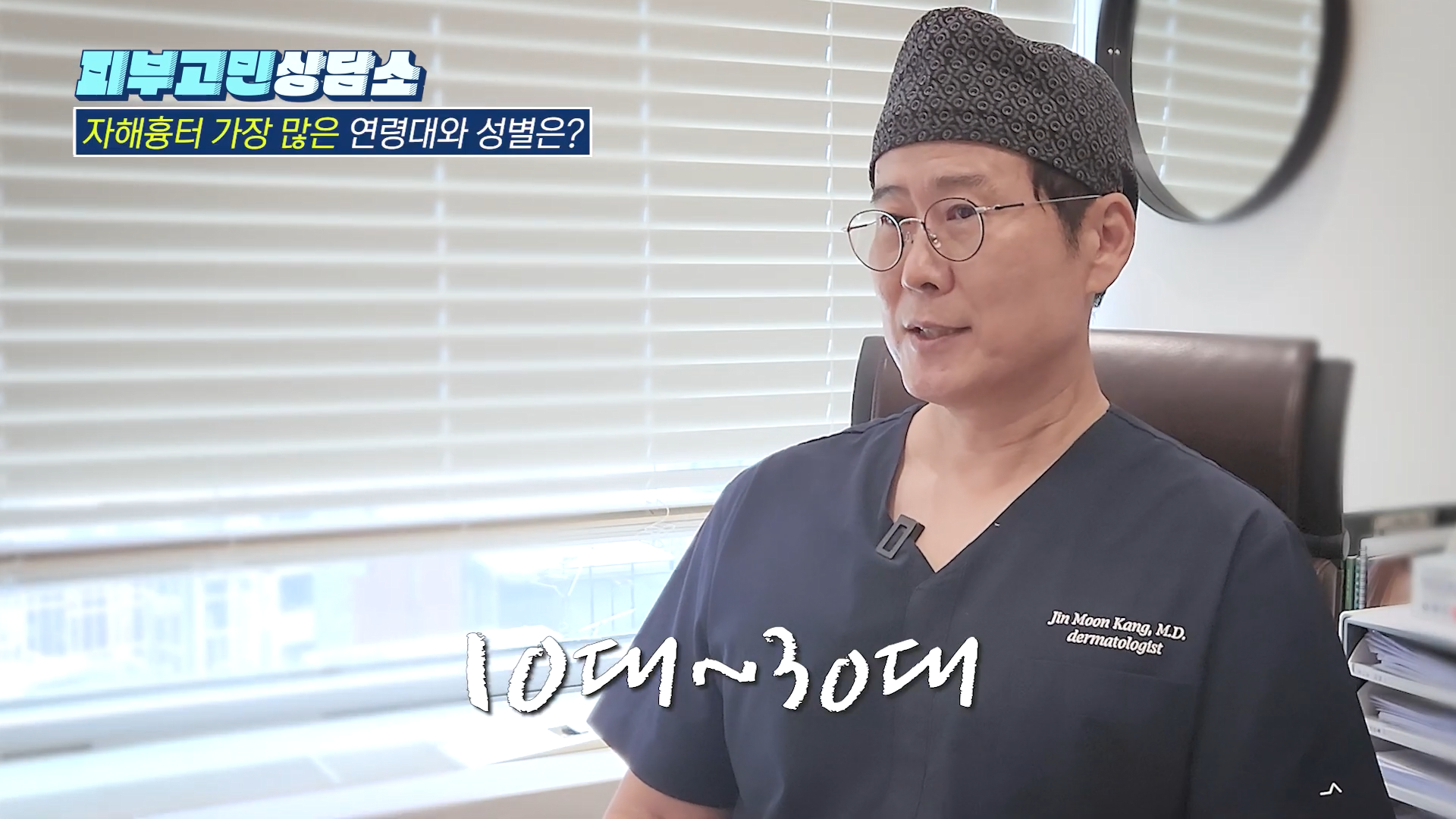
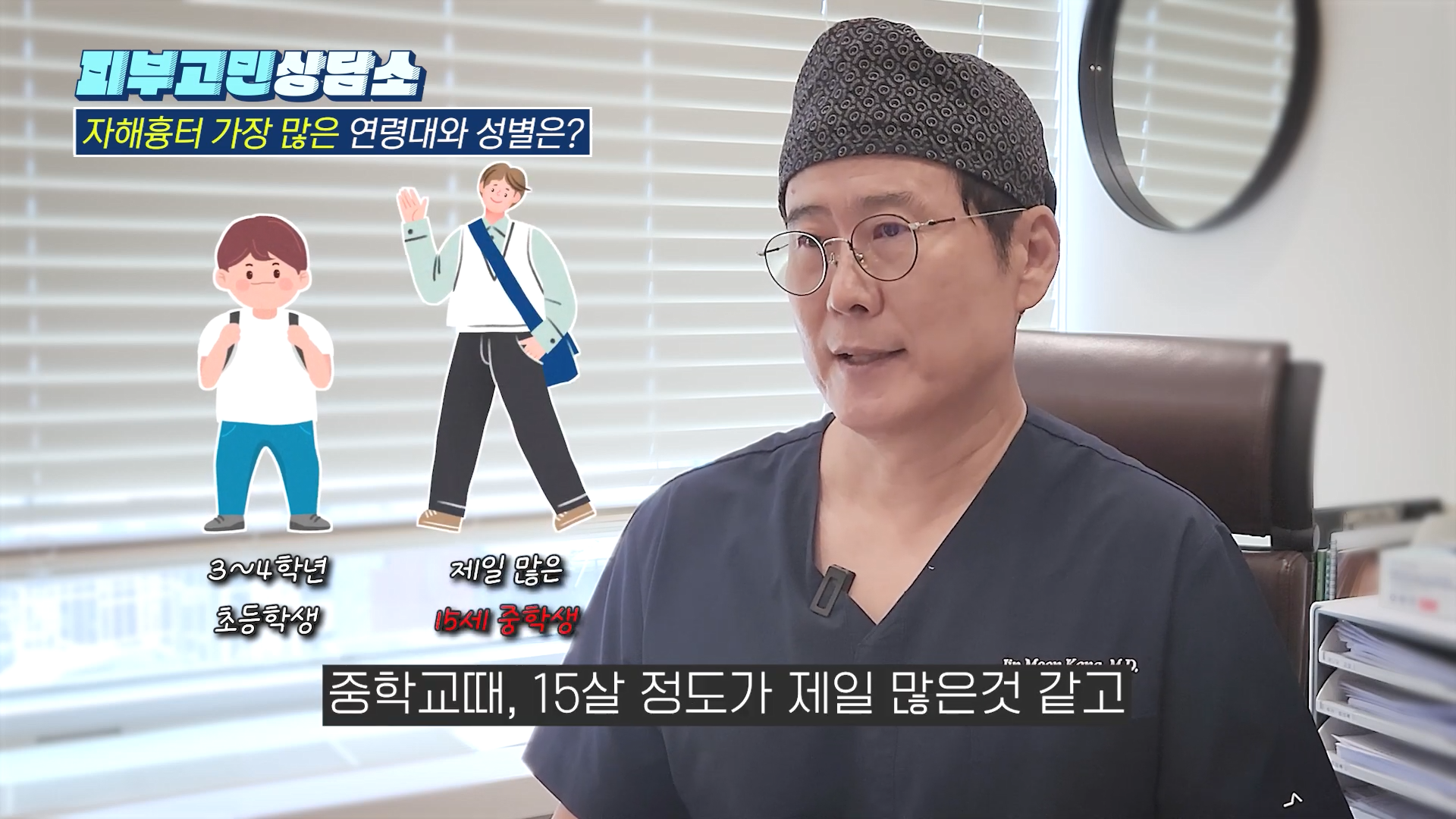
In the clinic, the age range of individuals visiting for self-harm scars is wider than expected. Based on the director's experience, middle school students make up a significant proportion, and in some early cases, it can be seen from elementary school grades 3 or 4.

The most common age group observed is around 15 years old. While it decreases somewhat in the 20s, there are occasional visits. A characteristic is that it overlaps with the sensitive and emotionally volatile period of adolescence.
- Scars sometimes begin in upper elementary school grades
- Most commonly observed around 15 years old
- Frequency tends to decrease somewhat after the age of 20
- Some individuals visit later with old scars, regardless of age
The weight felt by parents and the individual differs
Interestingly, while the child themselves may be rather calm, parents often shed tears. It seems that a strong sense of guilt for not knowing the difficult time their child went through plays a significant role.
There are also individuals who visit, having only discovered old self-harm scars a few days prior. In such cases, it is not uncommon for guardians to weep severely in the consultation room.

Although not a precise statistical survey, based on the director's experience, the proportion of females visiting for self-harm scars was about 2 to 3 times higher than males.
How long does treatment take?

Laser treatment for self-harm scars is not a short-term process. Even for relatively minor scars, it can take 1 to 2 years, and for deep and severe cases, treatment may extend beyond 3 years. Since there can be individual differences, the progress varies from person to person.
Therefore, with a heavy heart, the director recommends combining it with psychiatric treatment if possible. This is because if self-harm recurs after some improvement, all the efforts made so far could be in vain.
The work of erasing scars and caring for the mind must go hand in hand. When skin recovery and emotional recovery progress at the same pace, the results are reported to be more stably maintained.
If you feel burdened during the treatment process or are concerned about when to start, you can comfortably ask through Chat consultation for self-harm scar treatment inquiries.
What changes depending on when the scar occurred?
Scars change slightly in nature based on 6 months after the injury. Scars within 6 months are still in a state where the tissue has not fully settled, making treatment relatively easier.

However, after 6 months, a scar that is 1 year old or 10 years old becomes almost similar in condition. Ultimately, it is more accurate to say that the approach to laser self-harm scar treatment is similar, whether 10 or 20 years have passed.
| Scar Progression Period | General Characteristics |
|---|---|
| Within 6 months | Tissue is less settled, making treatment relatively easier |
| After 6 months | Whether 1 year or 10 years, the condition is generally stable and similar |
For these reasons, starting treatment as quickly as possible can be an advantageous time for self-harm scar management.
Important points to remember for self-harm scar treatment
If you have decided on treatment, keeping the following points in mind beforehand can make you feel much more at ease.
- Treatment is a process to be planned for the long term, not short term.
- The earlier treatment begins, the smoother the progress tends to be.
- Combining with psychiatric treatment can help maintain the results.
- There can be individual differences depending on the depth and location of the scar.
- It is better to discuss the progress with medical staff rather than arbitrarily stopping treatment if it seems to have improved midway.
Yonsei Star Dermatology Sinchon will strive to care for not only skin scars but also emotional scars, based on our extensive clinical experience.
Since the treatment direction varies depending on the type and depth of the scar, if you are curious about your condition and treatment direction, please inquire via Chat consultation for my scar condition and treatment direction.

Chief Director Lee Sang-joo (MD, PhD, Yonsei University College of Medicine and Graduate School, completed dermatology residency at Severance Hospital, President of the Korean Dermatological Association) Chief Director Lee Sang-joo's Profile First published 2024-08-13 / Last reviewed 2026-06-16
This article is for general information purposes, and the condition of scars and treatment progress may vary for each individual. For an accurate diagnosis and treatment plan, please consult with medical staff.