

Many people hoped the area after mole removal would heal cleanly, but over time, red marks or indentations remain, causing concern every time they look in the mirror. Why do mole removal scars occur, and how can they be naturally cared for? To start with the conclusion, treatment should be chosen according to the shape and depth of the scar, and it is not uncommon for a single method to be insufficient.
After removing a mole (nevus, pigmented mole, etc.), scars can remain during the healing process, requiring more careful management. In this article, we will systematically organize treatment methods, from the reasons for mole removal scars to Vbeam Prima, Ultrapulse Alpha, scar injections, and Subcision.
Why Do Scars Remain After Mole Removal?
While mole removal itself may seem simple, the marks left behind vary from person to person. Even with the same procedure, some people heal without a trace, while others are left with red marks or indentations. Situations where scars are likely to remain are generally summarized as follows:
- If tissue damage was extensive or deep during mole removal, excessive scar tissue may form during the healing process.
- If there was sun exposure or excessive heat or friction after removal, it could lead to pigmentation or discolored scars.
- If the removal area is highly mobile and the skin is thin, regeneration may be unfavorable, making scars more prominent.
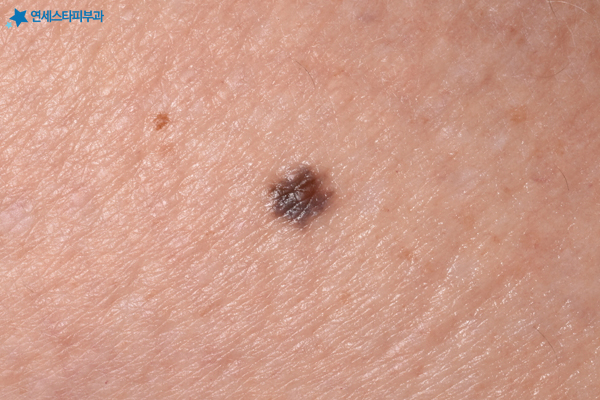
Therefore, those concerned about mole removal scars should not just consider mole removal, but also a scar management strategy for after the procedure.
Treatment Varies According to Scar Shape
Scars are approached differently depending on whether they are raised, sunken, or discolored, as well as their depth and location. In the examination room, even mole removal scars of the same type can have various forms, making it difficult to resolve all of them with a single device.
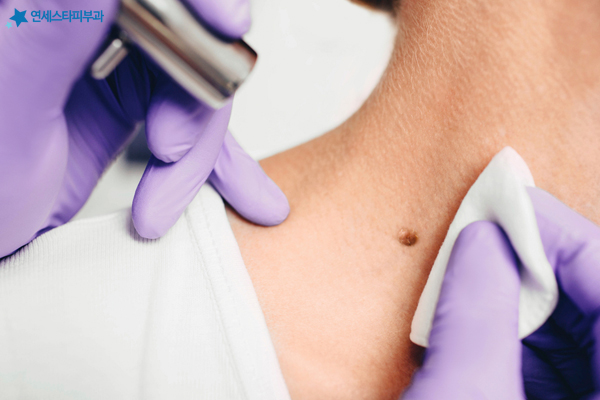
To quickly understand which method is primarily considered for each scar type, a simple table is provided:
| Scar Type | Key Characteristics | Primary Consideration |
|---|---|---|
| Scars with red marks | Prominent vascular, erythematous changes | Vascular laser |
| Sunken and uneven scars | Depressed surface, slow regeneration | Dermal regeneration laser, scar injection |
| Scars pulled inward and sunken | Adhered to fibrotic tissue | Subcision |

Vascular Laser for Red Marks, Regenerative Laser for Indentations
For scars with residual redness, lasers that act on blood vessels are primarily considered. Vbeam Prima selectively destroys hemoglobin within blood vessels while minimizing damage to surrounding tissue, with the expectation of reducing or eliminating redness. As a device specialized for vascular and erythematous changes, it is often considered first for cases where redness remains or blood vessels are prominent after mole removal. Similarly, the same principle is used for concerns like V-beam Facial Redness Treatment.
If the area is sunken or the surface is uneven, a laser that induces dermal regeneration is used. Ultrapulse Alpha and StarLux are CO₂ fractional lasers that penetrate deep into the dermis to induce collagen regeneration within the scar. They are reported to penetrate deeper than existing regeneration-inducing methods while causing less surrounding thermal damage, which can reduce discomfort such as pain.

If the scar after mole removal is sunken or the surface is uneven, or if skin layer regeneration is slow, improvement can be expected with this method. Regenerative lasers are also frequently used for similar depressed scar concerns.
If you are unsure about the cause of your mole removal scar, it is best to first identify the type of scar you have. If you have any questions, please inquire via chat consultation regarding mole removal scar treatment.
Injections and Subcision to Fill and Lift from Within
While lasers address the surface, scar injections and Subcision approach the skin from within.
Scar injection is a method of administering drugs that aid collagen regeneration beneath the scar tissue remaining after mole removal. Rejuran Skin Boosters containing PDRN are included in this category. This approach not only treats the scar from above with a laser but also replenishes volume and activates tissue from below. It is used for severely sunken or raised mole removal scars, or areas where regeneration is slow after removal.
Subcision is a procedure that uses a special needle at the boundary between the dermis and subcutaneous fat to break down fibrotic tissue that is adhered and pulling the skin down from beneath, thereby inducing the scar to rise. This method is well-suited if the scar formed after mole removal is sunken due to being pulled inward by the skin's internal structure.
It is reported that a combined approach, applying vascular lasers, dermal regeneration lasers, and Subcision together, is more effective than using each laser alone.
Subcision can be performed in a relatively short time with a quick return to daily life, but there is a possibility of bruising or internal bleeding, so choosing a medical professional with sufficient treatment experience is safer. If the scar is deep or the scar tissue is firm, Surgical Scar Revision may also be considered.

Mole Removal: Scarring Must Be Considered in Advance
Nowadays, removing visible moles on the face has become relatively simple, and many people undergo the procedure. However, if the subsequent scarring is not considered, concerns may grow later.
If you are already concerned about mole removal scars, it is advisable to seek a diagnosis from a dermatologist who can appropriately apply regenerative lasers such as Vbeam Prima, Ultrapulse, and StarLux, or scar injections and Subcision, and then establish a customized treatment plan. Broadly speaking, mole removal marks share characteristics with cosmetic surgery scars, so accurately understanding the nature of the scar is the first step.

Treatment is About Timing, Early Care is Crucial
Many scars, including those formed after mole removal, often require more than a single treatment. It can take considerable time and requires a complex approach with ongoing progress checks. While advancements in lasers and treatment methods allow for gradual improvement even in older cases, the most desirable approach is to start appropriate treatment at an early stage before the scar fully settles.
Here are some important points to remember for immediate post-mole removal care:
- Be diligent about sun protection to prevent direct UV exposure to the treated area.
- Do not forcibly remove scabs; let them fall off naturally.
- Avoid excessive heat, friction, and irritating cosmetic products.
- If redness or indentations persist for a long time, do not neglect them and seek medical consultation.
If you want to find out which treatment combination is right for your scar, feel free to ask using the button below.
💬 Consult NowYonsei Star Dermatology Sinchon will continue to provide explanations and treatment methods for various factors that can hinder clear skin, helping you with your concerns. Thank you for reading this long article.

Chief Director Lee Sang-ju (MD, PhD, Yonsei University College of Medicine and Graduate School, completed dermatology residency at Severance Hospital, President of the Korean Society for Dermatology) Chief Director Lee Sang-ju's Profile First Published 2025-11-21 / Last Reviewed 2026-06-16
This content is for general information purposes only, and the shape and recovery pattern of scars may vary individually. Therefore, please consult with medical staff for an accurate diagnosis and treatment plan.