
![RePott Laser Reviews: Reducing Side Effects When Removing Lentigo and Seborrheic Keratosis | [Yonsei Star Dermatology Sinchon]](/_next/image?url=https%3A%2F%2Fagqdgbuateknhwpocrgu.supabase.co%2Fstorage%2Fv1%2Fobject%2Fpublic%2Fsources%2Fbbf3bebe-45b6-4415-bd04-bda18b2cac0f%2Fblog-images%2F223864438542_00_525793f09271.jpg%3Ftype%3Dw966&w=3840&q=75)
Blemishes that are clearly visible on the face, such as lentigo and seborrheic keratosis, tend to darken over time. So, once pigment appears, does it really take a long time to lighten? If the pigment is located in the epidermal layer, you can expect changes in a relatively short number of sessions with a laser that selectively targets the pigment. The RePott Laser is a device that has recently gained attention for epidermal pigment issues.
Many people hesitate to start treatment for pigment problems due to the perception that the treatment period is long, only to visit the clinic after the lesions have become darker. As exposure to UV rays continues, the entire face can appear dull, so in the consultation room, those who received early consultation tend to feel much less burdened by management.
Lentigo and Seborrheic Keratosis: Why is Epidermal Pigment Treatment Key?

Lentigo and seborrheic keratosis are common pigmentary disorders that appear as brown or dark brown spots where melanin pigment accumulates in the epidermal layer. As UV exposure accumulates, the color can become darker and the area can widen, so it is better to accurately assess the condition and determine the treatment direction rather than leaving it untreated.
The RePott Laser is a device designed to selectively target melanin pigment in the lesion. It focuses on pigment while minimizing damage to surrounding healthy skin, which is reported to result in relatively less burden during the recovery process. However, even for the same lentigo, the response may vary depending on the color density, location, and skin type.
Features of RePott Laser and Expected Changes

Existing pigment lasers often took a long time to show changes and were quite stimulating, requiring consideration of subsequent issues such as post-inflammatory hyperpigmentation or laser-induced scars.
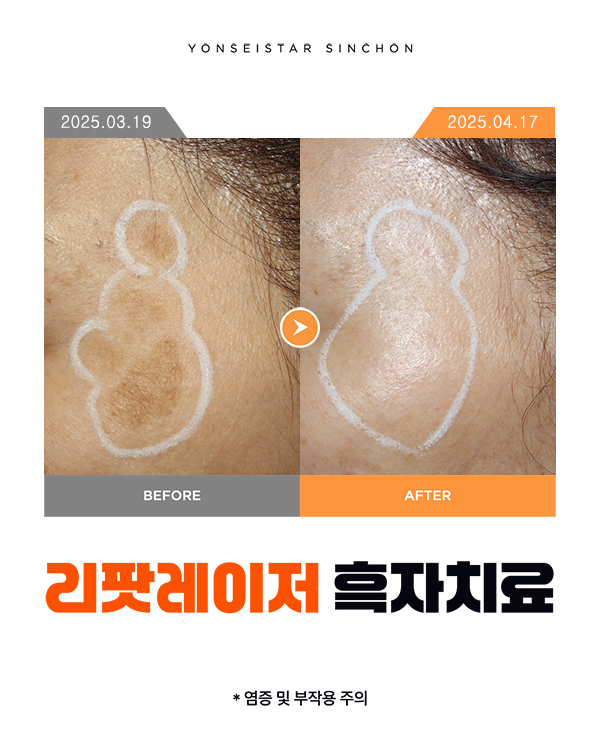
RePott Laser is reported to be relatively easy to return to daily life after treatment, as it handles pigment with strong energy while causing relatively less redness or irritation. This characteristic is why reviews often mention seeing changes within 1-2 sessions. However, the number of sessions and results can vary depending on the condition of the lesion, so it is difficult to generalize.

Pigmentary disorders on the face can darken and spread if left untreated for a long time, so it is recommended to check the condition and start management early.
As spring approaches and the sunlight intensifies, the possibility of pigment problems due to UV rays also increases. If you want to address lentigo or seborrheic keratosis, it is best to first check if the method is suitable for your skin. If you are unsure whether your current pigment problem is lentigo or another pigmentary disorder, you can also refer to the explanation of Epidermal Pigment Removal.
How to Approach Treatment Period and Sessions

Most pigment removal lasers are not completed in a single session. As a result, some people give up treatment midway if the period becomes long. RePott Laser is reported to generally reduce the number of treatment sessions, which is considered a characteristic that can alleviate the burden of time and schedule.
However, the same number of sessions does not apply to everyone. The required number of sessions varies depending on the depth and density of the pigment and the skin's regeneration rate, so it is important to establish a plan tailored to your condition during the consultation before starting.
If you are curious whether RePott Laser is the right method for you, you can check first by inquiring via chat about lentigo and seborrheic keratosis pigment treatment.
Post-Procedure Care: A Stage That Determines the Outcome

(The above data is an unedited original and is used with prior consent to aid understanding of the treatment.) Post-procedure care is as crucial as the procedure itself in determining the results.
After RePott Laser, the clinic applies a DuoDERM patch, and it is generally recommended to keep it on for about two weeks. DuoDERM creates an environment similar to healthy skin, reducing external irritation and aiding in damage recovery. If the regeneration is slow or the skin type is particularly delicate, it may be necessary to keep it on for longer than the recommended period.
Here are some important care points to follow at home:
- Adhere to the patch application period advised by the clinic after the procedure, adjusting it to your skin condition.
- If you have an allergic reaction to the patch, do not force it; instead, moisturize more thoroughly with a regenerating cream.
- Moisturize frequently to prevent skin dryness.
- Consistently use sunscreen to reduce the possibility of additional hyperpigmentation.
- If recovery is slow or no changes are observed, consult with medical staff again instead of self-diagnosing.
After the procedure, dullness may lighten, but temporary additional hyperpigmentation may appear. This usually recovers gradually over time, but if there is no sign of improvement, Customized Whitening Solution such as toning can be added to aid improvement.
As Important as the Equipment: How to Choose a Clinic

The performance of the RePott Laser equipment is confirmed in many reviews, but even with the same equipment, results can vary depending on how it is operated. Lentigo and seborrheic keratosis differ in their cause, location, and lesion condition for each person, so the judgment of medical staff who plan comprehensively is important.
Here are some items to check when choosing a clinic:
| Check Item | Key Point |
|---|---|
| Skin Knowledge | Does the clinic sufficiently explain the causes and types of pigmentary disorders? |
| Equipment Operation | Does the clinic adjust laser energy and depth according to the condition? |
| Procedure Experience | Does the clinic have sufficient experience in treating pigmentary disorders such as lentigo and seborrheic keratosis? |
| Aftercare | Is post-procedure care specific and flexible? |
| Side Effect Management | Are there measures to address changes such as hyperpigmentation? |
No matter how good the equipment is, it must be operated according to the condition to achieve the desired changes. To find a complete treatment plan, it is recommended to have a thorough consultation before the procedure. If you have other lesions such as moles or warts along with lentigo or seborrheic keratosis, it may be helpful to also consult about Laser Lesion Removal.
If you are curious about a treatment plan tailored to your skin condition, try inquiring via chat about pigment treatment consultation.


Chief Director Lee Sang-joo (MD, PhD, Yonsei University College of Medicine and Graduate School; completed dermatology residency at Severance Hospital; President of the Korean Dermatological Association) Chief Director Lee Sang-joo's Profile First Published 2025-05-13 / Last Reviewed 2026-06-16
The response and recovery speed of pigment treatment may vary individually, and an accurate diagnosis and treatment plan should be confirmed through a face-to-face consultation with medical staff.