
![Recommended Laser Treatment for White Stretch Marks, Treatment Timing, Diet | [Yonsei Star Dermatology Sinchon]](/_next/image?url=https%3A%2F%2Fagqdgbuateknhwpocrgu.supabase.co%2Fstorage%2Fv1%2Fobject%2Fpublic%2Fsources%2Fbbf3bebe-45b6-4415-bd04-bda18b2cac0f%2Fblog-images%2F223713811111_00_ecd9686c623a.jpg%3Ftype%3Dw966&w=3840&q=75)
Many people are surprised to discover skin marks they hadn't noticed before after experiencing rapid body changes. Stretch marks, appearing as white or red stripes, are a common example; the formal medical term is striae distensae. These are marks left when the skin cannot keep up with the speed of growth or weight gain, causing damage to the dermis.
The most frequently asked question is simple: "Can already white stretch marks be removed?" To answer directly, while not as quick as the red stage, laser treatment in the white stage can still show good results.

Why do stretch marks, once formed, not disappear?
Like scars, once stretch marks are formed, they do not disappear naturally and remain on the body. This is because the collagen and elastic fibers in the dermis have broken. Many people assume they will return to normal over time and leave them as they are, but it's important to understand that they do not heal on their own.
The skin surface becomes uneven and its color differs from the surrounding healthy skin, making them noticeable. Therefore, how you respond when you first discover the marks greatly influences the subsequent outcome.

Who gets them, and where do they commonly appear?
Rapid body changes are the key cause. They often appear on the thighs, abdomen, buttocks, and chest in the following cases:
- Adolescents experiencing rapid growth spurts
- Pregnant women nearing childbirth
- Cases of rapid weight gain in a short period
- Cases where chest and shoulder muscles have rapidly grown due to intense exercise
The commonality is that in all these situations, the dermis cannot keep up with the rate of skin expansion. In consultations, we often see surprisingly many people who missed the optimal treatment time, thinking, "I thought they would disappear when I lost weight."

Red stretch marks vs. white stretch marks: When to treat?
It is widely known that stretch marks initially have a reddish tint. However, in some cases, they may appear white from the beginning, so it is generally best to start treatment as soon as the marks are discovered, regardless of color.
While treatment response is reported to be faster and outcomes better in the red stage, it is not impossible to remove them in the white stage. It is important not to be discouraged and to start management at an appropriate time.
Regardless of color, dermal damage becomes established over time, so it is advantageous to have them evaluated as early as possible. If you have similar concerns, you may also want to review Treatment Direction for Red Stretch Marks and Characteristics of White Stretch Marks.

Does diet help, or does it cause more?
Stretch marks typically appear with weight gain. Therefore, people often ask if dieting is meaningful for prevention. While dieting alone has limitations in removing existing stretch marks, it can help prevent additional ones from forming.
There's also a common misunderstanding. Sometimes, as weight is lost, existing stretch marks that were previously hidden by thicker skin become visible. At this point, people might feel, "I dieted, and now I have stretch marks."
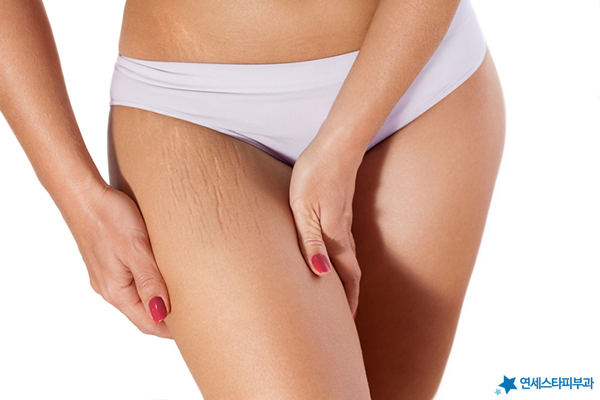
The stretch mark area is much thinner than the surrounding skin. When you gained weight, it might have just looked thin, but when you lose weight, that area can appear sunken, making it more visible.
So, when is the best time to receive treatment, before or after dieting? If it's an early stage, we recommend starting immediately when noticed, regardless of when you diet. If it's already progressed to the white stage, there isn't a precisely fixed optimal time, but since it's not a short-term fix, starting sooner is generally more advantageous.
Some people who exercise regularly take steroid hormones or protein supplements, which can create an environment where stretch marks form more easily. They might also appear in areas where muscles grow rapidly, such as the chest or shoulders. During treatment, we recommend reducing intense exercise and temporarily discontinuing related supplements.
If you have any questions, please inquire via chat consultation for stretch mark laser treatment

How are white stretch marks approached with lasers?
For old white stretch marks, CO2 carbon dioxide lasers like Ultrapulse Encore are used, and applying the Pinhole Technique in conjunction is reported to yield high satisfaction even for long-standing marks. This method stimulates the dermis to induce the regeneration of broken collagen.
For red stage marks, Vbeam Prima, known as a representative vascular laser, helps improve initial redness. An appropriate combination of equipment is planned according to the condition. The lasers mentioned above generally have lower pain during treatment compared to other devices, which is an advantage as it makes consistent treatment less burdensome.
Understanding the overall Stretch Mark Treatment Process first can help you plan a treatment tailored to your condition.
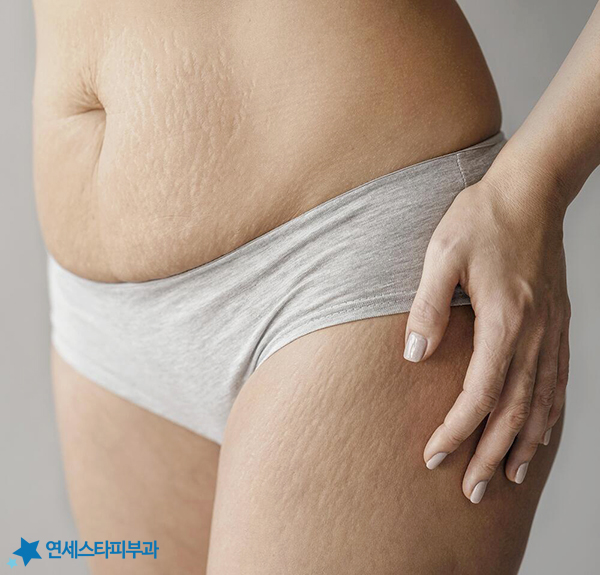
Things to remember for at-home care
If you receive hospital treatment, we will also guide you on suitable products, most of which focus on moisturizing ingredients. This is because dry skin can worsen stretch marks. When managing at home, it's good to keep the following in mind:
- Maintain sufficient moisture to prevent skin dryness
- If product selection is difficult, start with basic moisturizers like Vaseline
- Consider creams as a supplementary measure, as they may not deeply affect the dermis
- Avoid intense exercise and rapid weight changes
- Get an early evaluation if marks appear, rather than self-diagnosing and neglecting them
It is difficult to expect noticeable changes with cream products alone. It is more realistic to use them for management and prevention in conjunction with laser treatment.

In summary
White stretch marks do not disappear naturally, but outcomes are reported to be better the earlier treatment begins, regardless of color. Whether in the red or white stage, the key is not to delay once marks are discovered. Dieting contributes to prevention, and moisturizing care supports the treatment.
If you're curious about the stage of your stretch marks or which equipment is right for you, we can assess them based on photos and the affected area.
💬 Consult Now
Dr. Sang-Joo Lee, Chief Director (MD, PhD, Yonsei University College of Medicine and Graduate School; completed dermatology residency at Severance Hospital; President of the Korean Dermatological Association) Dr. Sang-Joo Lee's Profile First Published 2025-01-03 / Last Reviewed 2026-06-16
The progression and response of stretch marks vary from person to person, so an accurate assessment of your condition and treatment plan requires consultation with medical staff through an examination.