

Many people feel disheartened every time they look in the mirror because of the dull marks left on their skin after acne subsides. The first question that often comes to mind is, "Will these marks disappear on their own over time, or have they become permanent scars?" To answer directly, the treatment approach will completely change depending on whether your condition is pigmentation or a scar, because their causes are different.
Pigmentation vs. Scars: What's the Difference?
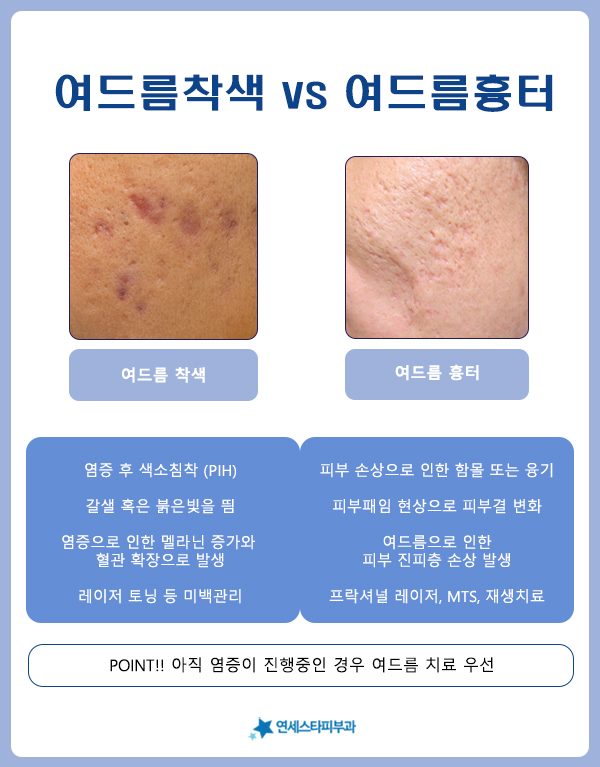
While often broadly referred to as 'acne marks,' these two conditions differ from their very origin. Acne pigmentation refers to discoloration or vascular marks that appear after skin injury, essentially a change in skin surface color. While it may gradually fade over time, it can persist for years if not properly managed. In contrast, a scar involves actual damage to the dermal layer, resulting in depressed or raised skin, meaning the skin's form, not just its color, has changed.
| Category | Acne Pigmentation | Acne Scar |
|---|---|---|
| Essence | Discoloration, vascular marks | Dermal structure damage (unevenness) |
| Surface Change | Flat, only color differs | Depressed or raised |
| Time Course | May gradually fade | Difficult to heal naturally |
| Approach | Primarily pigment/redness care | Primarily structural regeneration treatment |
If you're unsure which category your marks fall into, reviewing the Acne Scar and Acne sections together may help you distinguish them.
Why Does Pigmentation Last So Long?
Acne pigmentation is not just a simple pigment issue but a phenomenon that appears after inflammation subsides. In the process of healing inflammation, the skin activates melanin cells as a defense mechanism, resulting in dull pigmentation at the site of the problem lesion.
There are several reasons why this pigmentation can persist for a long time:
- When subtle inflammatory reactions remain in the skin even after visible acne has disappeared.
- When pigment has settled deeper than the epidermis.
- When melanin is re-stimulated by UV exposure.
- When irritation is repeated due to excessive self-extraction or strong exfoliation.
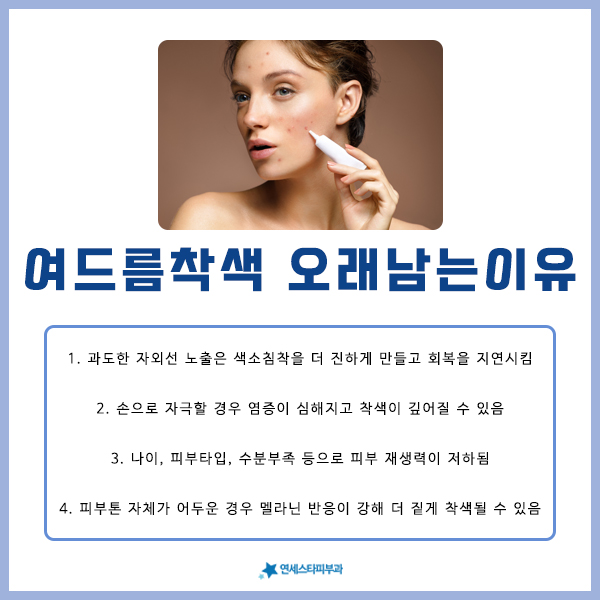
Especially if there is still inflammation in the skin and strong irritation is applied carelessly, there is a high risk that the pigmentation may become even darker. This is why the intensity and frequency of laser toning treatments can vary from person to person, even for the same procedure.
If acne is still active, toning management should be performed after first addressing factors that could cause scars or pigmentation, to improve dullness without worrying about recurrence.
In the clinic, we often see cases where people rush into pigment treatment while active acne is still present, eager to quickly erase the marks. However, simply changing the order can alter the outcome. If you are unsure which stage your condition is in, we recommend checking first through acne mark related chat consultation.
How Long Does Treatment Take?
Pigmentation can fade over time, but the speed and degree of improvement vary from person to person and depending on daily management habits. It is entirely possible that a method that worked well for someone else may not lead to significant changes for you.

Laser treatment for pigmentation is usually performed 5 or more times at 1-2 week intervals. If the interval is longer, the dormant pigment may resurface, reducing the treatment effect. Applying light energy of a specific wavelength to the skin works by destroying melanin or constricting blood vessels.
Representative devices include picotoning or IPL. In the past, nanosecond laser irradiation (one billionth of a second) was common, but with the advent of picosecond devices (one trillionth of a second), PicoWay Laser, which is used not only for pigmentation but also for Tattoo Removal, has become established.
Among them, PicoWay Laser is a superior device, reported to selectively treat melanin pigment while minimizing damage to surrounding skin. Toning helps break down deeply embedded pigment in the skin to facilitate its expulsion and reduces redness caused by inflammation, helping to brighten and even out skin tone. However, as individual responses vary, it is crucial to carefully assess the condition and proceed with experienced medical staff.
Choosing the right equipment for the specific condition is also key. Depending on the skin condition, appropriate lasers or regenerative treatments may be combined. In cases of severe redness, Vbeam Prima, which targets excessively developed blood vessels, may be added to alleviate Facial Redness symptoms. If tone correction is needed along with pigmentation, a customized approach like a Customized Whitening Solution can be considered.
Skin Types Prone to Pigmentation
If pigmentation is deeply progressed, the treatment period may be longer. Individuals with the following characteristics may be more susceptible to acne pigmentation, so it's advisable to pay attention in advance:
- Oily skin with high sebum secretion
- Generally darker skin tone
- Sensitive skin that easily reddens with irritation
- Frequent outdoor activities with high UV exposure
Most acne pigmentation fades over time, but depending on skin type and management habits, it can persist for a long time or remain dark, requiring additional treatment.

Home Care to Complement Treatment
To maintain good skin health, consistent home care is as important as clinic treatment. Especially, UV protection and the use of whitening ingredients are fundamental for pigmentation management.
- Apply sunscreen generously 30 minutes before going out and reapply throughout the day.
- Consistently use ingredients that help with whitening, such as Vitamin C or Niacinamide.
- Avoid squeezing or irritating active acne with your hands.
- Avoid excessive exfoliation or strong scrubs.
- Continue consistently even if there are no short-term changes.

This is an area where long-term effort helps, so maintaining consistency even if changes aren't immediately visible will positively contribute to soothing uneven marks.
When Should You Seek Professional Help?
For deep or old pigmentation, home care alone has limitations, and combining it with appropriate treatment at a dermatology clinic can help accelerate recovery. If depressed scars are present, a different approach than pigment treatment is needed, focusing on structural regeneration like Premium Customized Acne Scar Care. Therefore, accurately distinguishing the nature of the marks is paramount.
Rather than stressing over skin marks, it's better for both your mind and skin to seek medical consultation at the appropriate time to quickly find the direction for improvement. If you're unsure whether your marks are pigmentation or scars, or what order to approach them in, feel free to ask through the consultation below.
Chief Director Lee Sang-Joo (MD, PhD, Yonsei University College of Medicine and Graduate School; Completed Dermatology Residency at Severance Hospital; President of the Korean Dermatological Association) Chief Director Lee Sang-Joo's Profile First Published 2025-05-19 / Last Reviewed 2026-06-16
Individual differences exist in skin condition and treatment response. Accurate diagnosis and treatment direction must be determined through in-person consultation with medical staff.