


This is the most common question asked by those seeking tattoo removal laser consultations in Sinchon. The number of tattoo removal sessions is difficult to state definitively. This is because various factors interact, including the tattoo's color, size, depth, the type of ink used, and the individual's skin condition and immune response.
However, even for the same tattoo, the total number of sessions and duration may vary depending on the equipment used and the treatment method.
The number of sessions is determined by expulsion efficiency
Tattoo removal involves repeatedly breaking down pigment particles with a laser, and then the body's immune cells absorb and expel the debris. How efficiently this process occurs determines the total number of treatment sessions.


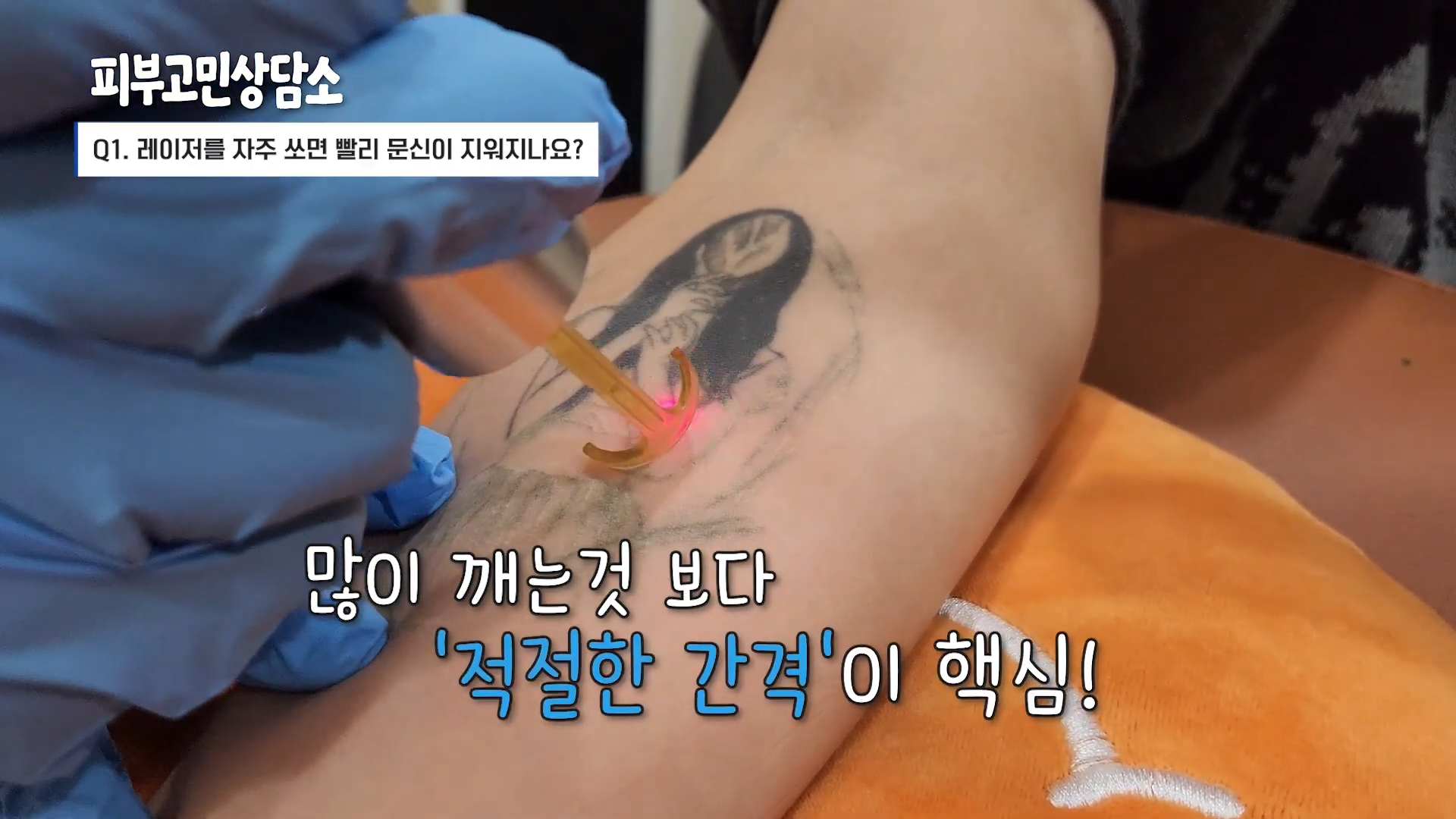
While it's difficult to definitively state the number of tattoo removal sessions, choosing the right equipment and treatment method can help reduce the total number of sessions and duration.

How Pico Laser affects the number of sessions
Pico lasers deliver energy in picosecond-unit ultrashort pulses. This method breaks down pigment particles more finely by delivering energy in a much shorter time than traditional nanosecond lasers.
| Characteristic | Relevance to the number of sessions |
|---|---|
| Breaks down pigment more finely | Macrophages can absorb and expel it more easily, increasing the efficiency of pigment reduction during the recovery period between treatments. |
| Supports various wavelengths | With 532nm, 730nm, 785nm, and 1064nm, it can target not only black and white but also colored tattoos like red, blue, and green, corresponding to each color. |
| Minimizes thermal damage to surrounding tissue | Reduced recovery burden helps maintain a stable interval until the next treatment. |
Colored tattoos are often difficult to treat with single-wavelength lasers, leading to an increased number of sessions. This is why equipment capable of multi-wavelength treatment affects overall efficiency. You can compare different wavelength configurations in the Nd:YAG Tattoo Removal guide.

Request to maximize output
Some people occasionally ask to maximize the laser output, hoping to remove their tattoo faster. However, this is the wrong approach.
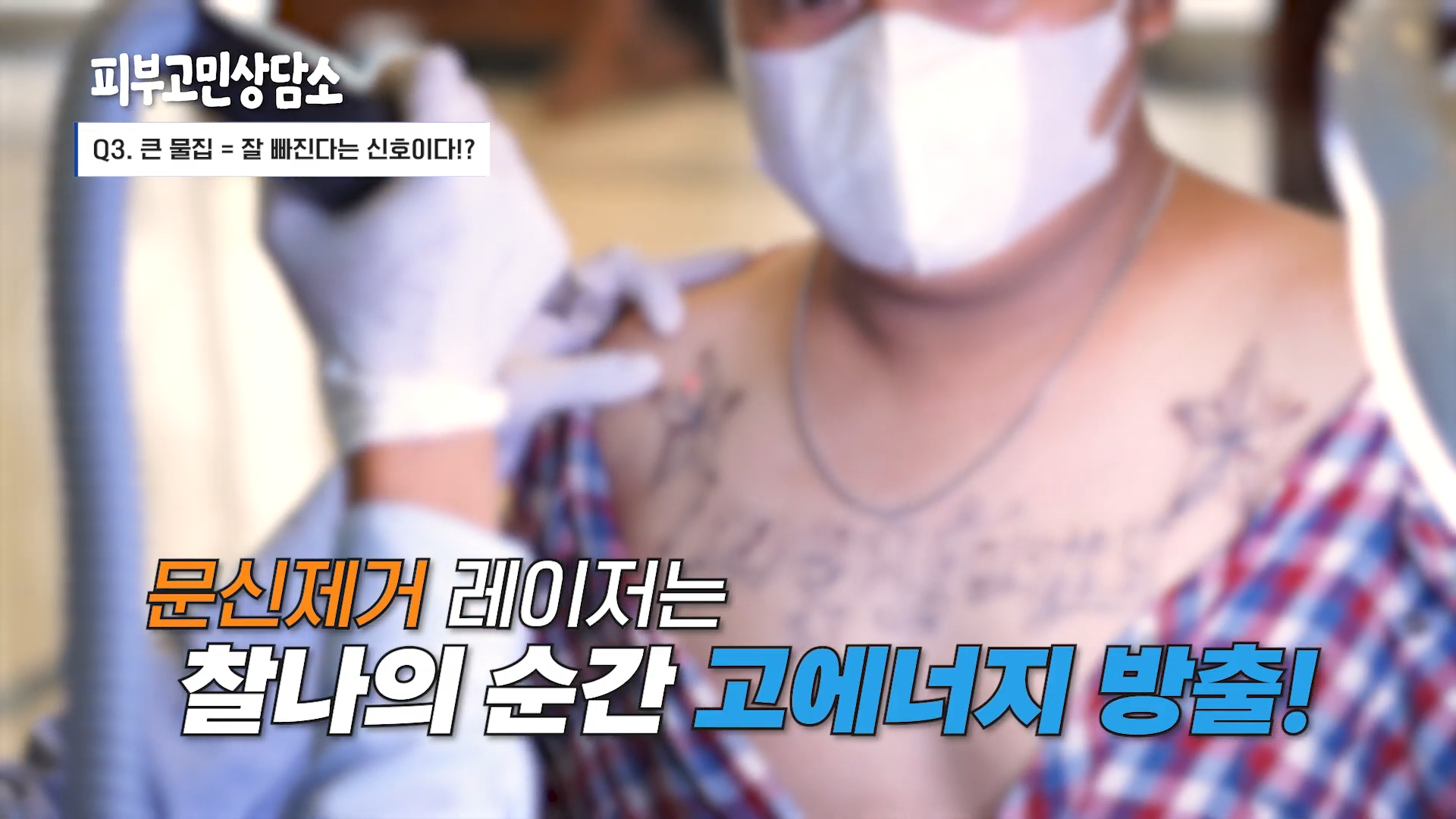


Laser intensity and tattoo removal speed are not proportional.
After pigment particles are destroyed, the body needs sufficient time to absorb and expel the debris. Excessively high output does not speed up the expulsion process.
What excessive output leaves behind
On the contrary, unnecessarily high output can cause unwanted damage to surrounding skin tissue besides the pigment.
- Scars
- Pigmentation
- Fibrosis, or hardening of the skin
It is safer and more efficient to use appropriate output to minimize skin damage and allow sufficient treatment intervals for the body to expel the pigment.

It's not decided by one piece of equipment
Pico tattoo removal equipment alone does not solve everything. Various factors must align to help reduce the total number of sessions and duration.
The R-Zero Technique is a technology that rapidly removes the white bubbles formed on the skin surface after laser irradiation using a special medication, allowing for up to 4 repeated irradiations within one session. This can contribute to reducing the total number of tattoo removal sessions by treating more pigment in a single visit without excessively increasing intensity. Detailed information can be found in the R-Zero Pico-Frectat Tattoo Removal guide.
Added to this is the practitioner's judgment. Designing the wavelength, output, and treatment interval based on the tattoo's color, depth, and skin reaction is as important as the equipment. An experienced practitioner adjusts the next plan by checking the skin condition and the degree of pigment reduction at each session. This customized approach plays a key role in reducing unnecessary sessions and lowering the risk of side effects.
How many sessions will my tattoo take?
Even for the same design, the plan varies depending on the color, depth, and skin condition. You can see the treatment flow in the Tattoo Removal Treatment Guide, and if you're curious about the number of sessions, you can easily ask via Chat now.
Authored · Medically Reviewed by Representative Director Dr. Lee Sang-joo (Dermatologist) Former Resident in Dermatology at Severance Hospital · Former Professor of Dermatology at Yeongdong Severance Hospital Former Chief of Dermatology at the National Police Hospital · Current Adjunct Professor, Department of Dermatology, Yonsei University College of Medicine View Medical Team Introduction
First Published 2026-06-09 · Last Reviewed 2026-07-29
This article contains general medical information and does not substitute for individual diagnosis and treatment. Results and recovery may vary from person to person.