
When considering tattoo removal, the two most common questions are: how long does it take, and how much does it hurt?
Here, we explain the sequence and methods our clinic uses for tattoo removal, and how we reduce the burden of pain.
Up to four passes at once with a special medication
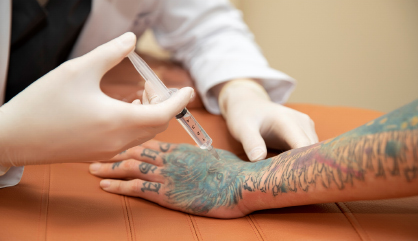
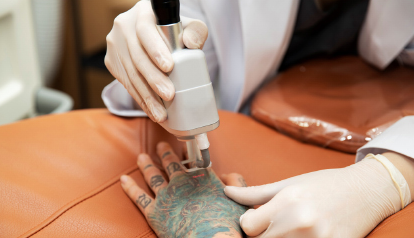
Our clinic proactively adopted the R-Zero Technique, a treatment method gaining popularity overseas.
The R-Zero Technique involves applying a special medication to the tattooed area. This allows for up to four repeated laser passes in a single session. The detailed procedure is outlined in R-Zero Pico-Frectat Tattoo Removal.
A method reported in an academic journal based on Korean clinical trials
Dr. Sang-Joo Lee, our lead director, has published clinical results of the R-Zero Technique on Korean patients in the Journal of the Korean Society for Laser Medicine and Surgery.
Even with the same technique, results can vary depending on skin color and pigment response. Therefore, we apply the experience gained from Korean patient data to our treatments.
We don't postpone scar concerns
Our clinic has a dermatologist with over 20 years of experience in scar treatment. This extensive experience and know-how in scar management are directly applied to tattoo removal.
We don't just focus on removing the tattoo; we also address potential post-treatment issues like pigmentation and scarring. We develop treatment plans that aim to minimize post-procedure scars through a scar prevention system.
- For methods that address scar prevention, please refer to Pinhole for Burn & Surgical Scar
- For methods that address remaining pigmentation, please see Pico·Dual·Gold-Diamond Toning
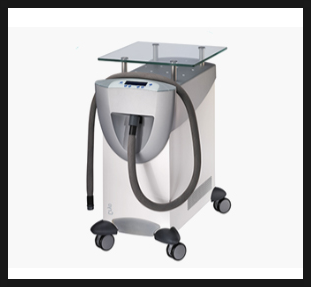
Towards reducing the burden of pain
Many people worry about pain as much as the duration or progress of tattoo removal.
Therefore, our clinic offers various anesthesia methods to alleviate pain during treatment and operates a low-pain system to reduce the burden of discomfort.
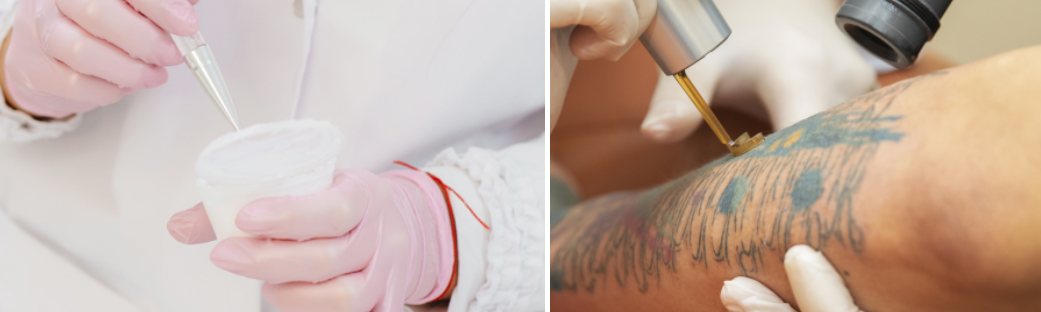
Combining topical anesthetic cream and air cooling
| Anesthesia Method | Procedure |
|---|---|
| Topical Anesthetic Cream | Cream is applied for local anesthesia |
| Cryo-anesthesia Air Cooling | Cold air is delivered deep into the skin to alleviate pain |
| Non-sedation Nitrous Oxide Anesthesia | Treatment is performed while the patient is conscious |
Combining topical anesthetic cream and air cooling significantly reduces the burden of pain, allowing many individuals to undergo treatment without much difficulty. Individual pain perception may vary.
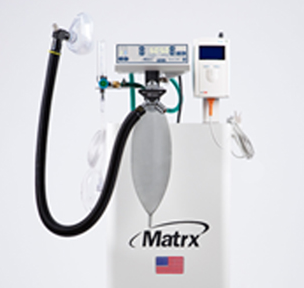
Why we use nitrous oxide instead of general anesthesia
Some individuals occasionally request general anesthesia due to fear of the procedure. However, tattoo removal is a procedure, not a major surgery.
General anesthesia can make communication difficult during the procedure, posing clear risks.
Therefore, our clinic uses non-sedation nitrous oxide anesthesia. Since the procedure is performed while the patient is conscious, it is a safe method even for children.
Considering pain, effectiveness, time, and side effects together is what our clinic believes tattoo removal should be. The overall treatment flow can be found in Tattoo Removal Treatment Guide, and for individual consultations, please contact us via chat now.


Authored and Medically Reviewed by Lead Director Sang-Joo Lee (Dermatologist) Graduated from Yonsei University College of Medicine · Completed Dermatology Residency at Severance Hospital · Served as Professor of Dermatology at Yeongdong Severance Hospital Served as Chief of Dermatology at National Police Hospital · Author of "Pigmentary system," "Medical Skincare" View Medical Staff Profile
First Published 2024-09-24 · Last Reviewed 2026-07-29
This article contains general medical information and does not substitute for individual diagnosis and treatment. Results and recovery progress may vary by individual.