


The reasons for getting a tattoo vary, but the reasons for deciding to remove one are surprisingly similar. Many people decide to remove tattoos for their children.
Tattoos do not disappear in one or two sessions. The time it takes varies depending on the color, size, and method of tattooing, so if you have a deadline, it's better to plan backward from that point.

Between Expression of Individuality and Regret
In the past, tattoos were often seen as a symbol of a specific group, but over the past decade, they have become a way to express individuality, leading to a significant increase in people getting them. However, in Korea, the perception of tattoos is still not very lenient, so cases of regret for various reasons are also increasing.
In one community, a post about children discussing a parent with a tattoo became a hot topic. Such stories can sometimes be the catalyst for deciding to remove a tattoo.


The Decision Point for Removal is Generally Threefold
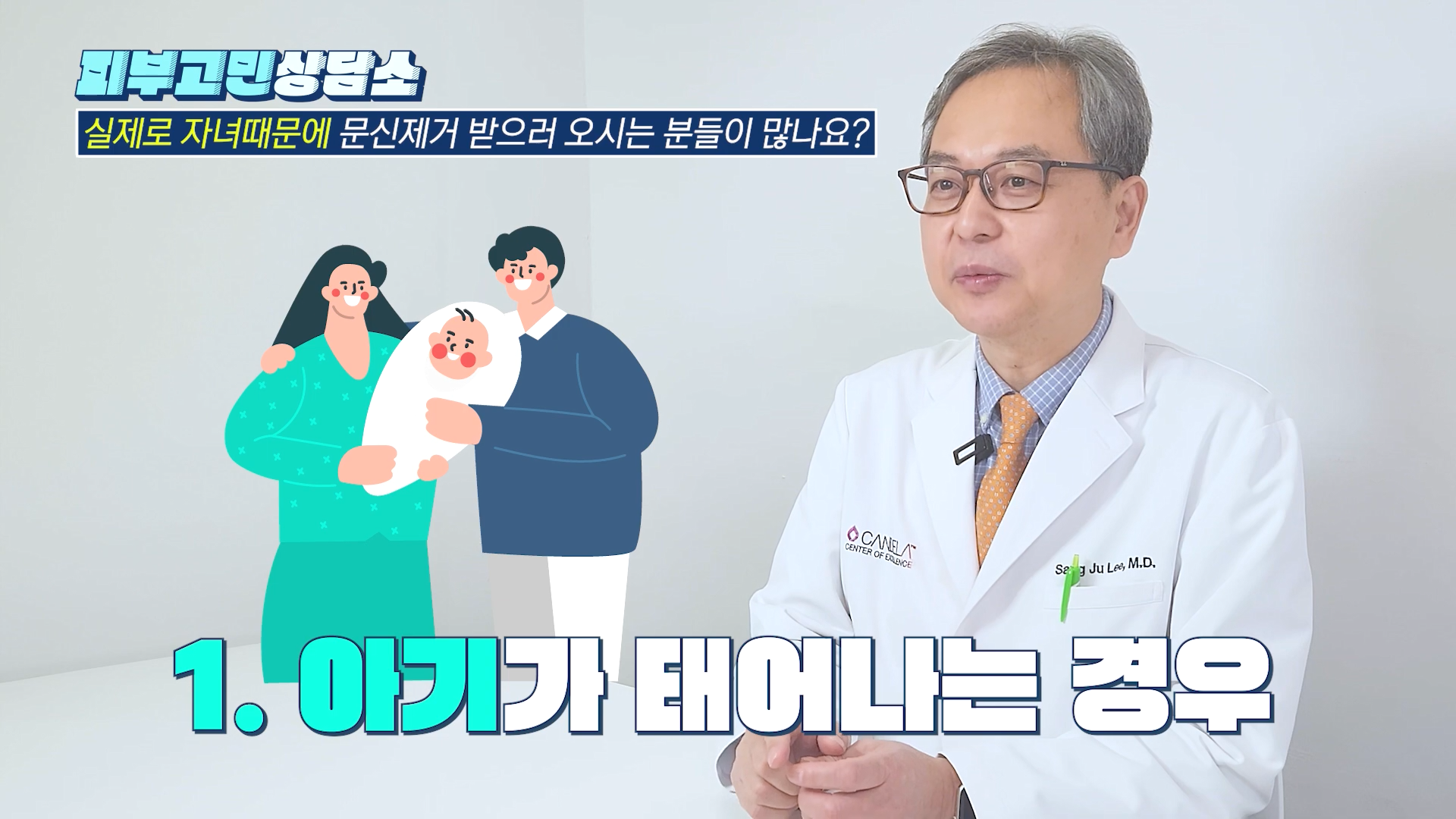
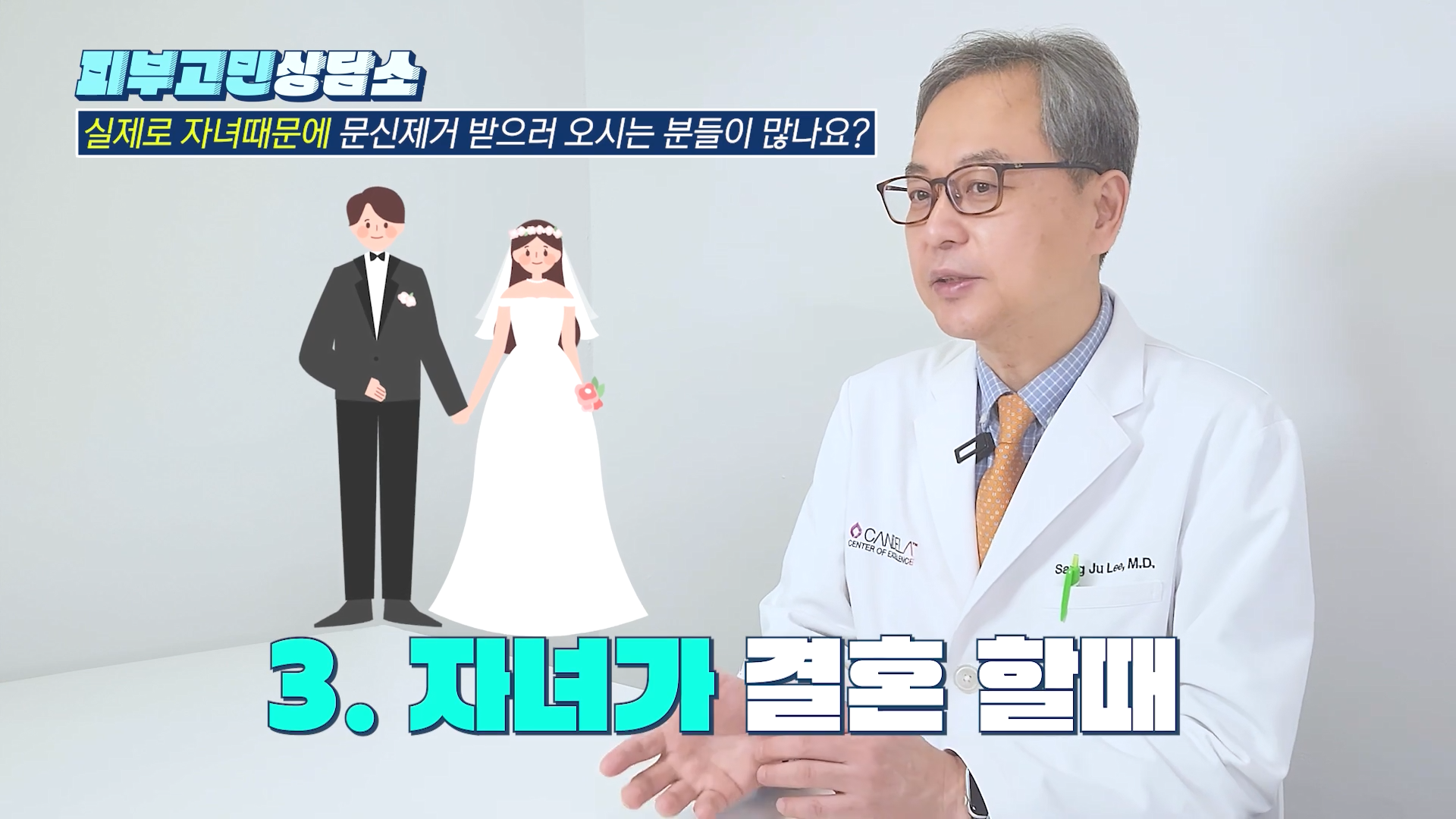
The decision points for those who come for their children are as follows:
| Timing | Reason for considering removal |
|---|---|
| Around the time of a baby's birth | Many people get tattoos removed when they give birth |
| Around the time a child enters elementary school | They come to remove tattoos that might be discussed at parent meetings |
| Around the time a child gets married | They start treatment out of consideration for the other party |
Tattoos that were gotten without much thought in youth come back into focus as a child's sphere of activity expands.
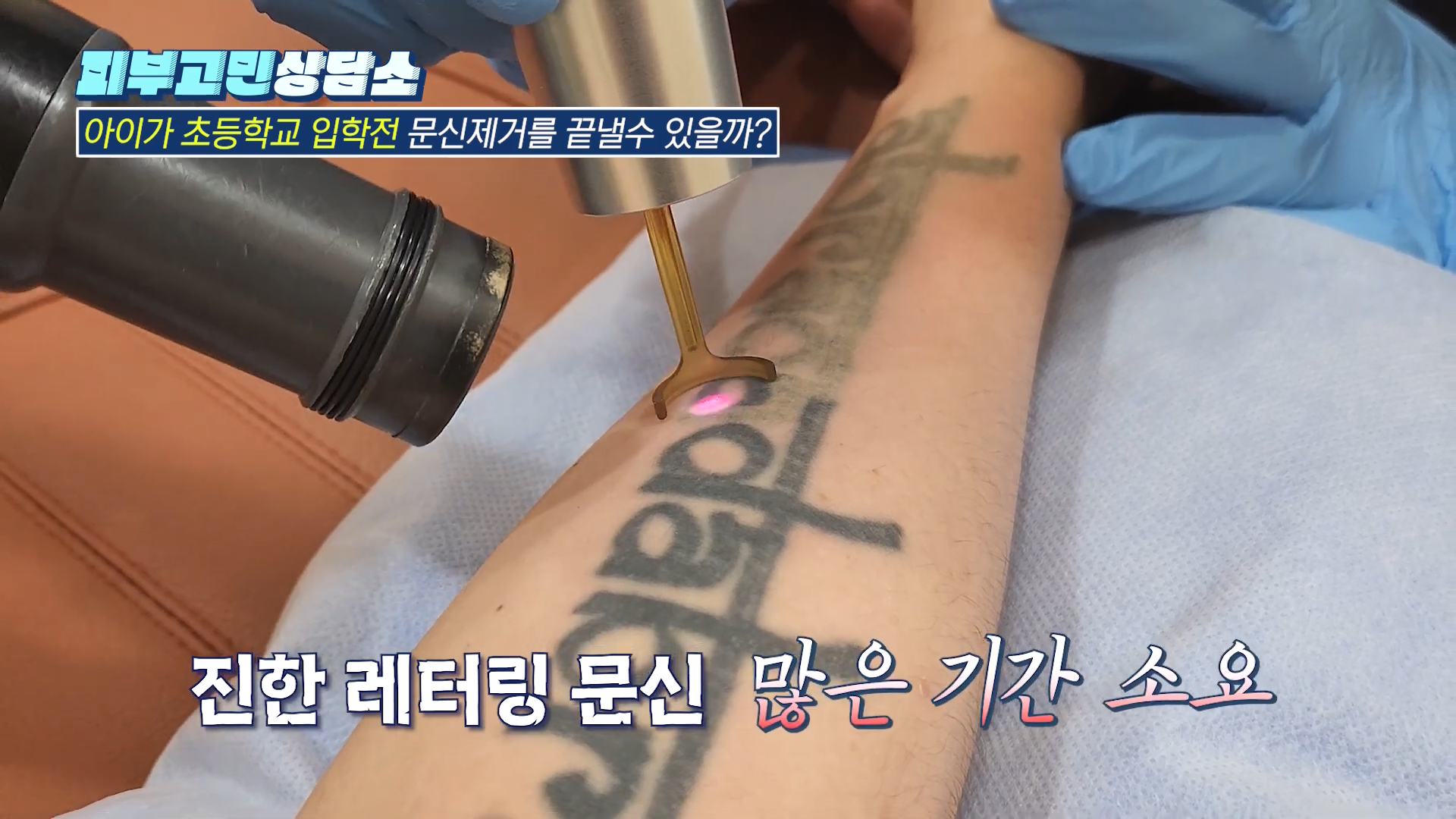
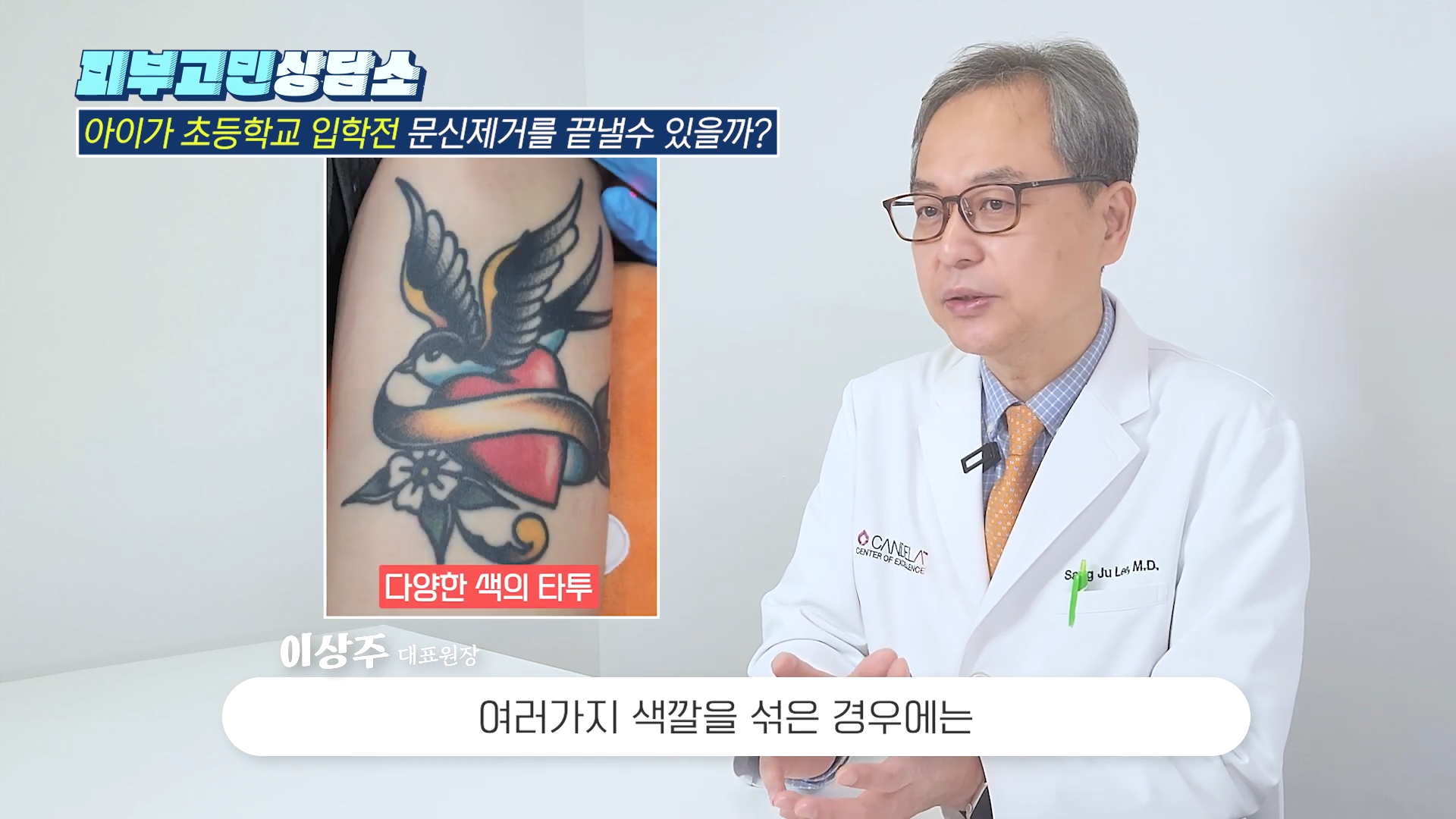
Duration is Determined by Color and Shape
Tattoo removal treatment duration inevitably varies depending on the color, type, and size of the tattoo.
- Darkly inked lettering takes a long time to treat.
- Tattoos with multiple colors are more challenging than single-color ones.
- Tattoos accompanied by scars may require a longer duration.
Even for the same size, if these conditions overlap, the number of sessions may increase more than expected. This is why the duration is discussed first during consultation.



5 to 10 Sessions, and Several Years
Tattoo removal is performed at intervals of one to two months. This is to allow the skin time to recover.
If 5 to 10 sessions are performed, it can take at least 1 year, and in some cases, more than 3 years.
If you are considering the time your child enters elementary school, it is important to plan your treatment in advance.

It Depends on Which Laser You Choose
To remove tattoos quickly and with fewer side effects, the first step is choosing the right tattoo laser.
In the past, Q-switched Nd:YAG lasers were used. Now, PicoWay Laser is known to be more effective for tattoo treatment. You can check the differences between devices in the Nd:YAG Tattoo Removal Guide.


Remove Bubbles for Up to Four Passes at Once
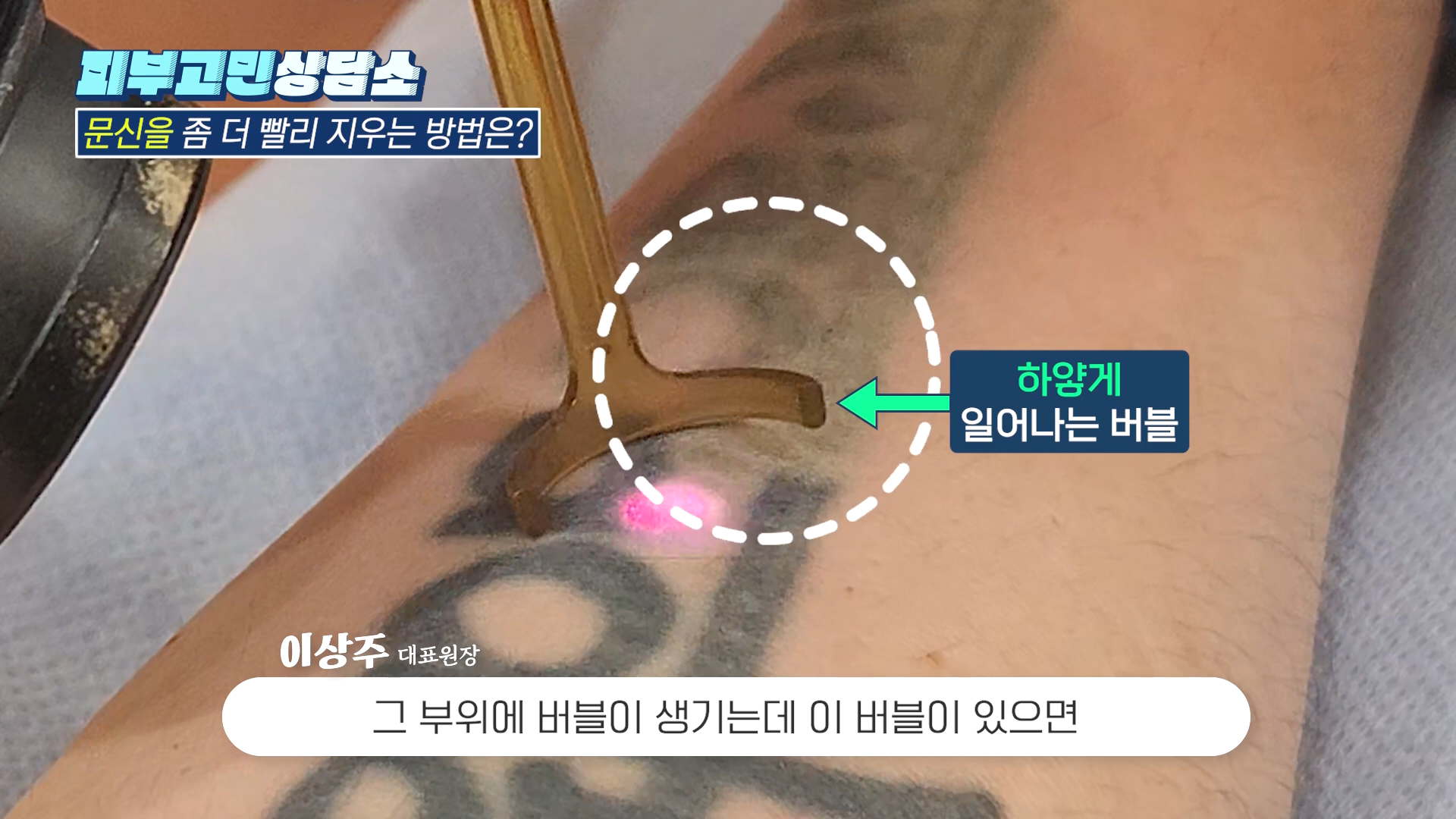
When a laser is applied, white bubbles form in that area. As long as the bubbles remain, the light cannot pass through even if more laser is applied.
The R-Zero Technique for tattoo removal involves applying a special medication to eliminate these white bubbles. This allows the laser to be used up to four times in one spot, which is reported to increase treatment effectiveness compared to conventional methods. The procedure is outlined in R-Zero Pico-Frectat Tattoo Removal.


A Pathway for Tattoo Pigment to Exit
The Pinhole Technique creates pathways for tattoo pigment to exit the skin. It is used to shorten treatment duration and reduce side effects like scarring.
This approach combines the steps of breaking down pigment into fine particles and expelling them. More details can be found in the Pinhole for Burn & Surgical Scar Treatment Guide.
Feel free to leave any questions via Chat with us now.

Before Covering with Skin-Colored Cover-up
Since removal takes a long time, many people consider getting a skin-colored cover-up tattoo in that area. There are a few points to consider here.
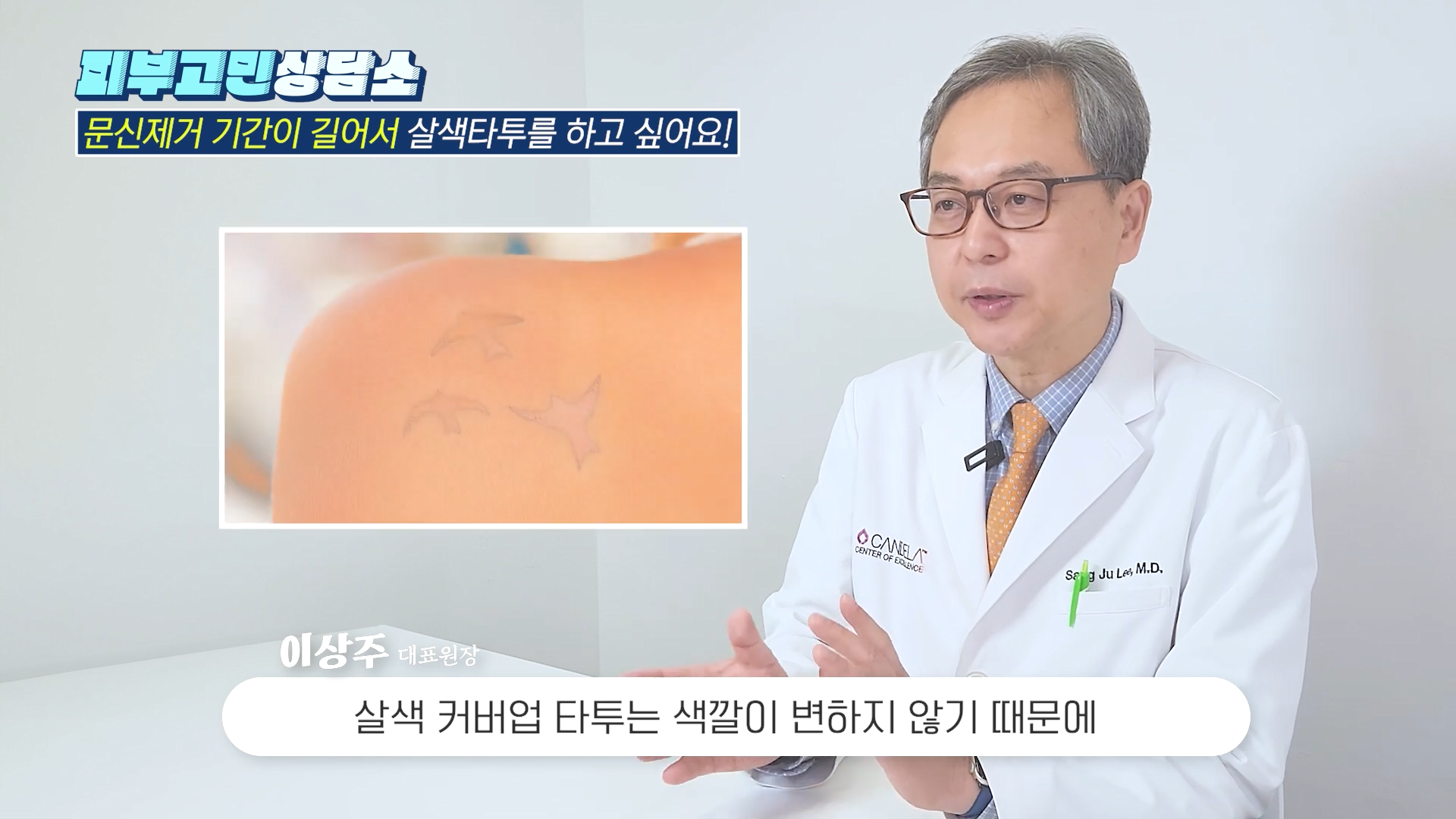
Skin color changes with the seasons. However, skin-colored cover-up tattoos do not change color, so they will inevitably stand out as the seasons change.
Problems also remain when you want to remove it because it doesn't match the surrounding skin color. Skin-colored tattoos are harder to remove than other colors, leading to longer treatment periods, and after removing the skin color, the original tattoo remains underneath. This can significantly increase treatment duration and make scarring more likely.
If possible, it is advisable not to cover it up and to come early to start laser removal while it is still a tattoo. The overall treatment flow can be seen in the Tattoo Removal Treatment Guide.

Authored and medically reviewed by Chief Director Kang Jin-moon (Dermatologist) Graduated from Yonsei University College of Medicine · Completed dermatology residency at Severance Hospital · Former professor at Bundang CHA Hospital Currently an adjunct professor at Yonsei University College of Medicine, Department of Dermatology View Medical Staff Profile
First published 2024-08-12 · Last reviewed 2026-07-29
This article contains general medical information and does not substitute for individual diagnosis and treatment. Results and recovery progress may vary by individual.