
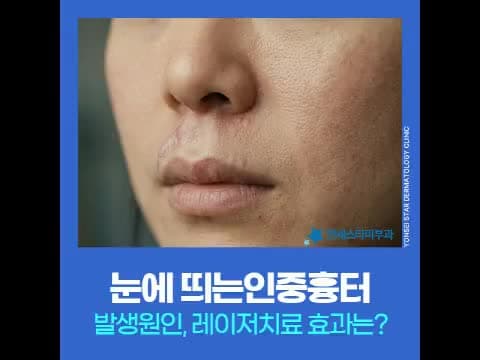
Scars on the philtrum and around the lips, located in the center of the face, can make even small marks feel unusually prominent. As they are difficult to conceal with makeup, they can easily become a source of emotional burden.
Why Philtrum and Lip Scars Are Particularly Concerning
Many people feel that others' eyes are drawn to these scars every time they meet someone, and even taking photos becomes a burden. The philtrum and lip area is the most visible part of the face, so a scar of the same size appears much more prominent here than on other areas.
Even if it starts as a small mark, if not managed in time, it can evolve into a red scar, a white scar, or a thick, raised form.
Why Is This Area Difficult to Treat?
Treating the philtrum and lip area is more challenging than other areas not just because of its prominent location. The skin layer is thin and sensitive, and it's a highly mobile area, so accurately identifying the scar type and designing an appropriate approach is crucial for the outcome.
Accurately identifying the scar's condition and type is the first step in treatment.
Scars Are Not All Alike
Not all philtrum scars are approached in the same way. The choice of laser and combination treatments varies depending on whether it's an early stage with red marks, a hardened white scar with lost color, or a thick, raised scar. This is why Multi-Laser Scar Treatment tailored to the type is necessary.
In the examination room, even with the same philtrum scar, the starting point of treatment differs depending on whether there is residual redness or if it has hardened white.
Laser Approach by Scar Type
| Scar Type | Characteristics | Approach |
|---|---|---|
| Red Scar (Early) | Stage with excessive vascular response | Vbeam Prima Vascular Laser (595nm) |
| White/Old Scar | Color loss and damage to the dermal layer | Ultrapulse Alpha CO₂ Fractional |
| Raised Scar | Hypertrophic scar/keloid form | Combination of laser + injection |
If it's an early scar stage with residual redness, Vbeam Prima selectively acts on hemoglobin to help alleviate the redness. The earlier this stage is addressed, the more advantageous it is in reducing the scar from thickening or hardening white later on.
Scars that have turned white over time indicate damage deep within the dermal layer, and are approached by stimulating regeneration with Ultrapulse Alpha. While older scars may require a longer treatment period, stimulating regeneration externally can lead to gradual improvement.
If you are curious about which stage your scar is in, we recommend confirming your scar type through consultation.
Is Laser Alone Sufficient for Raised Scars?
For firm, thick, raised scars, a combination of laser and injection treatment is considered rather than laser alone. This method uses Triamcinolone Scar Injection to break down excessively proliferated collagen, reducing its height, and combines it with Ultrapulse Alpha to refine both thickness and texture. For keloid scars with a risk of recurrence, combining Triamcinolone Scar Injection with laser can help suppress recurrence and maintain results for a longer period.
Things to Check Before Treatment
- First, identify the scar type: red, white, or raised.
- Examine the timing and depth of scar formation.
- Be aware that repeated treatments may be necessary, not just 1-2 sessions.
- Given that it's a thin and sensitive area, verify the practitioner's experience.
In Summary
Philtrum and lip scars are highly visible due to their location and are challenging to treat, but by choosing the appropriate laser and combination treatments for the scar type, even old scars can show gradual improvement. The key is to treat red scars quickly, stimulate regeneration for hardened white scars, and consider both injections and lasers for raised scars. Even if you have given up on improving an old scar, we recommend creating a plan tailored to your condition through consultation.
Author · Dr. Lee Sang-joo (Dermatologist) As the chief director of Yonsei Star Dermatology Sinchon, Dr. Lee Sang-joo has extensive experience in treating pigment and scar conditions. He will serve as the president of the Korean Dermatological Association in 2026 and is an adjunct professor at the Department of Dermatology, Yonsei University College of Medicine. His clinical history can be found in his profile. · Last reviewed on July 23, 2026
This article provides general medical information, and treatment methods and results may vary depending on the condition of philtrum and lip scars and individual skin characteristics. Please consult with a dermatologist for an accurate diagnosis and treatment plan.