

If you feel small, hard, bumpy granules when touching your face, especially around the nose or chin, you might consider the possibility of papular scars. Many people first ask, "Will these go away on their own if I leave them?" However, hard, solidified papular scars are often difficult to flatten naturally over time, requiring active treatment.
How Do Papular Scars Form?
Papular scars are closely related to past acne. If you repeatedly and excessively extract acne when it appears, the skin can be irritated and leave scars.
In the clinic, we often see patients who already have hard, palpable scars. Looking inside the skin, fibrosis has progressed in the dermal layer, making the area hard, and the sebaceous glands have become excessively enlarged, causing sebum to become trapped inside. If the treatment timing is missed and it transforms into hard tissue, it remains as a bumpy protrusion on the skin's surface.

Where Do They Primarily Occur, and How Do They Appear?
Papular scars are known to occur with a relatively high probability on the nose or the front of the chin. However, they are not limited to the face. They can also appear on the chest or back, so it's a good idea to check if bumpy protrusions remain for a long time without healing.
Because they protrude and have a bumpy shape on the surface, many people are concerned that their skin looks rough and detracts from a clean impression. You might suspect papular scars if you have the following characteristics:
- Areas where acne used to be feel hard to the touch.
- Small, raised bumps like nodules are present on the nose, chin, chest, or back.
- They do not flatten over time.
- They feel hard, not soft, when touched.

Can Home Care Reverse Them?
If the hard, solidified form has already developed, there are limitations to restoring it to its original state with general home care alone. This is because the treatment must include a process to lower the raised part on the skin's surface closer to normal skin.
Papular scars with fibrosis extending to the dermal layer are difficult to flatten with just moisturizing or exfoliation; a medical approach to match the surface height is necessary.
Of course, there can be individual differences in the course of all scars, so the priority is to first check the extent of your skin condition. In cases where they are mixed with depressed acne scars, a judgment tailored to the condition is needed rather than simply applying a single method uniformly.
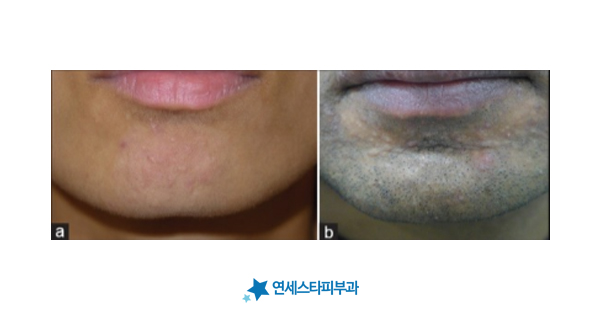
How Are Papular Scars Treated?
Papular scars are primarily treated with laser methods. CO2 lasers such as ProFractional or Ultrapulse Encore are used to improve the raised areas. In particular, applying the Pinhole Technique is reported to help normalize the overall height of the skin.
At Yonsei Star Dermatology, we consider methods like Mild Pinhole or Pinhole Alpha depending on the depth and hardness of the scar. The appropriate method varies depending on the scar's condition, so it's best to decide through a preliminary consultation.
Even with the same laser device and treatment method, the quality of the results can vary depending on who performs it and how. Experience and know-how are crucial for comprehensively judging various factors such as laser type, intensity, irradiation time, and application depth, considering the skin condition carefully before the procedure.
If the scar area is wide or mixed with different types, methods tailored to the condition, such as Premium Customized Acne Scar Care, may be considered.
For questions, inquire about papular scar treatment methods via chat consultation
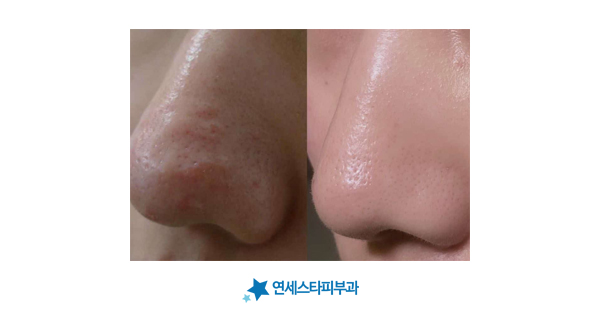
Why Post-Treatment Care is Important
Acne, mentioned as the initial cause, is a common skin problem that occurs across a wide age range, from adolescents to adults. Even after treatment, there is a possibility of recurrence, so it's advisable to continue with daily life management to prevent future scarring.
To prevent acne scars from recurring, pay attention to the following points:
- Maintain cleanliness to prevent sebum and waste buildup.
- Avoid touching or excessively squeezing inflammatory acne with your hands.
- Minimize irritation when there is pain or pus.
- In dry seasons, provide sufficient moisture to protect the skin barrier.
- If the condition worsens, do not leave it untreated; consult with medical staff.

Even if inflammatory acne has progressed and you feel pain or pus has started to form, it's best to avoid touching or excessively squeezing it with your hands. While it's not a problem to be left untreated, it also won't resolve instantly, so careful management to prevent further worsening and slowly improve the condition should continue.
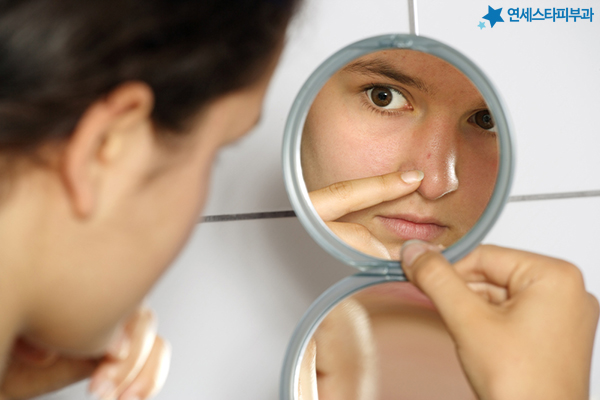
In Dry Seasons, Also Manage Your Skin Barrier
In seasons prone to dryness, like now, it's necessary to strengthen the skin barrier that protects the skin from external stimuli. If the barrier collapses, changes such as wrinkles and loss of elasticity can occur in sequence, so it's important not to forget the habit of providing sufficient moisture.
The table below summarizes key management points to consider for each period.
| Period | Management Point |
|---|---|
| When acne appears | Avoid extraction, minimize irritation |
| After hardening into a scar | Consult medical staff to review treatment methods |
| After treatment | Maintain cleanliness, provide moisture, observe for recurrence |

In Conclusion
Papular scars are a condition where the dermal layer has hardened due to past acne leaving scars, and it is often difficult to flatten them with home care alone. Improvement can be expected when treatment to match the height of the raised areas is combined with consistent management to reduce recurrence. The first step is to identify your skin condition and determine the appropriate direction.
Since the type and depth of scars vary from person to person, the most accurate way to understand your condition and treatment direction is through a direct consultation.
💬 Consult Now
Chief Director Lee Sang-joo (MD, PhD, Yonsei University College of Medicine and Graduate School; completed dermatology residency at Severance Hospital; President of the Korean Dermatological Association) Chief Director Lee Sang-joo's Profile First Published 2024-12-20 / Last Reviewed 2026-06-16
This content is for general information purposes only, and treatment results and progress may vary individually. Please confirm an accurate diagnosis and treatment plan through consultation with medical staff.