


The wrist is frequently exposed and has thin skin, making tattoo removal a process that requires extra caution.
When considering scars, hyperpigmentation, and the recovery process, there's a question that comes before "does it remove well?" It's "how cleanly can it be removed without leaving scars?"
Conditions of the Wrist That May Slow Recovery
The wrist has thin skin and many blood vessels and nerves. Frequent movement can also slow down recovery.
Therefore, it's necessary to carefully check everything from laser selection to the treatment method before starting removal.

Basis for Using PicoWay on Thin Skin
One of the most commonly used devices for wrist tattoo removal recently is the PicoWay Laser.
| Characteristic | Significance for the Wrist |
|---|---|
| Picosecond ultra-short pulse irradiation | Passes quickly in trillionths of a second |
| Finely breaks down ink particles | Divides pigment into small pieces to create an excretion pathway |
| Less thermal damage | Aims to reduce the risk of scarring |
| Relatively short recovery period | Faster return to daily life |
| Responds to both black and color | Applies uniformly to mixed-color tattoos |
Because it uses a short, strong breakdown method, it's good for ensuring safety on thin skin, and using multiple wavelengths together increases efficiency for color tattoos. The device configuration is detailed in R-Zero Pico-Frectat Tattoo Removal, and traditional methods are summarized in Nd:YAG Tattoo Removal.

How Many Times is it Irradiated in One Visit?
To not only remove quickly but also reduce the possibility of additional scarring, how the laser is applied is also important.
R0 is not a one-time treatment. It involves repeated irradiation up to 4 times in one session, while progressively checking the ink reaction, skin recovery response, and color changes.
The typical method usually involves one irradiation per session, which inevitably lengthens the overall removal period.
The completeness of the results increases when the precision of the equipment and the staged removal strategy work together.
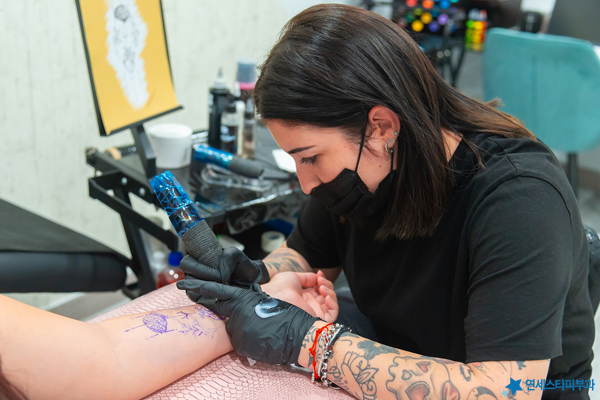
It's Not Just About Getting Laser Treatment
Wrist tattoo removal is not just a simple laser procedure. It's good to check the following items before treatment:
- Is a safe anesthetic method available to reduce pain?
- Can scar treatment methods like Pinhole Technique be combined?
- Is the procedure performed by a board-certified dermatologist?
If this process is not followed properly, blisters, discoloration, or depressed scars may remain. Scar management can be found in Pinhole for Burn & Surgical Scar, and the overall treatment flow in Tattoo Removal Treatment Guide.

Balance of Equipment, Treatment Method, and Skill
Removing a wrist tattoo is difficult to view as a simple cosmetic procedure. The results are refined only when skin regeneration and scar prevention are considered together.
We recommend undergoing the procedure at a place that has a balanced combination of efficient equipment, safe treatment methods, and the practitioner's skill.
If you have any questions, please use Chat Consultation.

The More Sensitive the Area, the Longer the Preparation
The wrist is one of the thin and sensitive areas of the skin. As such, there are a few more things to check before starting.
Reviewing the items mentioned above in advance can help reduce the burden you might experience during the recovery process.

Authored · Medically Reviewed by Dr. Jin-Moon Kang, Chief Director (Board-Certified Dermatologist) Former Resident in Dermatology at Severance Hospital · Former Professor at Bundang CHA Hospital · Current Adjunct Professor at Yonsei University College of Medicine, Department of Dermatology Member of the Korean Society for Aesthetic and Dermatologic Surgery · Member of the Korean Medical Laser Association View Medical Staff Profile
First Published 2025-12-05 · Last Reviewed 2026-07-29
This article contains general medical information and does not substitute for individual diagnosis and treatment. Results and recovery progress may vary by individual.