
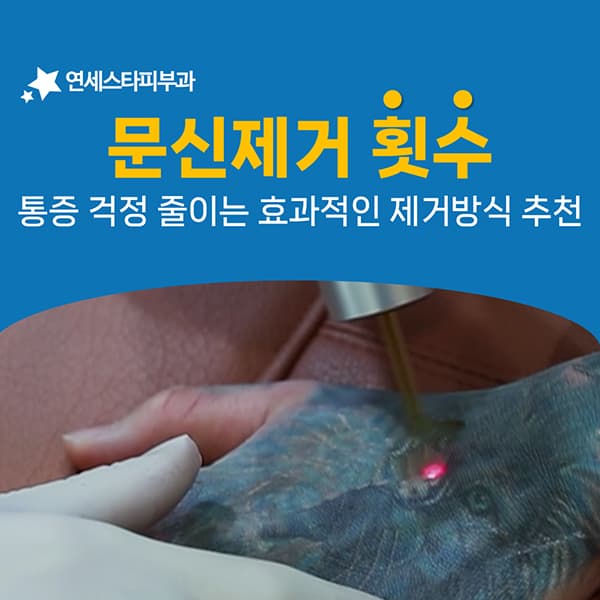
Many people decide to remove a tattoo but find themselves unable to schedule an appointment. This is often due to concerns that if the first session was painful, subsequent sessions might be even more so.
5 or More Sessions, Sometimes 10 or More
Tattoo removal with lasers is not a one-time procedure. Depending on the tattoo's color, density, and size, multiple sessions are often required, which increases the burden of pain.
The number of sessions varies depending on several factors, including the tattoo's condition, shape, location, and color. Generally, it takes 5 or more sessions, and in some cases, it can be repeated 10 or more times.
Why Picoseconds Leave Less Heat
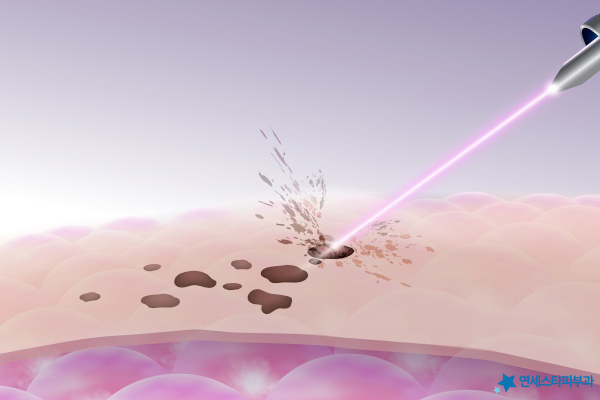
Tattoo removal lasers are broadly categorized into nanosecond and picosecond types. Recently, picosecond lasers, which can break down pigment more finely at a faster speed, are widely used.
Because the laser stays on the skin for a very short time, in units of one trillionth of a second, even with the same energy delivery, less heat is applied to the surrounding skin tissue, which can reduce concerns about damage.
Among these, PicoWay is gaining attention for the following reasons:
- It breaks down ink particles more finely, making them easier to expel.
- It utilizes four wavelengths to address not only black but also challenging colored tattoos.
- It can proceed in a way that reduces the possibility of pigmentation and scarring without excessively increasing thermal energy.

Fewer Sessions Mean Less Frequent Pain
The biggest reason for cumulative pain is the prolonged total number of treatment sessions.
Therefore, if the total number of sessions can be reduced, the frequency of experiencing pain can also decrease.
R-Zero Technique to Reduce Waiting Time
Immediately after laser treatment, a bubbling phenomenon occurs where the skin surface turns white. This bubbling interferes with laser penetration, making it difficult to perform continuous repeated treatments. Consequently, re-irradiation of the same area can only occur after waiting for the bubbles to disappear.
R-Zero is a technique that quickly removes bubbles and allows for continuous treatment, efficiently breaking down ink particles while reducing this waiting time. You can find details on its composition in the R-Zero Pico-Frectat Tattoo Removal guide, and approaches for other types in Nd:YAG Tattoo Removal.
How to Address Pain and Swelling Concerns Together
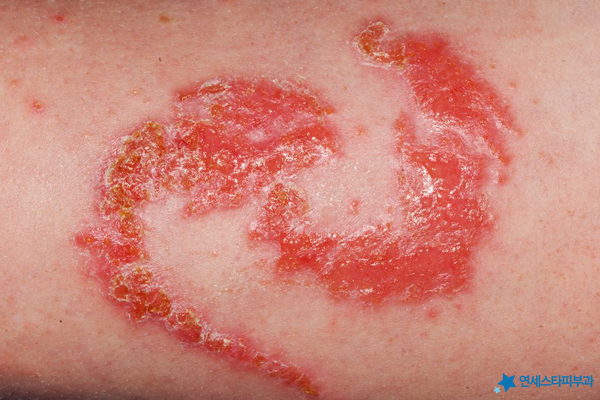
To alleviate concerns about post-treatment pain, swelling, or scarring, the Pinhole Technique may also be utilized. The Pinhole Technique is a technology that rapidly activates skin regeneration by creating microscopic holes with a laser, and it is actively used as a method to treat various scars, including burns.
When applied to tattoo removal, it can also have the effect of expelling ink more quickly through the holes. More details can be found in the Pinhole for Burn & Surgical Scar treatment guide.
Things to Check Before Consultation
| Check Item | What to Look For |
|---|---|
| Equipment | Which laser is used |
| Treatment Method | Is a method that reduces the number of sessions, like R-Zero, available |
| Aftercare | Is care provided to minimize potential side effects |
Techniques like the Pinhole Technique or R-Zero are not applied everywhere. We recommend choosing a clinic with a board-certified dermatologist.

Finding the Right Method for You
Most importantly, it is crucial to find the method that suits you. We recommend consulting with a board-certified dermatologist to create a plan tailored to your tattoo's condition and skin characteristics, and to check if the clinic can flexibly adapt to your condition during the process.
The treatment flow is summarized in the Tattoo Removal Treatment Guide. If you are hesitant to take the first step due to fear of pain, feel free to inquire via chat now.
Authored and Medically Reviewed by Dr. Lee Sang-Joo, Chief Director (Board-Certified Dermatologist) Former Resident in Dermatology at Severance Hospital · Former Professor of Dermatology at Yeongdong Severance Hospital Current Adjunct Professor, Department of Dermatology, Yonsei University College of Medicine · President of the Korean Dermatological Association in 2026 View Medical Staff Profile
First Published 2026-03-18 · Last Reviewed 2026-07-29
This article contains general medical information and does not substitute for individual diagnosis and treatment. Results and recovery progress may vary from person to person.