

Some people are concerned about bluish spots on their face or body that don't seem to fade. These spots differ in color from common brown moles or melasma, and the first question that comes to mind is likely, "Is this just a mole, or is it Nevus of Ota?" To put it simply, if you have grayish or bluish spots around your eyes, it's worth considering the possibility of Nevus of Ota.
Hello, this is Yonsei Star Dermatology Sinchon. Nevus of Ota often appears around the eyes, such as on the face, forehead, temples, and cheekbones, making it noticeable in daily life. Today, we will systematically explain how to differentiate Nevus of Ota, its principles, and treatment approaches.
Why does Nevus of Ota appear bluish?
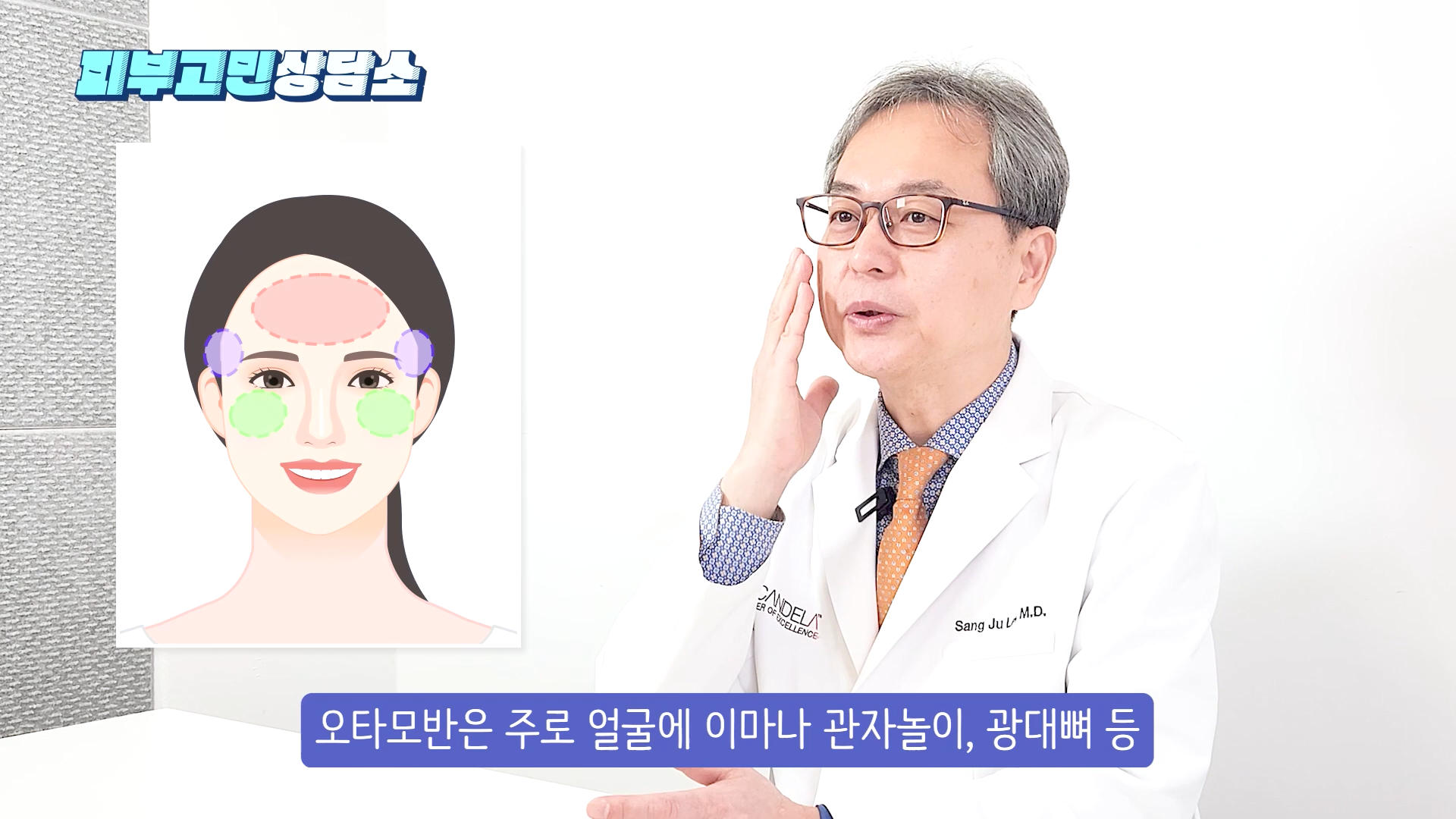
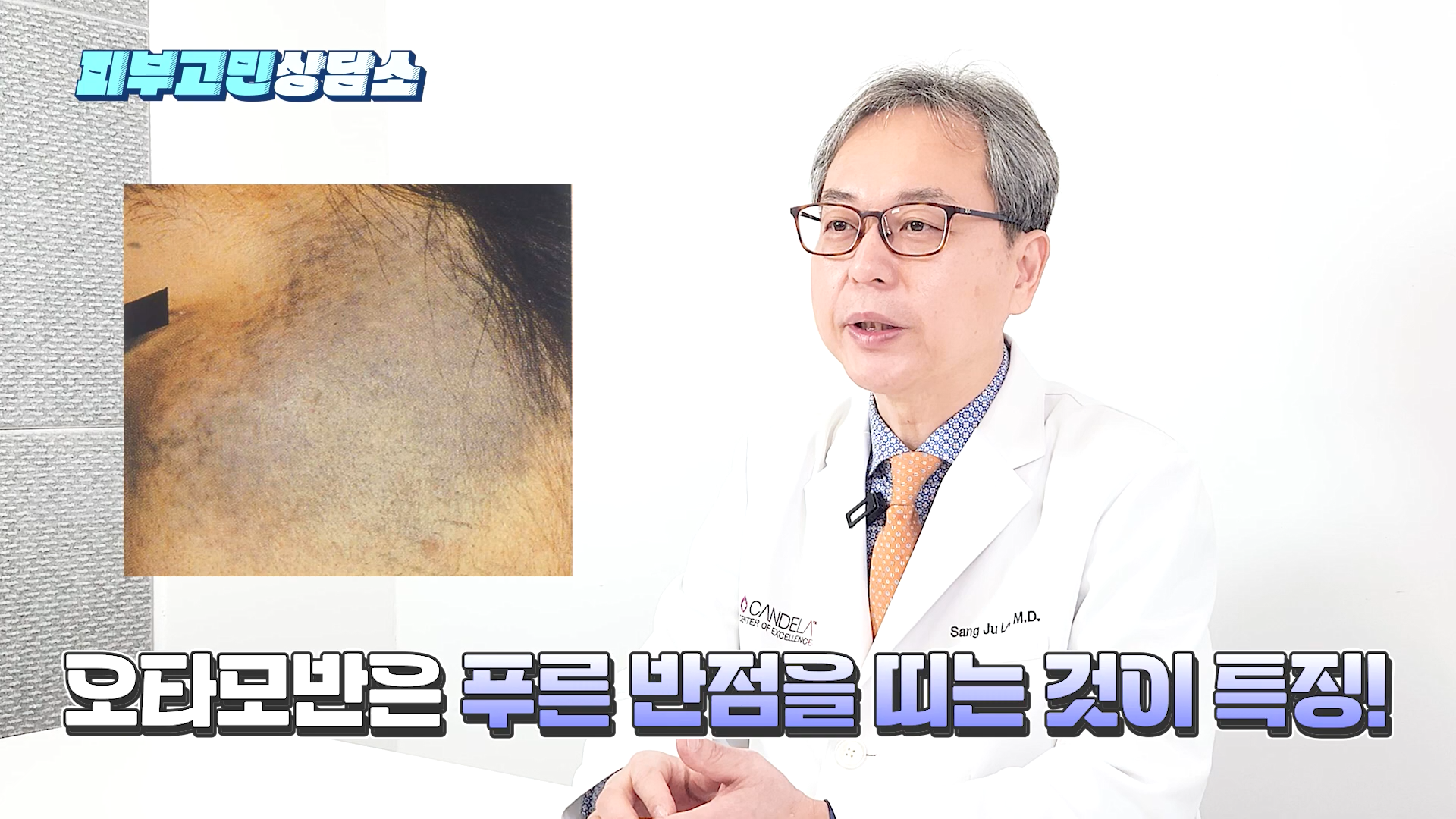
Most melanin cells are located in the epidermis of the skin. However, Nevus of Ota is a phenomenon caused by an increase in abnormal melanin cells deep within the dermis. Unlike melasma or other spots, because the pigment is located in a deeper layer, it appears blue or gray instead of brown.
Similar to how water appears bluer in deeper areas than in shallow ones, the deeper the pigment is in the dermis, the bluer it appears on the skin's surface.
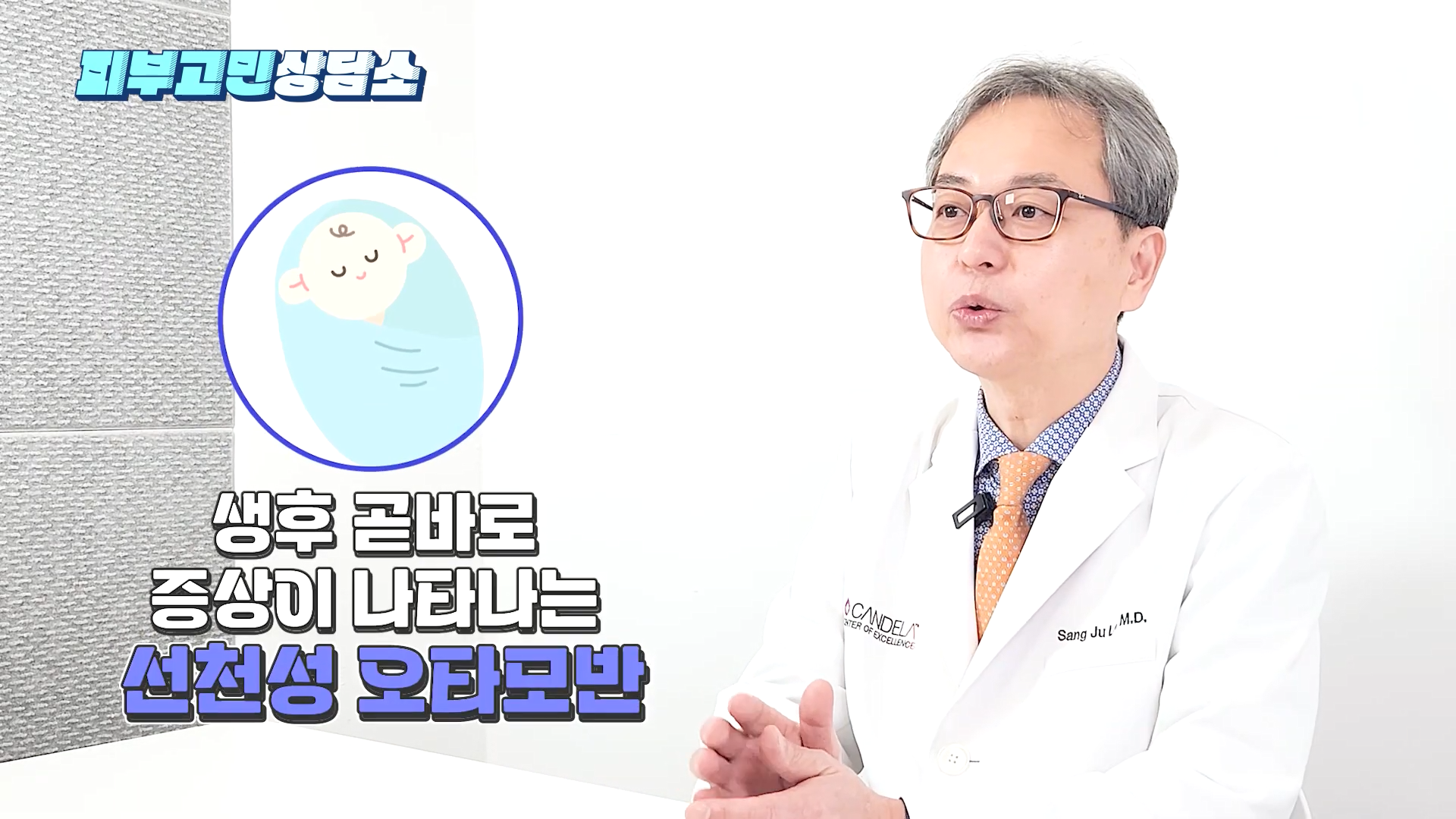
Nevus of Ota usually appears on only one side, but in about 5-10% of cases, it can appear on both sides. There are congenital Nevus of Ota, which appear immediately after birth, and acquired Nevus of Ota, which develop during adolescence and darken after the age of 20.
How common is it and who gets it?

Nevus of Ota is known to primarily affect East Asians. It is a relatively common skin condition, occurring in about 0.5% of the total population, and is reported to be about 5 times more frequent in women than men. As a pigmented lesion, it is often confused with epidermal pigment removal like blemishes, age spots, or freckles, but the key difference is the depth at which the pigment is located.
How to differentiate it from similar-looking spots?

Many people confuse Nevus of Ota with café-au-lait spots or Becker's nevus.
Considering the color, location, and accompanying symptoms can help with differentiation.
| Category | Color | Characteristics |
|---|---|---|
| Nevus of Ota | Grayish-blue | Pigment in deep dermal layer, mainly around the eyes |
| Café-au-lait spot | Light brown | Epidermal pigment, coffee-with-milk color |
| Becker's nevus | Brown | Hair growth in the pigmented area |
If the spot on the skin is the color of milk coffee, it's a café-au-lait spot; if hair grows in that area, it's Becker's nevus. In contrast, Nevus of Ota is closer to gray or blue, not brown. However, self-diagnosis based solely on color is difficult, so it's best to confirm with a medical examination for an accurate differentiation.
Since the approach differs from Laser Lesion Removal for moles or warts that are difficult to see directly, accurately identifying the type of lesion first is crucial.
For questions, inquire via chat about Nevus of Ota differentiation and treatment
How has treatment evolved?

30-40 years ago, before laser treatment was developed, the only options for Nevus of Ota were cryotherapy or surgical removal of the skin.

Since then, lasers have been actively developed for about 30 years, and Q-switched ruby lasers have been widely used in Korea for Nevus of Ota removal. Recently, PicoWay Laser has been introduced and is known to show better results, so you can understand that PicoWay Laser has become the standard treatment for Nevus of Ota.
In the clinic, the most common question is about the number of treatments, which varies depending on the individual's Nevus of Ota color and response. Typically, 5 to 10 or more treatments are received at intervals of 4 to 8 weeks.
What to know about treatment timing and process

It is advisable to start Nevus of Ota removal as early as possible. Treatment at a young age tends to show results relatively quickly, allows the child to be free from psychological stress earlier as they grow, and is advantageous in terms of treatment outcomes.

Here are some points to consider when planning treatment:
- It is a lesion that can be treated from infancy.
- The Nevus of Ota laser used is known to be relatively safe.
- The number of treatments needed varies per person depending on the color and response.
- It is not a one-time treatment; repeated treatments are required at 4-8 week intervals.
- There may be individual differences in effectiveness and recovery patterns.

The meaning of treatment in life

Among dermatological conditions, Nevus of Ota is one of the lesions that brings a sense of reward as a doctor. In the past, people had to live with Nevus of Ota for life, causing considerable psychological stress. However, since the advent of Nevus of Ota removal lasers, cases of 80-90% or more improvement have been reported, making it a treatment that can significantly change a patient's life.
Today, we discussed the removal, differentiation, and laser treatment of Nevus of Ota. While it is difficult for a doctor to definitively declare Nevus of Ota as "cured," active treatment can lead to an improvement close to complete disappearance. If you have been concerned about its color and location, we recommend not delaying and seeking consultation with a dermatologist.
For questions, inquire via chat about Nevus of Ota treatment consultation
Thank you for reading.

Chief Director Lee Sang-Joo (MD, PhD, Yonsei University College of Medicine and Graduate School, Completed Dermatology Residency at Severance Hospital, President of the Korean Dermatological Association) Chief Director Lee Sang-Joo's Profile First published 2024-05-16 / Last reviewed 2026-06-16
This article provides general information, and since the appearance and course of the same spot can vary from person to person, please consult with medical staff to determine an accurate diagnosis and treatment plan.