


Tattoo removal begins with laser irradiation of the tattooed area. When the laser is applied, the pigment in the skin shatters, causing irritation.
In severe cases, this process can damage the skin, leading to blisters and often resulting in scars.
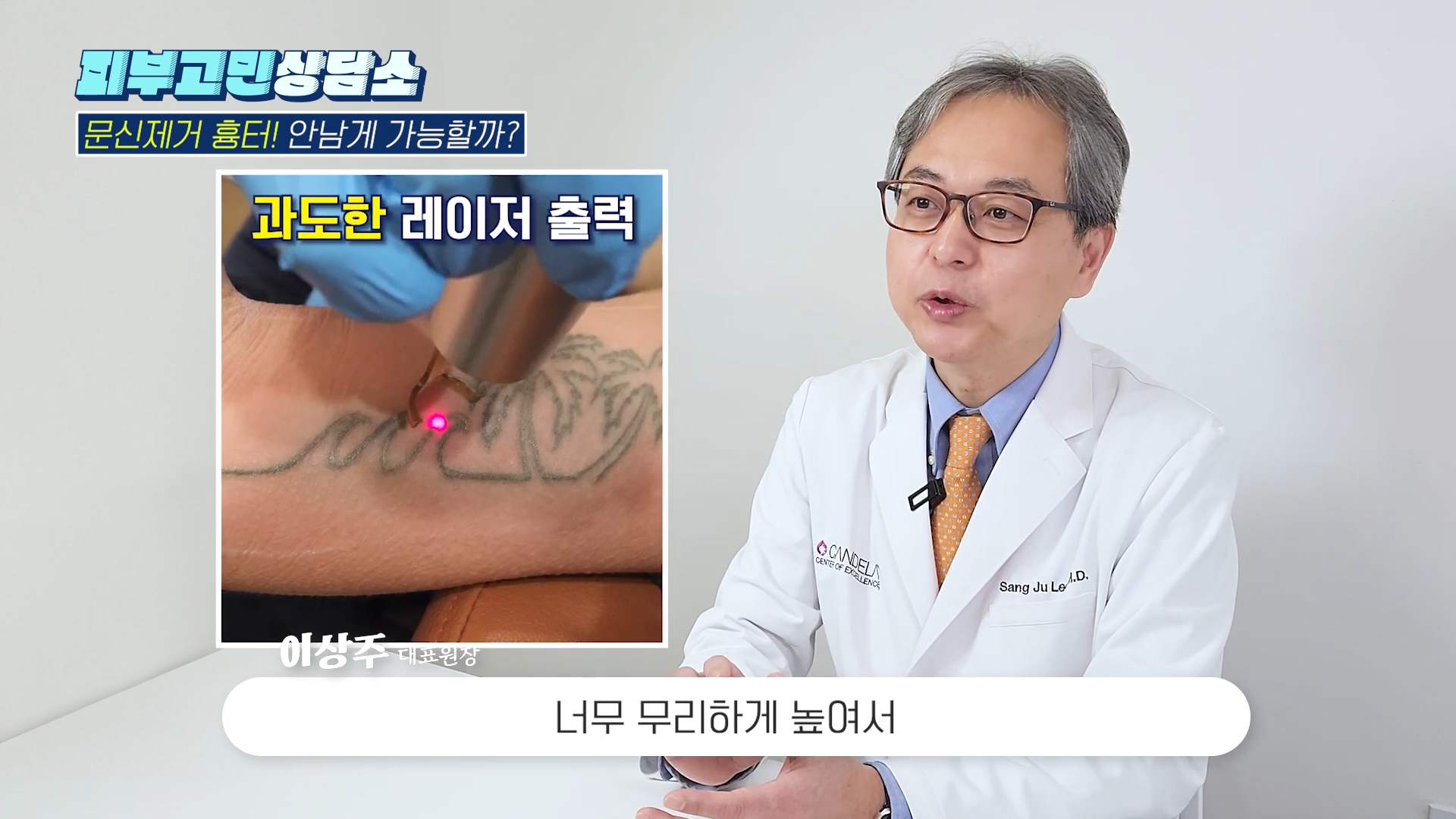
What Comes with Increased Output
If the practitioner excessively increases the laser power to enhance treatment effectiveness, the tattoo pigment's reaction will be stronger, and the likelihood of scarring will significantly increase.
Therefore, the laser should be applied with an appropriate energy level, neither too strong nor too weak, tailored to each individual's skin condition. This can help remove the tattoo while minimizing scarring.
This is one of the general treatment methods that considers the skin condition.
The One-Time Barrier Created by Bubbles
When a laser is applied to the tattooed area, the pigment shatters into tiny fragments, and white bubbles form in the process. These bubbles block laser penetration.
Therefore, traditional tattoo removal methods allowed only one laser treatment per session.
PFD Medication Enables Repeated Irradiation
Yonsei Star Dermatology Sinchon performs treatments using the R-Zero Pinhole Technique. This method involves applying a special medication called PFD to remove the white bubbles that form after laser irradiation, allowing up to four laser treatments in a single session.
Unlike conventional methods, the ability to perform repeated treatments accelerates the process. You can find more details on the specific procedure in the R-Zero Pico-Frectat Tattoo Removal Guide.
What the Pinhole Technique Does
If you've been interested in scar treatment, you might have heard of the Pinhole Technique. It's a treatment method that creates precise, microscopic holes deep in the skin to induce regeneration.
When the R-Zero Technique is performed for tattoo removal and combined with the Pinhole Technique, the following process unfolds:
- Helps tattoo pigment exit more easily
- Creates space for blisters to drain
- Works to reduce the likelihood of scarring
A detailed explanation of the Pinhole Technique itself is provided separately in the Pinhole for Burn & Surgical Scar Treatment Guide.
When the Two Are Combined
| Step | What it Does |
|---|---|
| Picosecond Laser Irradiation | Shatters pigment |
| PFD Medication Application | Removes bubbles to allow repeated irradiation |
| Pinhole Technique Finish | Creates pathways for pigment and blisters to exit |
Proceeding with the R-Zero Pinhole Technique can help continue removal while reducing the burden of scarring. Individual differences may exist in recovery progress and the number of sessions required.
When We Recommend This Method
If you wish to remove tattoos quickly or are concerned about scarring, we recommend considering this method.
The consultation process is outlined in the Tattoo Removal Treatment Guide. If you're curious about which method is right for your tattoo, please contact us via chat now and tell us the area and color.

Authored · Medically Reviewed by Representative Director Dr. Lee Sang-joo (Dermatologist) Severance Hospital Dermatology Resident · Yonsei University College of Medicine Graduate School, Doctor of Medicine Current Adjunct Professor, Department of Dermatology, Yonsei University College of Medicine · Author of "Acne Bible" View Medical Staff Profile
First Published 2024-04-03 · Last Reviewed 2026-07-29
This article contains general medical information and does not substitute for individual diagnosis and treatment. Results and recovery progress may vary by individual.