

Have you ever woken up after sleeping with an electric blanket or hot pack in winter to find a red mark or stinging sensation on your skin? Low-temperature burns progress slowly at lukewarm temperatures that don't feel "hot," so many people dismiss them with "this much is fine" and end up with scars. The first question that usually comes to mind is one: Can low-temperature burns also leave scars? To answer directly, if initial treatment is delayed, it can lead to pigmentation or scarring.
Why do low-temperature burns occur?
When skin touches something hot, usually 100 degrees Celsius or more, the body automatically reacts by pulling the hand away. However, heat around 40-50 degrees Celsius, similar to body temperature, feels warm rather than hot, making it easy for the same area to be exposed to heat for a long time. Low-temperature burns occur when heat slowly accumulates in the body this way.
There are also reports of burns progressing to 2nd or 3rd degree, leaving scars, when initially considered minor. In the clinic, surprisingly many people neglect them, thinking "it was only mildly warm," and seek treatment later.
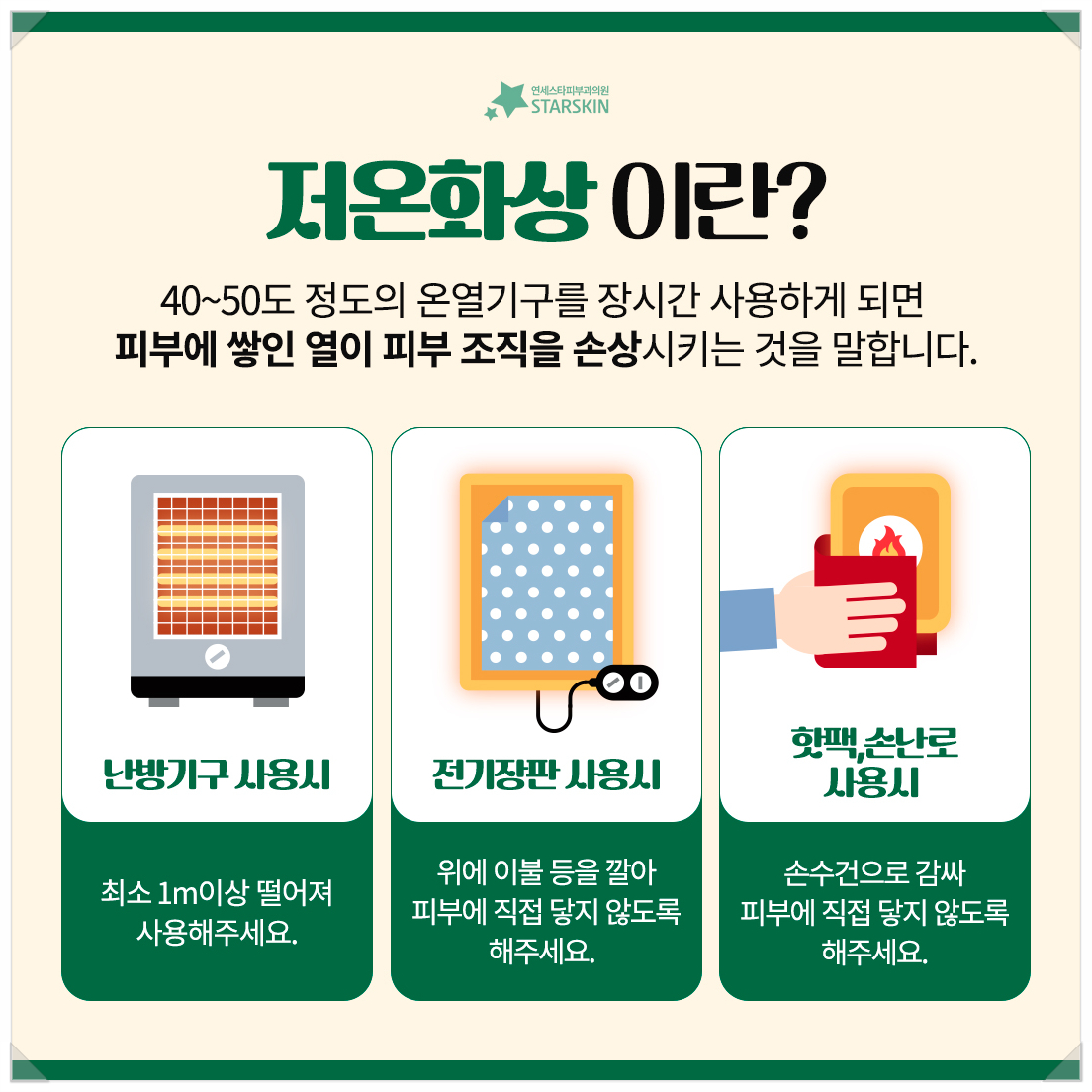
They are more dangerous because they seem minor at first
When low-temperature burns occur, only slight blistering or itching may appear at first, leading many to leave them alone, believing they will get better on their own over time. However, if the damage is deep, it can harden into a scar over time, making immediate post-burn action crucial.

How to handle low-temperature burn emergencies
Actions taken immediately after a burn greatly influence whether a scar remains. It's good to remember the following steps:
- Immediately move away from the heat source, such as electric blankets, hot packs, or heating appliances.
- Hold the burned area under cool running water for 20-30 minutes to cool down the accumulated heat.
- If running water is difficult to use, wrap an ice pack in a towel and place it on the area.
- Do not apply ice directly to bare skin or for too long (risk of frostbite).
- After the heat has dissipated, maintain a moist environment with a scar-specific hydrocolloid dressing or antibiotic ointment.
If blisters form on the burned area, it is better to leave them intact rather than forcibly bursting them. If they grow to an extent that causes discomfort in daily life, please consult a dermatologist.
If marks remain even after cooling the burn, it is safer to have the progression of the burn scar checked in the clinic rather than insisting on self-treatment.
For questions, inquire via chat consultation regarding low-temperature burn treatment
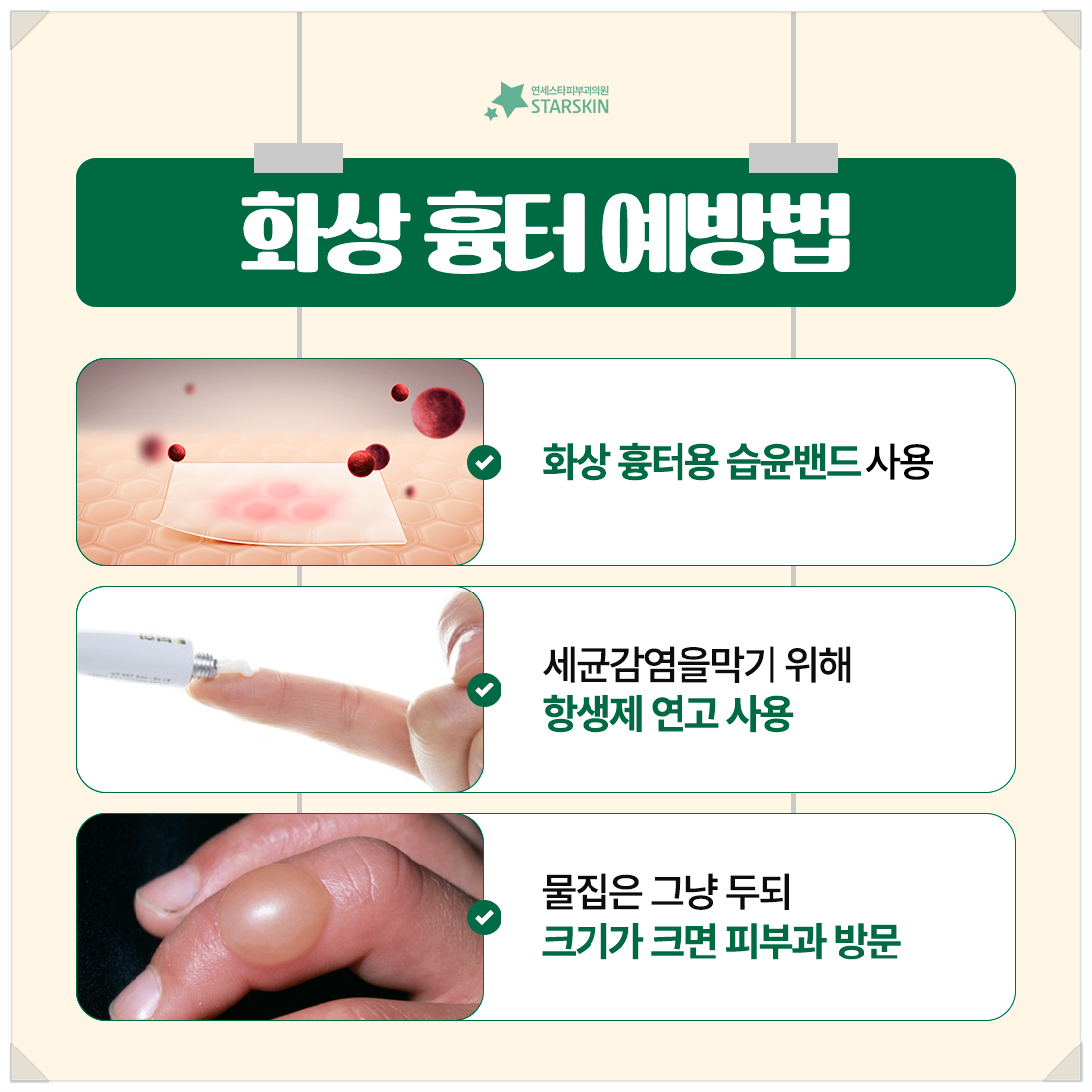
What treatments are available if a scar remains?
Burn scars vary from person to person, so there isn't one fixed method. For those with uneven or hardened skin tissue damage, some even consider skin grafting. However, surgery itself can leave another wound, so laser treatment is often approached first.
One representative method is the Pinhole Technique. By creating microscopic holes in the dermal layer with the Ultrapulse Encore laser, skin regeneration is induced, and tangled and clumped collagen is rearranged, allowing for the expectation of a gradual softening of the hardened scar area. Depending on the depth and hardness of the scar, methods with varying intensities, such as Mild Pinhole or Pinhole Alpha, may be applied.
| Scar Type | Primary Approach |
|---|---|
| Uneven or hardened scars | Induce collagen rearrangement with Pinhole-type lasers |
| Marks with brown pigmentation | Tone correction with toning lasers |
If brown pigmentation remains after a burn, there is also a method of correcting the tone by receiving lasers that treat epidermal pigment over several sessions. However, the degree of response may vary individually, so it is best to plan after directly assessing the scar condition.

Prevention comes before treatment
The best thing is to prevent low-temperature burns from occurring in the first place. Small habits of safely using heating appliances can significantly reduce the risk.
- Do not leave electric blankets or hot water mats on for long periods with a timer.
- Do not apply hot packs directly to bare skin; place them over clothing.
- Change your posture frequently to prevent heat from touching the same area for too long.
- Do not fall asleep on heating appliances after drinking alcohol or when your senses are dulled.
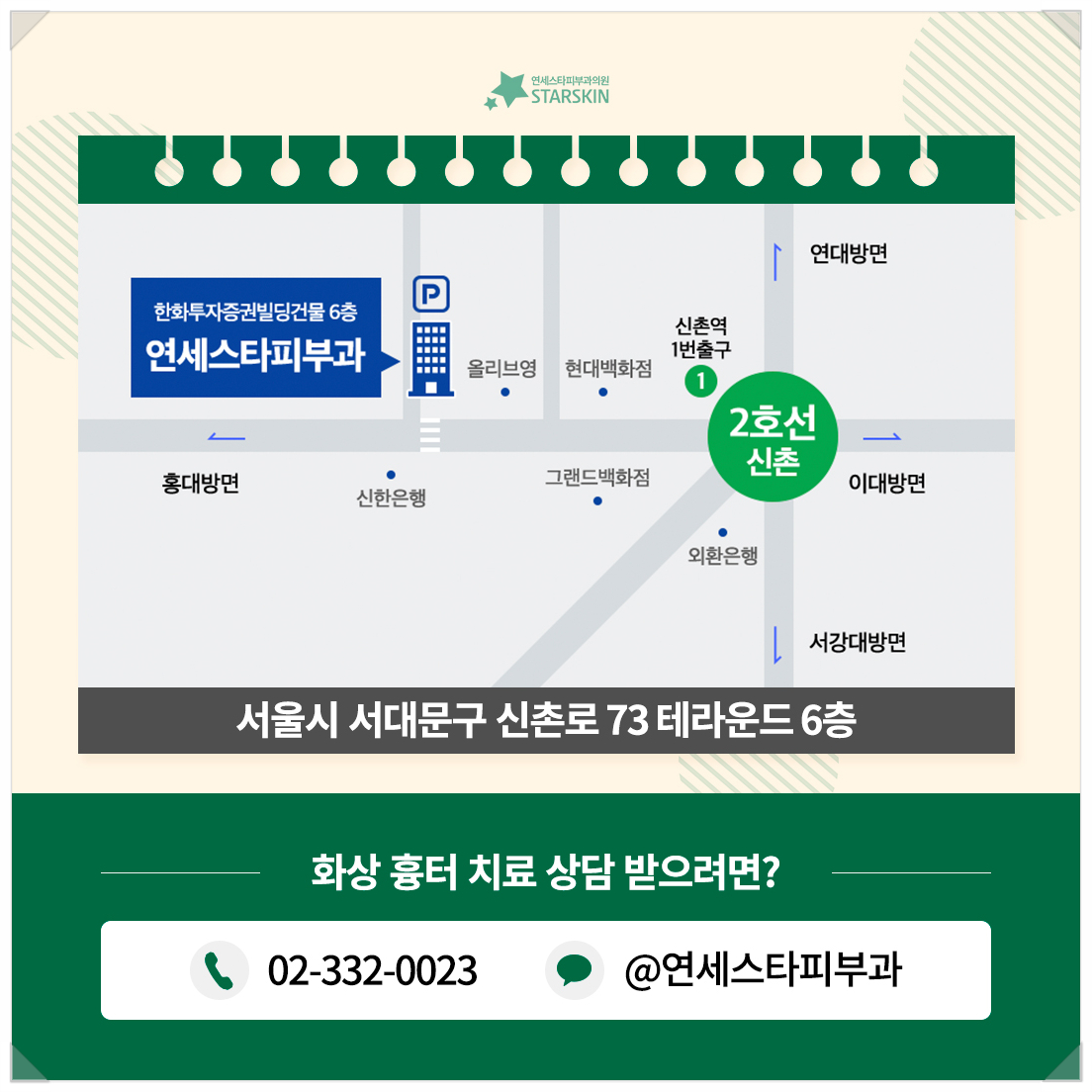
When should you visit the hospital?
If blisters are growing, pain doesn't subside, or marks and pigmentation remain clear even after the heat has dissipated, it's better to visit a dermatologist rather than relying solely on self-treatment. Scars become more challenging to treat as they harden over time, so getting an early assessment of the condition can aid recovery.
We hope you have a warm and safe winter with the methods we've shared today.

If you are concerned about burn scar treatment, it's better to consult with us rather than making a judgment alone. Inquire about burn scar treatment consultation
Chief Director Lee Sang-joo (MD, PhD, Yonsei University College of Medicine and Graduate School, Completed Dermatology Residency at Severance Hospital, President of the Korean Dermatological Association) Chief Director Lee Sang-joo's Profile First published 2023-11-15 / Last reviewed 2026-06-16 The degree of burn and recovery patterns vary from person to person, so please consult with medical staff for an accurate diagnosis and treatment plan.