

Why are lip and philtrum scars particularly bothersome?
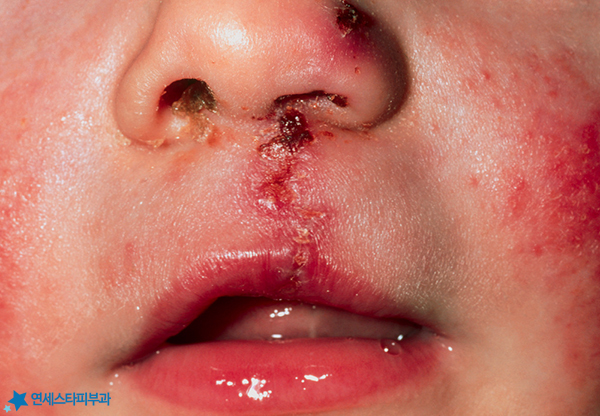
Located at the center of the face, the lips and philtrum are areas where even small injuries can easily leave scars. Many people wonder, "Why do marks in this area last so long?" The answer lies in the unique characteristics of the area itself. Frequent skin movement and inconsistent regeneration speed make injuries prone to occurring, and during the healing process, they can leave red marks, white marks, or raised forms.
Especially, lip scars or philtrum scars are easily visible, leading to stress about one's appearance. Therefore, establishing a treatment plan that considers the specific characteristics of the area from the early stages is paramount.
Causes of scars on the lips and philtrum
The origin of scars varies from person to person. In the clinic, even scars in similar locations often have different causes. The main causes are summarized as follows:
- Sudden trauma such as falls, scratches, or burns
- Adhesions after surgery, such as lip corner surgery or cleft lip and palate surgery
- Pigmentation remaining after dermatitis, herpes, or blisters
- Red marks or white scars that develop due to slow recovery after inflammation subsides
If the skin is delicate or the wound was deep, scars may be more pronounced. Due to frequent movement and thin skin layers, lip and philtrum scars can also be uneven or asymmetrical. If you have similar concerns, you may find it helpful to also review information on Cosmetic Surgery Scar Management.

Laser treatment approaches vary by scar type
Scars on the lips and philtrum require a tailored approach rather than a one-size-fits-all method. By categorizing scars based on their color and shape, the treatment direction becomes much clearer.
| Scar Type | Characteristics | Treatment Approach |
|---|---|---|
| Red Scars | Early sign of scar, red marks and inflammatory response | Suppress excessive vascular response with vascular laser |
| White Scars | Pigment loss and dermal layer damage remaining | Induce dermal regeneration with high-output laser |
| Raised Scars | Hard, raised keloids, hypertrophic scars | Combine scar injections and laser |
Red Scars, an early sign of scarring
Red marks that appear in the early stages of a scar are prone to hyperpigmentation over time, and if this period is missed, their shape can thicken and turn white. In such cases, the approach is to suppress excessive vascular response and reduce inflammation using Vbeam Prima, a vascular laser. The procedure time is short, allowing for a relatively quick return to daily life, and it is applied to early scars with red marks or inflammatory responses. If redness is prominent, you can refer to the principles of Red Acne Scar Treatment in a similar context.
White Scars, a stage requiring dermal regeneration
White scars, where pigment has faded over time, indicate damage deep within the skin. In this case, high-output CO₂ lasers like Ultrapulse Encore are used to induce skin regeneration. This method reaches deep into the dermal layer to promote regeneration and is applied to older scars where pigment has been lost or tissue reconstruction is needed.
Raised Scars, combining laser and injections
Hard, raised scars (keloids, hypertrophic scars) are not just an aesthetic issue but also carry a risk of recurrence, requiring a more cautious approach. Triamcinolone Scar Injection, known as a scar injection, is used to soften scar tissue, and Ultrapulse Encore laser is combined to improve both the thickness and texture of the scar tissue.
Since there are reports of recurrence with injection-only treatment, combining it with laser is recommended.
For such raised scars, it is advisable to first understand the characteristics of keloid scars and then determine how to combine Triamcinolone Scar Injection and laser through consultation.
For inquiries, contact us via chat for lip and philtrum scar treatment
Why are philtrum and lip scar treatments challenging?
Even for the same type of scar, treatment difficulty increases when it occurs on the lips and philtrum. This is linked to three characteristics of these areas.

First, it is an area with frequent movement. The area around the lips moves dozens of times a day due to facial expressions, speaking, and eating, making it an environment where scars can easily become fixed.
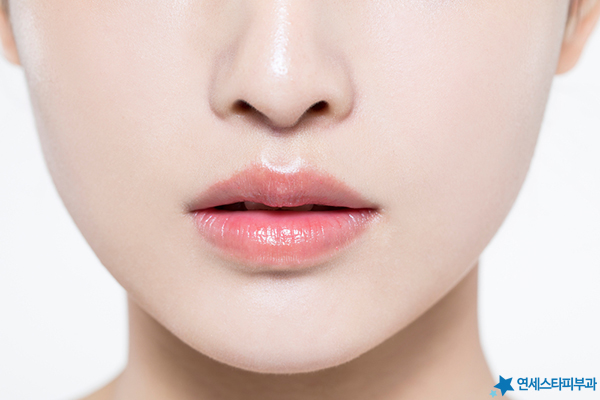
Second, the skin tissue is thin yet tough. The philtrum, the boundary between the nose and lips, has tough skin and slow regenerative capacity, making treatment difficult.

Third, shape and symmetry are crucial in this area. The lip line (cupid's bow) and philtrum curvature affect the central proportions of the face, so even subtle scars can appear prominent. Located in the center of the face, this area significantly influences a person's impression.

Things to remember before treatment
Due to the characteristics of the area, self-care and the timing of treatment influence the results. Checking the following items may be helpful:
- Scars are generally easier to manage in terms of color and shape in their early stages.
- Red scars, white scars, and raised scars require different approaches.
- For raised scars, combining laser with injections is recommended over injections alone.
- Results may vary individually, so the direction should be determined after diagnosis.
The cause of scarring varies from person to person, but it is necessary to proceed with the correct method at the appropriate time to ensure natural improvement without prominent issues. If the degree is deep or tissue reconstruction is needed, Surgical Scar Revision may be considered.

How should I begin?
Lip and philtrum scars are difficult to self-diagnose due to the characteristics of the area. Since the appropriate treatment varies depending on the scar's color, shape, and depth, checking your current condition and then determining the direction is the most realistic starting point.

Representative Director Lee Sang-joo (MD, PhD, Yonsei University College of Medicine and Graduate School; Completed Dermatology Residency at Severance Hospital; President of the Korean Dermatological Association) Representative Director Lee Sang-joo's Profile First Published 2025-07-03 / Last Reviewed 2026-06-16
This article is for general informational purposes only. The condition of scars and treatment results may vary by individual, and an accurate diagnosis should be confirmed through consultation with medical staff.