
![Learn More About Why Laser Treatment is Recommended for Lip Corner Surgery Scars | [Yonsei Star Dermatology Sinchon]](/_next/image?url=https%3A%2F%2Fagqdgbuateknhwpocrgu.supabase.co%2Fstorage%2Fv1%2Fobject%2Fpublic%2Fsources%2Fbbf3bebe-45b6-4415-bd04-bda18b2cac0f%2Fblog-images%2F224078940865_00_de138042f45d.jpg%3Ftype%3Dw966&w=3840&q=75)
A bright, smiling face is a major factor in first impressions. Many people consider lip corner surgery to lift downturned corners of the mouth, but sometimes they face new concerns due to scars left around the mouth after the surgery. The question, "Can lip corner surgery scars be lightened without further incisions?" likely comes to mind first. To answer directly, a combination of lasers and auxiliary procedures is often used for gradual improvement.
Why are lip corner scars particularly noticeable?
Some people are born with downturned lip corners, while others experience it as skin sags with age. If surgical methods are chosen to improve this, traces may remain around the mouth from the incision and suturing process.
Especially around the mouth, the skin is very thin and frequently moves due to expressions and eating, making it a prominent area for scars.
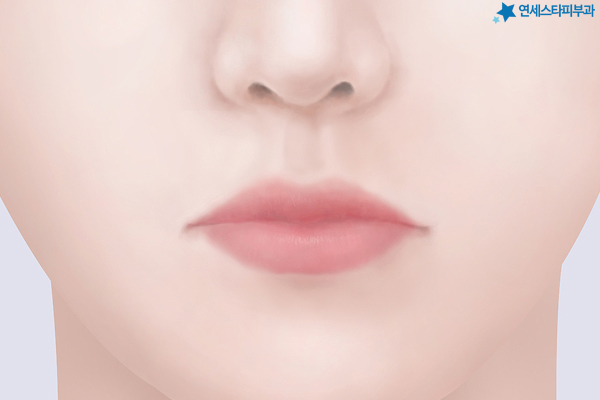
The appearance of scars varies from person to person. They may start as red marks and turn white over time, or they may develop into hypertrophic (raised) forms or, conversely, depressed forms. Since the approach differs depending on the shape they take, it is advisable to have them checked if the marks are a concern.
When is the best time for treatment, before scars harden?
If traces do not fade even after a long time has passed since lip corner surgery, it is possible that they have already turned into scar tissue. Generally, it is reported that starting scar management as early as possible is advantageous.
However, it is difficult to apply lasers immediately after surgery. A recovery period of about 2-3 weeks is usually needed until sutures are removed from the incision site and symptoms like bleeding subside.
Only after sufficient recovery can laser or scar removal procedures be applied. Therefore, if the marks around your mouth are a concern, rather than applying products based on self-diagnosis, we recommend consulting with medical staff first. In the examination room, even with the same lip corner scar, the timing of occurrence and depth vary, so the accuracy of the initial diagnosis greatly influences the subsequent progress.
Those with similar concerns about surgical scars or scars remaining after cosmetic surgery are approached with the same principle.
Why ointments and bandages alone have limitations
Once a scar has formed, simple management with ointments or bandages often has limitations. However, choosing another surgical method can be a significant burden.
In such cases, a method of selecting appropriate equipment by comprehensively considering various factors such as the scar's shape, color, and time of formation is utilized. The following equipment is typically used:
- Ultrapulse Alpha, where the laser reaches deep into the dermal layer to organize clumped scar tissue and induce collagen regeneration.
- StarLux, a non-invasive fractional laser that reduces the burden of epidermal damage while inducing dermal regeneration.
- Vbeam Prima, which calms redness caused by vascular development and addresses chromatic scars.
- Subcision, which helps to organize fibrous bands of adhered skin, allowing deeply depressed areas to fill in.

Even scars caused by the same reason can take on completely different shapes depending on skin characteristics and the intensity of stimulation. Therefore, one method does not fit everyone equally.
Reasons to recommend laser treatment
A major advantage of laser treatment is its wide range of application. It is reported that changes can be expected across a broad spectrum, from early scars with redness to older scars that have faded over time.
Since each scar has a different appearance, it is often combined with multiple devices tailored to the condition rather than relying on a single device.
Depending on the extent of the scar, procedures like Subcision may be combined, or two or more lasers may be used together. Additionally, regenerative injections such as Juvelook or Rejuran may be added to enhance skin regeneration and aim for synergy. If the depression is deep and tissue adhesion is severe, Surgical Scar Revision may also be considered.
If you are unsure about the progression of your lip corner scar, you can easily check by inquiring via chat consultation for those curious about scar treatment.

Things to know before treatment
Before starting lip corner surgery scar treatment, it may be helpful to know the following:
- Since each scar has a different shape, it is important to accurately understand its characteristics before determining the treatment direction.
- Older scars may require a longer period for improvement.
- While combining good equipment and various methods can enhance treatment quality, it does not necessarily shorten the number of sessions or duration.
- A patient attitude of observing the progress step-by-step is more beneficial for the outcome than rushing to finish in a short period.
- There may be individual differences in results, so the speed of recovery and degree of change vary from person to person.
Approach direction according to scar type
| Scar Appearance | Primarily Considered Method |
|---|---|
| Early scars with redness | Vascular laser for chromatic attenuation |
| Deeply depressed scars | Fractional laser, Subcision, regenerative injections combined |
| Raised hypertrophic scars | Approach centered on tissue-organizing lasers |
| Old scars that have settled white | Dermal regeneration induction methods, long-term follow-up |
The above classification summarizes general directions, and actual application varies depending on the individual's scar condition.

Not giving up is the most important thing
Noticeable scars are often difficult to fade satisfactorily through natural recovery alone. However, rather than neglecting them, gradual changes can be expected with consistent laser and procedural treatments.
Older scars take longer, but the key is to not give up and proceed step-by-step.

If you are concerned about surgical scars, including those on the lip corners, we recommend consulting with safe and reliable medical staff to find the right approach for your condition. If you have more detailed questions, you can easily ask below.
💬 Consult Now

Chief Director Lee Sang-Joo (MD, PhD, Yonsei University College of Medicine and Graduate School, completed dermatology residency at Severance Hospital, President of the Korean Dermatological Association) Chief Director Lee Sang-Joo's Profile First published 2025-11-17 / Last reviewed 2026-06-16
This content is for general information purposes only, and since scar appearance and recovery progress vary individually, accurate diagnosis and treatment direction must be determined through consultation with medical staff.