

Facial scratches, even if they appear as minor marks, often become depressed or discolored over time, leaving long-lasting traces. The initial questions are almost always the same: "Will this mark disappear on its own, or do I need treatment?" To put it simply, depending on the depth and timing of the injury, some cases can be managed sufficiently with care, while others require laser treatment.
Why are Facial Scratches So Common?
Our hands are constantly in motion in daily life, and our faces are always exposed. Accidents like being scratched by pets such as dogs or cats, or inadvertently scratching oneself with a fingernail, happen more often than one might think. Therefore, facial scratches can occur frequently to anyone.
Initially, it's easy to dismiss them as minor scratches and simply apply ointment. However, many people later experience stress when surprisingly deep indentations remain. Especially in noticeable areas, they are difficult to conceal even with makeup.

Fingernails are surprisingly strong. Skin tissue is easily torn or indented and damaged, and the skin color around the scar can change. While minor injuries may show some improvement with care, deeply depressed damage is different.
Can I Rely on Natural Healing?
There are cases where much stronger skin regeneration induction is needed than natural healing. In such cases, appropriate laser treatment tailored to the condition can aid recovery.
The treatment approach for early-stage red marks is completely different from that for established, depressed scars. If the timing is missed, the treatment period can be prolonged, so it's important to first assess the condition of the mark.
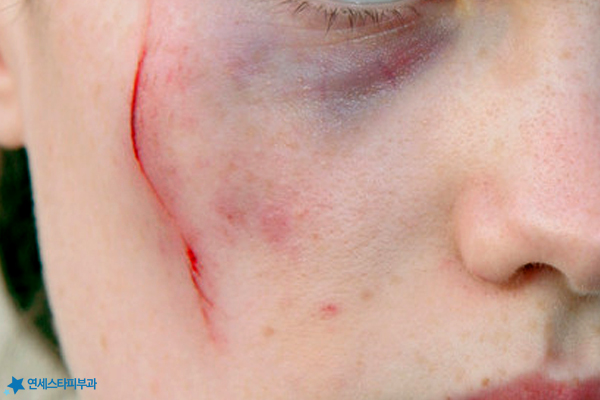
In the clinic, early scratches often remain as red marks. Many people consider them injuries that will heal over time and neglect them, only applying ointment. However, areas deeply marked by fingernails are highly likely to lead to scars.
Treatment Approaches Based on Timing and Appearance
Scratches cannot be resolved with a single method. The approach varies depending on the stage of the mark.
| Scar Type | Main Characteristics | Treatment Approach |
|---|---|---|
| Early Red Marks | Redness due to vascular dilation | Vascular laser |
| Depressed Scars | Fibrous bands pulling the skin | Subcision combined with laser |
| Pigmentation Traces | Uneven skin tone | Pigment laser |
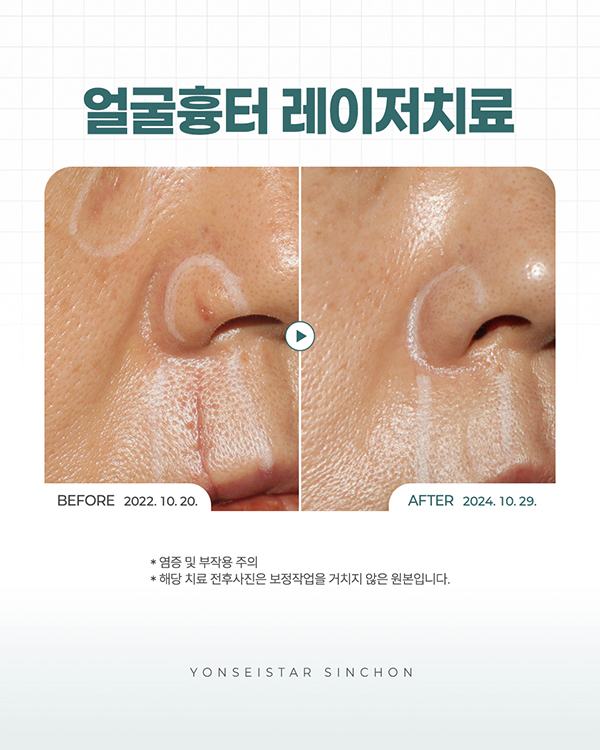
In the early stage, characterized by redness, Vbeam Prima, a vascular laser, is used to calm the redness. This can help reduce the likelihood of the scar becoming more deeply depressed or turning white and settling as it heals. The principle of this approach is also related to V-beam Facial Redness Treatment, where redness persists for a long time.
If a significant portion has already become a depressed scar, the situation changes. The treatment period will be longer, and the treatment method will also change compared to early scratches.
To Fill Depressed Marks, First Cut the Bands
The cause of depressed shapes includes fibrous bands pulling the skin inward. These bands must be appropriately cut to allow the depressed area to rise and naturally fill in again.
For this, combining Subcision with Ultrapulse Alpha laser treatment can lead to better results. The approach of cutting fibrous bands is also used with the same principle in Surgical Scar Revision and Depressed Acne Scars treatment.
If you have any questions, inquire via chat consultation about scratch scar treatment directions

If the Color is Unevenly Left Behind
Sometimes, pigmentation occurs around the scratch scar, leading to an overall uneven skin tone. In such cases, the PicoWay Laser, which helps with pigment treatment, can be a good alternative.
Scars often do not present with just one characteristic. If redness, indentation, and pigmentation are mixed, it is often best to approach them in stages.

Daily Care to Prevent Scars from Worsening
Initial care is as crucial as treatment in determining the depth of a scar. If you've just been scratched, it's good to check the following:
- Do not scratch or pick at the wound area again with your fingernails.
- Do not forcibly remove scabs; let them fall off naturally.
- During recovery, diligently use sunscreen to reduce pigmentation.
- If redness or indentation persists for more than 2 weeks, consult a doctor instead of neglecting it.
- If the scar area deepens or darkens, seek early confirmation.
Until You Regain a Clear Face
Many people wish to maintain a flawless, clean face. Even a small nail mark, if it remains as a scar, can cause significant stress.
It's often dismissed as an unavoidable problem that can occur at any time in daily life. However, it is possible to fill in scratch scars and lighten marks through laser and Subcision treatments tailored to the specific condition. Since scar patterns vary individually, it is safer to confirm an accurate diagnosis and treatment plan through consultation with medical staff.
💬 Chat for a consultation now[Sinchon Facial Scratch Scar Treatment Yonsei Star Dermatology]


Representative Director Lee Sang-joo (MD, PhD, Yonsei University College of Medicine and Graduate School; Completed Dermatology Residency at Severance Hospital; President of the Korean Dermatological Association) Representative Director Lee Sang-joo's Profile First Published 2026-03-09 / Last Reviewed 2026-06-16
This content is for general information purposes only, and scar patterns and treatment responses may vary from person to person. Please consult with medical staff for an accurate diagnosis and treatment plan.