
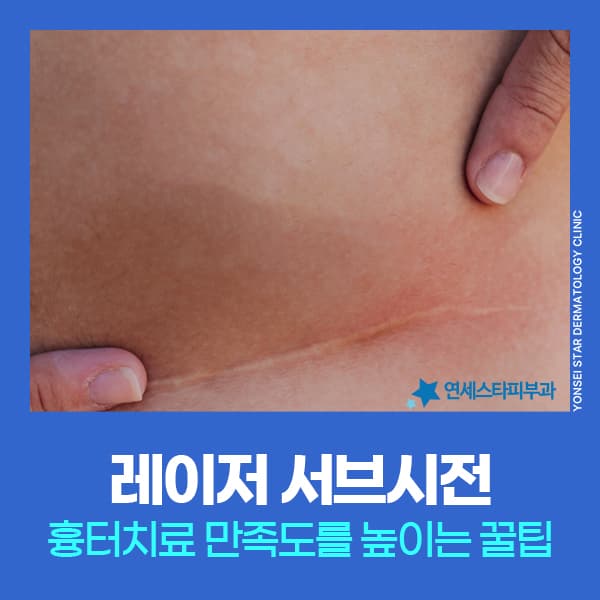
If your skin is thin and easily reddens with irritation, you might stop at the mention of "laser" even when looking into depressed marks, simply because you only think of aggressive ablative methods. However, there isn't just one way to treat depressed marks, and it's not always about resurfacing the skin.

The Real Reason Marks Don't Fill In
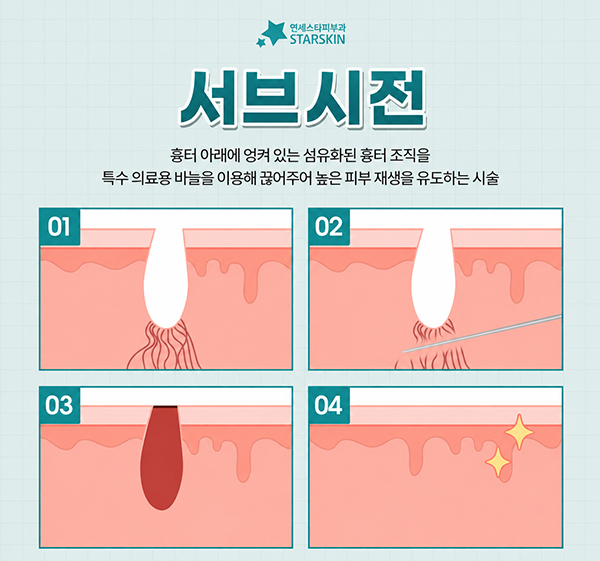
When you look at a sunken area, it might appear as if the surface is indented, but the actual area that needs attention is beneath it. During the healing process after inflammation has reached the dermis, tough tissue forms in that spot, anchoring the skin downwards like an anchor.
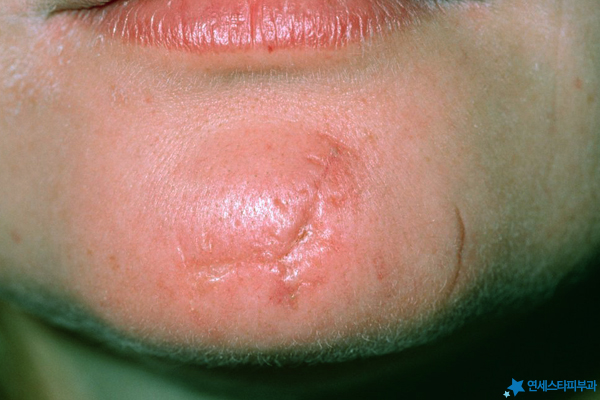
This is why methods that only regenerate the surface have limitations. Even if new skin grows, if the pulling force from below remains, it cannot rise to its original height. This is why, when planning treatment, both the surface and the base must be considered together.
First, We Sever the Anchoring Force
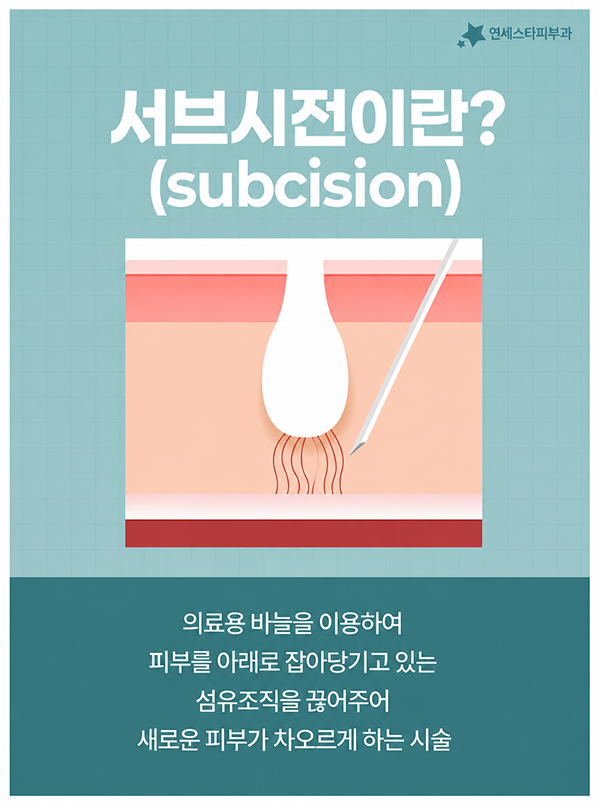
Subcision is a method where a fine needle is inserted without incision to sever the tissue that pulls the skin down. Once this connection is released, space is created for new collagen to form in the empty area, and the depressed area gradually rises over time.
Laser Subcision adds shockwaves to this process. A specialized patch is placed on the area, and energy is delivered in the form of shockwaves. This method does not directly heat the surface, but rather loosens hardened tissue and stimulates cells to produce collagen. The reduced thermal burden makes it a viable option for sensitive skin.
A Procedure That Cannot Be Seen with the Naked Eye
This procedure is not performed by looking directly into the skin. The angle at which the needle is inserted and the extent to which shockwaves are used together vary depending on the depth, shape, and hardness of the scar. This is why results can differ even with the same equipment, and why diagnosis is as crucial as the procedure itself.
In Summary
There isn't just one way to treat scars. The appropriate approach varies depending on whether the cause is superficial or deep, and how much heat the skin can tolerate. If you've been postponing treatment due to sensitive skin, we recommend checking the method suitable for your skin type.

Author · Dr. Sang-Joo Lee, Chief Director / Board-Certified Dermatologist As the Chief Director of Yonsei Star Dermatology Sinchon, Dr. Lee Sang-Joo has long specialized in treating everything from pigmentation and wrinkles to scars. He serves as the President of the Korean Dermatological Association in 2026 and an adjunct professor at the Department of Dermatology, Yonsei University College of Medicine. Detailed credentials can be found in his medical staff profile. · Last reviewed September 2, 2026
This article is intended to provide general medical information, and treatment methods and results may vary depending on the depth of the scar and individual skin condition. Please consult with a board-certified dermatologist for an accurate diagnosis and treatment plan.