

Do you feel like a recent scar is gradually getting bigger or thicker over time? If it's accompanied by itching or pain, you might want to check if it's related to a keloid scar predisposition. To put it simply, keloids often don't fade on their own over time, making early intervention crucial.
Why are keloids different from ordinary scars?
When a wound occurs on the body, it usually heals slowly over time, recovering to a state close to the original skin. However, keloids are abnormal scars formed by excessive collagen production, characterized by swelling beyond the original wound area. They are distinguished from ordinary scars in that they can lead to daily discomfort, not just a cosmetic concern.
In the clinic, we often see many patients who visit us late because scars that started from small scratches or acne marks have gradually grown larger. Therefore, it's important to have a habit of checking your condition before it worsens.
If you see these signs, a check-up is needed
Keloids tend to appear in relatively noticeable forms. If you observe the following changes, we recommend checking your condition rather than neglecting it.
- Swells wider and thicker than the wound
- Appears red or purplish and rises above the skin surface
- Does not fade over time and may even grow larger
- May be accompanied by pain, stinging, and itching
These morphological characteristics, along with the potential for daily discomfort in severe cases, differentiate them from ordinary scars. Therefore, it is considered an area that requires a systematic approach.
What are the treatment options for keloid skin?
Keloids often make it difficult to achieve satisfactory results with a single method, so treatment usually involves combining several approaches tailored to the condition. The representative methods considered are summarized below.
| Approach | Expected Role | Considerations |
|---|---|---|
| Steroid Injection | Suppresses tissue growth, relieves itching and pain | Duration of effect and recurrence variables |
| Surgery | Removes raised scar tissue | New scar at incision site, possibility of recurrence |
| Laser | Improves redness, restores skin tone | Equipment selection based on condition and timing |
Steroid Injection
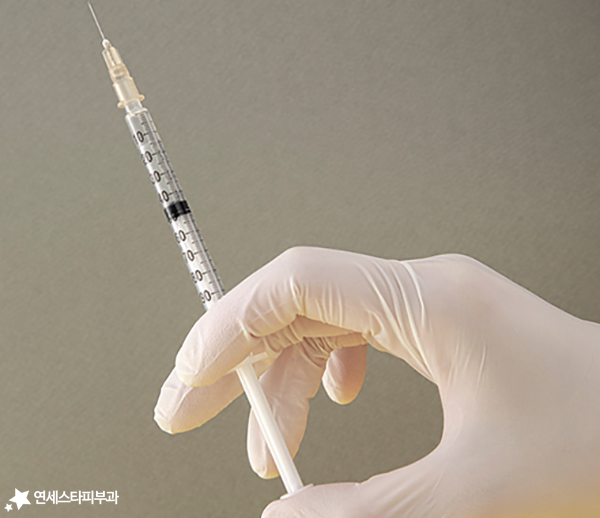
This is a method often considered first when a problem arises. Steroids help suppress the growth of keloid tissue and alleviate discomforts such as pain or itching. However, cases where the effect does not last as long as expected or recurrence is reported, so it's good to know in advance that the satisfaction with Triamcinolone Scar Injection might be lower with a single method.
Surgery
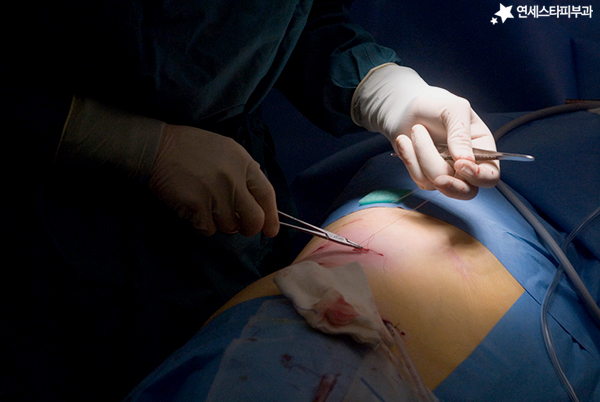
Some people consider Surgical Scar Revision to remove the protruding scar tissue. However, this comes with the burden of potentially creating another scar during the incision process. Since it is heavily influenced by individual constitution and has a possibility of recurrence, follow-up observation is considered necessary even after surgery.
Laser
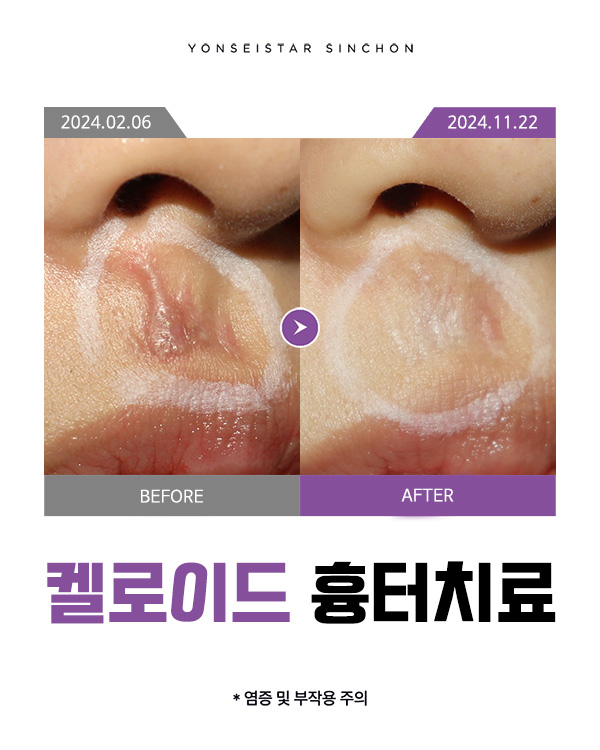
When scars form due to a keloid predisposition, they generally appear reddish. Lasers are used to restore this redness to a color closer to normal skin. Even in situations requiring strong skin regeneration, such as when the color changes to white after a long time, equipment appropriate for the condition can be selected, allowing for treatment regardless of the scar's shape or timing of occurrence.
If you have any questions, feel free to leave them via chat consultation regarding keloid scar treatment.
Reasons why combination therapy is recommended

When injection therapy to lower the height of raised scars is performed together with laser treatment to improve redness caused by excessively proliferated blood vessels, results show symptom improvement and a reduced possibility of recurrence.
Rather than relying on a single method, combining approaches by considering the scar's height, color, and timing of occurrence is the basic direction for keloid management. As there can be individual differences, the process of creating a plan tailored to your condition is important.
How to manage it in daily life

It is not yet clear how to accurately confirm if one has a keloid predisposition in advance, so many people only seek medical attention after a scar has formed. If your wounds tend to swell unusually or if minor scratches frequently leave scars, daily management is particularly important.
- Keep even minor scratches and wounds clean
- Avoid unnecessary irritation or damage to the skin
- Check early if you notice any changes like the scar swelling or growing larger
- Also observe changes in scars formed after incisions, such as cosmetic surgery scars or surgical scars
- Record the progress rather than neglecting it based on self-diagnosis
It's important to start not too late

Keloids are difficult to improve naturally, so it's important to start keloid skin treatment appropriate for the condition when discovered early. If you see raised scars that are larger than the damaged area, we recommend getting them checked rather than neglecting them.
Scar improvement may not be achieved in a short period, but by proceeding step-by-step with a method tailored to you through sufficient consultation, you can reduce daily discomfort. It's not too late, so we recommend starting your check-up now.
💬 Consult NowRepresentative Director Dr. Sang-Joo Lee (MD, PhD, Yonsei University College of Medicine and Graduate School, Completed Dermatology Residency at Severance Hospital, President of the Korean Dermatological Association) Representative Director Dr. Sang-Joo Lee Profile First published 2025-05-08 / Last reviewed 2026-06-16
The above content is for general information purposes only, and symptoms and progress may vary individually, so please confirm the exact diagnosis and treatment direction through consultation with medical staff.