
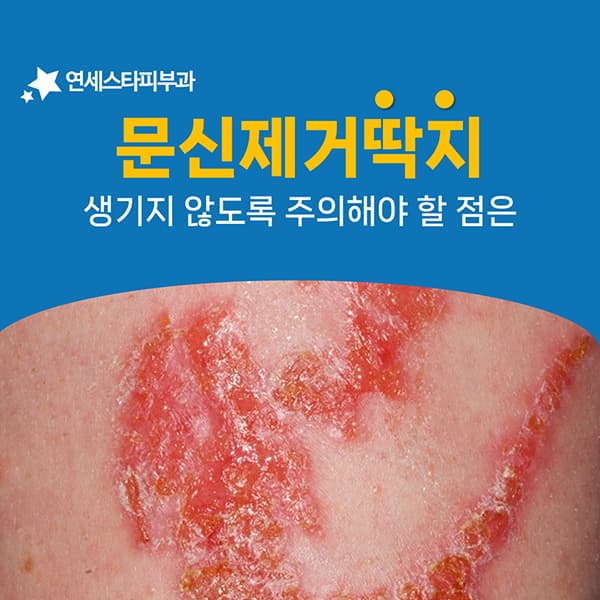
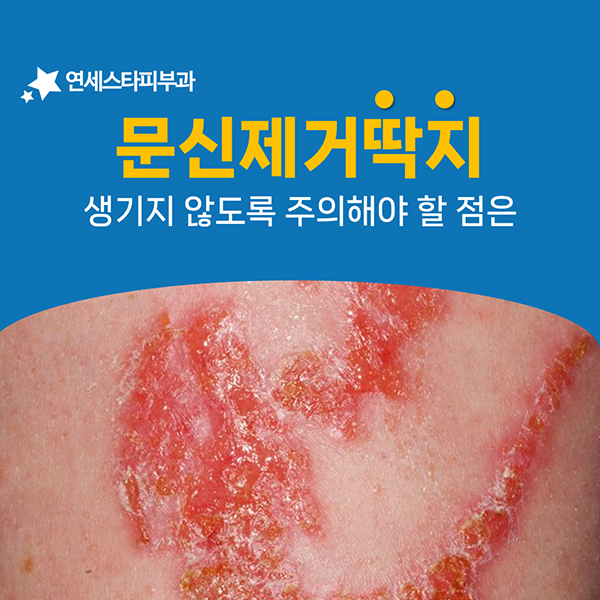
Many people receive laser treatments to remove tattoos. This is often due to the short duration of each session, allowing them to continue with their daily lives.
However, if blisters or scabs form after the procedure, the likelihood of scarring increases. Tattoo removal is not only about erasing the tattoo but also about protecting skin health.
Why Do Scabs Form?
When the laser reacts with tattoo pigment, inflammation occurs, and scabs form during this process. This happens more frequently than one might expect.
Scabs themselves are a reaction that occurs as the skin heals. Therefore, rather than trying to remove them, it's important to manage them well and let them pass naturally.

Cleanliness and Moisturizing After Treatment
To prevent scabs from forming, maintaining cleanliness after the procedure is most important. Gently wash the treated area with lukewarm water.
- Apply antibiotic ointment to prevent infection.
- Moisturize the skin sufficiently with a low-irritant moisturizer.
- Ensure the treated area does not dry out.

When Blisters Occur
Never pop blisters. Popping them increases the risk of infection.
Blisters are also a reaction that occurs as the skin heals itself. It is best to leave them undisturbed and allow them to heal naturally.
Summary of Care Items
| Timing | What to Do | Reason |
|---|---|---|
| Immediately after treatment | Gently wash with lukewarm water | Maintain cleanliness without irritation |
| Early recovery | Apply antibiotic ointment | Prevent infection |
| Throughout recovery | Use a low-irritant moisturizer | Reduce scab formation due to dryness |
| If blisters occur | Do not pop them | Popping increases infection risk |
| When going out | Use sunscreen | Possible pigmentation if exposed to sunlight |

Treatment Configuration to Reduce Scab Risk
PicoWay Laser is equipment used to remove tattoo pigments. By adding the R-Zero Technique, a special medication can be applied, allowing the laser to be applied up to 4 times in a single session.
This can lead to faster removal than traditional methods, reduce skin damage, and be broadly applied to various tattoo colors. The combination of these two approaches aims to reduce the risk of scab formation.
Tattoo removal is a procedure that requires specialized knowledge and experience. We recommend receiving treatment from trusted medical professionals. Equipment configurations are detailed in R-Zero Pico-Frectat Tattoo Removal, and other methods are summarized in Nd:YAG Tattoo Removal.

Sun Protection is the Other Half
After treatment, the skin becomes sensitive. Exposure to sunlight can cause pigmentation, so it is advisable to use sunscreen when going out.
By avoiding irritation with your hands, preventing dryness, and consistently managing UV protection, you can reduce the burden of scabs or blisters and recover. Recovery progress may vary individually.
The overall treatment flow can be found in Tattoo Removal Treatment Guide.
If you are confused about care methods, please inquire via chat now.


Authored and Medically Reviewed by Chief Director Dr. Lee Sang-joo (Dermatologist) Former Resident in Dermatology at Severance Hospital · Former Professor of Dermatology at Yeongdong Severance Hospital Doctor of Medicine, Yonsei University College of Medicine · President of the Korean Dermatological Association in 2026 View Medical Team Profile
First Published 2025-10-16 · Last Reviewed 2026-07-29
This article contains general medical information and is not a substitute for individual diagnosis and treatment. Results and recovery progress may vary individually.