



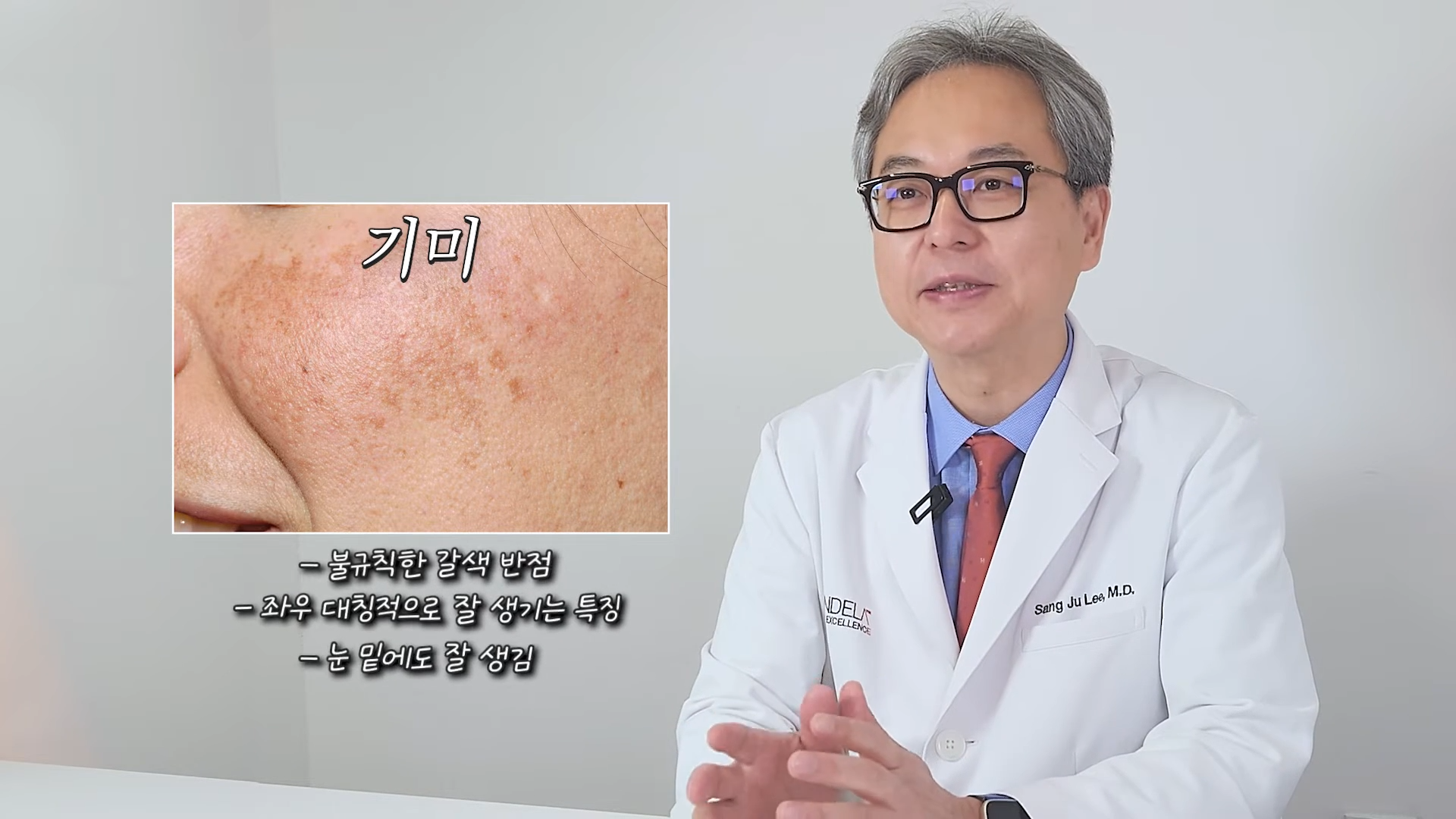


Even with meticulous UV protection, melasma inevitably reappears when stress accumulates or hormones change. Many people, tired of covering it with makeup, look into laser treatment, but once they start, they often give up midway, thinking, 'Why is this taking so long?'
Melasma is a pigmentary disorder where melanin pigment is deeply embedded from the epidermis to the dermis, and vascular dilation and hormonal changes are complexly involved. Because it's not simply about removing pigment particles but requires continuous management to prevent recurrence, the choice of treatment method and consistency are particularly important.

Pigmentary Disorders That Look Similar But Are Different
Melasma is not the only pigmentary issue that dulls the skin. Melasma, blemishes, freckles, and post-inflammatory hyperpigmentation all look similar on the surface, but the skin layer where the pigment is located and the causes of their occurrence are different.


As such, since each pigmentary disorder requires treatment in different skin layers and with different appropriate methods, accurate differential diagnosis is the first step in treatment. Even if they look like the same pigment, choosing the wrong laser can actually worsen the pigment or increase the risk of recurrence.

Difference Between Laser Toning and Pico Toning
Laser toning is the most commonly used method for pigment treatment. General laser toning involves repeatedly irradiating with a relatively low-intensity laser to gradually break down melanin pigment. While this can be advantageous for reducing skin irritation, the number of treatments can be long, and the effects may feel slow, leading to abandonment midway. However, if pigment management is stopped during treatment, the dormant problems may recur, often making it more difficult.
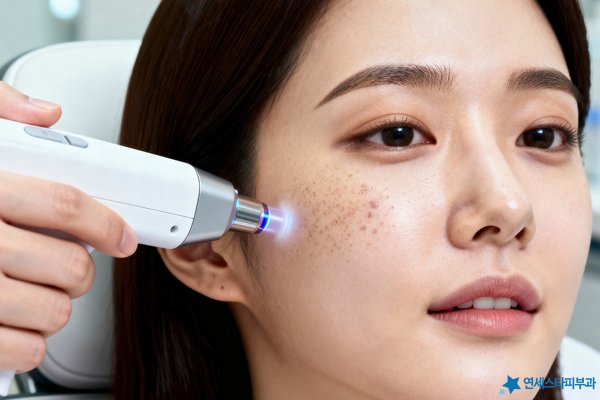
Pico lasers used in melasma Pico toning have a fundamentally different mechanism of action than conventional lasers. Compared to general lasers that use nanosecond (one billionth of a second) pulses, Pico lasers deliver energy with much shorter picosecond (one trillionth of a second) pulses. The shorter the pulse duration, the higher the peak power generated, which allows for finer fragmentation of pigment particles. The key feature of Pico lasers is their ability to selectively act on pigment while minimizing thermal damage to surrounding healthy tissue.


Among Pico laser toning devices, PicoWay is an original picosecond laser from Candela, USA, and is considered a widely used device for treating various pigmentary problems. Melasma often involves pigment complexly located in both the epidermis and dermis, and PicoWay allows for customized approaches based on the depth and type of pigment through its four different wavelengths. Furthermore, the Pico toning method is characterized by low-energy, repeated irradiation without scabs, which allows for a quick return to daily life and is advantageous for reducing the risk of post-inflammatory hyperpigmentation side effects.
Why Consistent Management is Necessary
One of the most common mistakes in melasma treatment is stopping treatment when it 'feels a bit better.' Since melasma is a state where the melanin-producing melanocytes themselves are overactive, even if surface pigment is reduced by treatment, it is prone to recurrence if UV exposure or hormonal changes continue.
PicoWay Laser toning is not a treatment completed in 1-2 sessions. It is important to consistently manage it by gradually reducing pigment particles through repeated procedures and suppressing melanin production. Stopping treatment midway can actually stimulate melanocytes to react more actively, leading to faster recurrence.

For pigmentary issues, including melasma, even if they appear similar on the surface, the cause and skin layer differ, so an accurate diagnosis comes first. Melasma Pico toning is an approach that finely fragments pigment with ultrashort picosecond pulses, minimizing damage to surrounding tissue, and the effects of melasma pigment treatment can be expected with consistent continuation. To maintain the treatment effect for a long time, UV protection management in daily life must be combined with the procedure.

In Summary
Since pigment treatment methods vary depending on the cause and skin layer, please confirm with a consultation for an accurate diagnosis.
Author · Dr. Sang-Joo Lee, Chief Director (Dermatologist) Dr. Sang-Joo Lee is the Chief Director of Yonsei Star Dermatology Sinchon and has long specialized in pigment and scar treatment. He will serve as the President of the Korean Dermatological Association in 2026 and is an adjunct professor at the Department of Dermatology, Yonsei University College of Medicine. His clinical history can be found in his profile. · Last reviewed August 6, 2026
This article provides general medical information, and treatment methods and results may vary depending on the condition of melasma and pigment, and individual skin characteristics. Please consult a dermatologist for an accurate diagnosis and treatment plan.