

Lentigo, seborrheic keratosis, melasma, and freckles are common pigmentary disorders that dull the complexion. "Can a single laser treatment remove them completely?" is the first question we often hear in the consultation room. However, pigmentary disorders often involve both the epidermis and dermis, making treatment more challenging than expected.
Blemishes on the face tend to darken and grow in size or spread widely over time. Since multiple problems often appear together rather than as a single lesion, treatment can be complex. Laser treatment is a representative method for addressing such pigmentary disorders.

Laser treatment has been consistently chosen for its quick procedure time and fast return to daily life. However, the possibility of recurrence is a concern for many. Yonsei Star Dermatology Sinchon recently introduced the highly anticipated RePott Laser. Let's take a closer look at its features.
What makes RePott Laser different from existing pigment lasers?
While conventional pigment lasers are simple and quick for a single session, multiple repetitions were often required to achieve desired results.

RePott Laser uses a 532nm high-output method, which is reported to allow for efficient treatment with fewer sessions. The notable point is that fewer treatment sessions also reduce skin irritation and time burden. Results may vary by individual.


Why is lentigo a challenging pigmentary disorder to treat?
RePott Laser is effective in treating epidermal pigment, and it has a particular strength in removing lentigo, a concern for many. Lentigo is primarily caused by excessive sun exposure or skin aging.
Medically, it is classified as a benign tumor and does not directly harm health. However, it can make the skin appear dull, leading to external stress. Over time, the size of a single lesion may increase, or in some cases, brown spots may cluster and spread widely. Since it does not disappear naturally, precise treatment and management, such as laser therapy, are required. If epidermal pigment is present along with lentigo, Epidermal Pigment Removal treatment may also be considered.
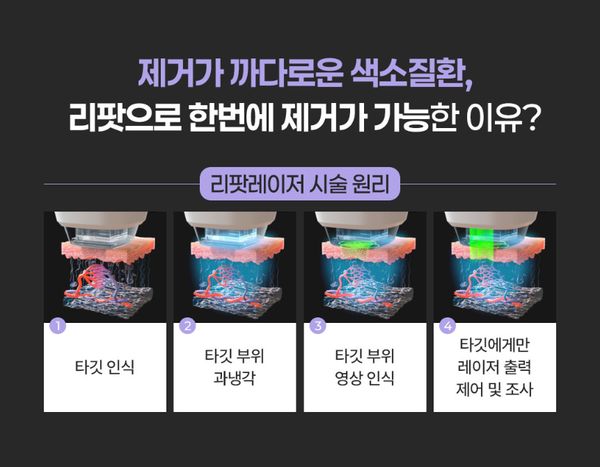
The principle of targeting only pigment while protecting the dermis and blood vessels
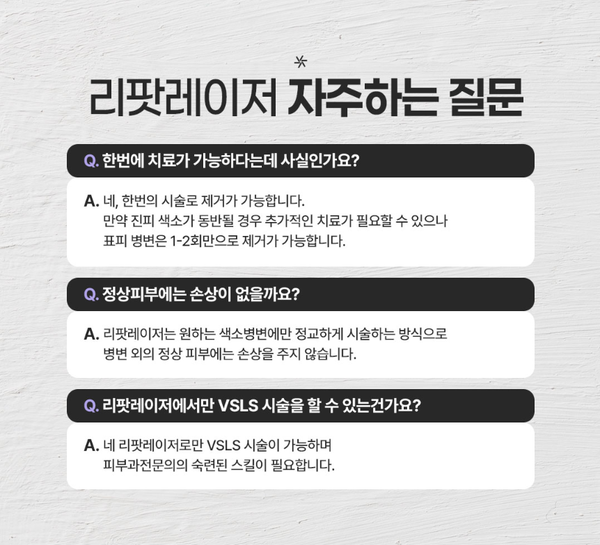
RePott Laser precisely targets and removes pigment from problematic lesions while protecting the dermal layer and capillaries. The precise application range also reduces damage to surrounding healthy tissue.

This technology, called Vasculature Salvage Laser Surgery (VSLS), is the core of RePott Laser. It constricts blood vessels to reduce the risk of damage during the procedure and selectively applies the laser only to pigmentary lesions.
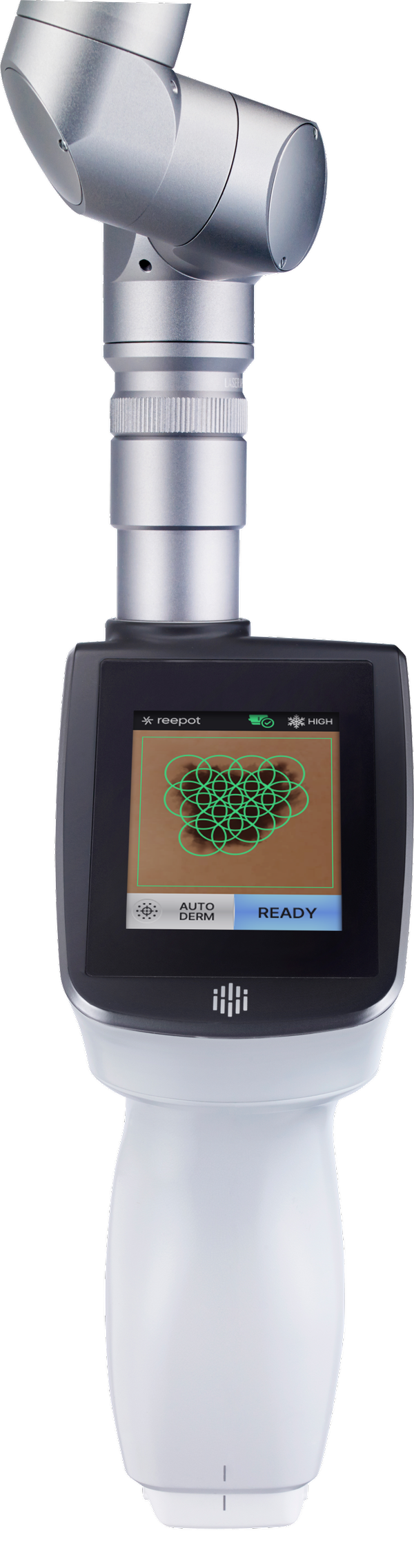
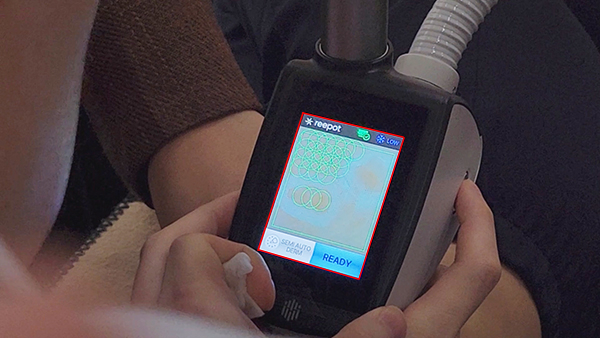
This device is approved by the Ministry of Food and Drug Safety, and its handpiece has a built-in camera to accurately confirm the lesion's location before laser irradiation.
Individuals with thin and sensitive skin may hesitate due to concerns about redness, pain, or burns after laser treatment. RePott is equipped with a high-performance cooling system that adequately cools the skin during the procedure, protecting it from the risk of vascular rupture or inflammation. It is characterized by improving the shortcomings of existing treatments, such as pain, redness at the treatment site, and additional pigmentation, allowing for a quick return to daily life. Reactions may vary by individual.
If you are wondering if RePott Laser is right for you, feel free to ask via Lentigo Pigment Treatment Chat Consultation.
Post-treatment care is essential for long-lasting effects
Facial pigmentary disorders such as lentigo, seborrheic keratosis, melasma, and freckles are likely to occur in combination. Even with excellent treatment, neglecting post-care can shorten the duration of the effects. To maintain clear and bright skin for longer, it is good to take care of the following:
- Apply sunscreen thoroughly and reapply when going out.
- Avoid touching or irritating the treated area with your hands.
- Moisturize sufficiently to maintain a healthy skin barrier.
- Regularly check the pigment condition with skin diagnostics.
RePott Laser is a device specialized for treating lentigo and seborrheic keratosis. Pigment problems are known as intractable diseases with high recurrence rates, as they are widely mixed from the epidermal to the dermal layers, even after treatment. In particular, lentigo grows larger if left untreated, so rapid treatment before the pigment spreads widely is reported to be helpful.
However, increasing the intensity alone can burden the skin. RePott is designed to minimize the burden during treatment, even with a high-output laser, through its cooling and compression methods that reduce vascular damage.
From immediately after treatment to recovery, this is how it proceeds
It is reported that even a single treatment can lead to good improvement and low risk of side effects, resulting in high satisfaction. Immediately after the procedure, a regenerative tape is applied and removed after about 2 weeks of recovery.
| Step | Details | Precautions |
|---|---|---|
| Immediately after treatment | Apply regenerative tape | Minimize external contact |
| Approx. 2 weeks recovery | Skin regeneration in progress | Do not remove patch arbitrarily |
| Patch removal | Removed at the clinic | Visit immediately if abnormal |
During the approximately 2 weeks of skin regeneration, it is best to minimize external contact and leave the patch on until it is removed at the clinic. Although it may be somewhat inconvenient in daily life, adhering to these guidelines will increase treatment satisfaction. If you experience any unusual symptoms such as irritation or redness around the patch area during the recovery period, it is recommended to visit the clinic where you received treatment immediately for appropriate measures.

Why pigmentation is called an intractable disease
Pigmentation is called an intractable disease due to its high recurrence rate. It requires treatment that addresses not only visible lesions but also the mixed conditions throughout the epidermal and dermal layers.

The problem is that it is difficult to accurately assess the condition within the dermis with only visual checks, which increases the likelihood of neglect. Yonsei Star Dermatology Sinchon conducts thorough skin diagnostics before treatment to enhance the satisfaction of RePott Laser.
Steps from pre-treatment diagnosis to customized treatment
First is the VISIA skin measurement diagnosis. This device diagnoses the condition of the skin that is difficult to confirm with the naked eye, which can be called a health check-up for your skin. It diagnoses various items in detail, including pigmentation, wrinkles, pores, oiliness, moisture, skin temperature, elasticity, and skin tone. As a result, you can understand what care you need now.
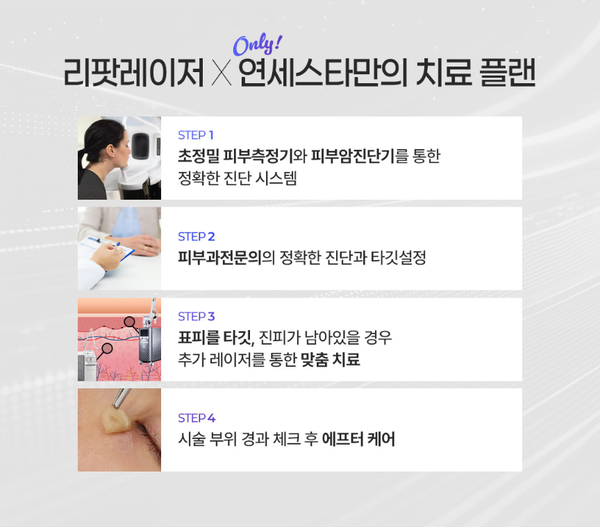
Second is a precise diagnosis by a dermatologist. Even after receiving an examination with good equipment, it can be daunting to figure out how to start care based on the results. After measurement, a dermatologist directly diagnoses what care is needed and what should be prioritized, then proceeds with tailored treatment. Even when using the same equipment, the expertise and meticulous checks of the practitioner are crucial for greater synergy.

Third is customized treatment for epidermal and dermal pigment. Pigment treatment is challenging because it often spreads widely not only on the surface but also in deeper layers. Yonsei Star Dermatology Sinchon has pigment lasers suitable for various lesions that can be applied to each skin layer. Epidermal pigment is addressed with RePott Laser Pigment Treatment, and remaining dermal pigment is treated with appropriate lasers in separate stages. If whitening care is also needed, we may recommend a Customized Whitening Solution, and if raised lesions like moles or warts are present, we may also consult on Laser Lesion Removal.

If you have long-standing pigment concerns like lentigo, seborrheic keratosis, melasma, or freckles, the first step is to confirm the treatment direction that suits your skin condition.
💬 Consult NowRepresentative Director Lee Sang-joo (MD, PhD, Yonsei University College of Medicine and Graduate School, completed dermatology residency at Severance Hospital, President of the Korean Dermatological Association) Representative Director Lee Sang-joo's Profile First published 2025-01-22 / Last reviewed 2026-06-16
This article provides information to help understand pigmentary disorders, and even for the same lentigo or seborrheic keratosis, reactions may vary from person to person. Therefore, please consult with medical staff for an accurate diagnosis and treatment plan.