
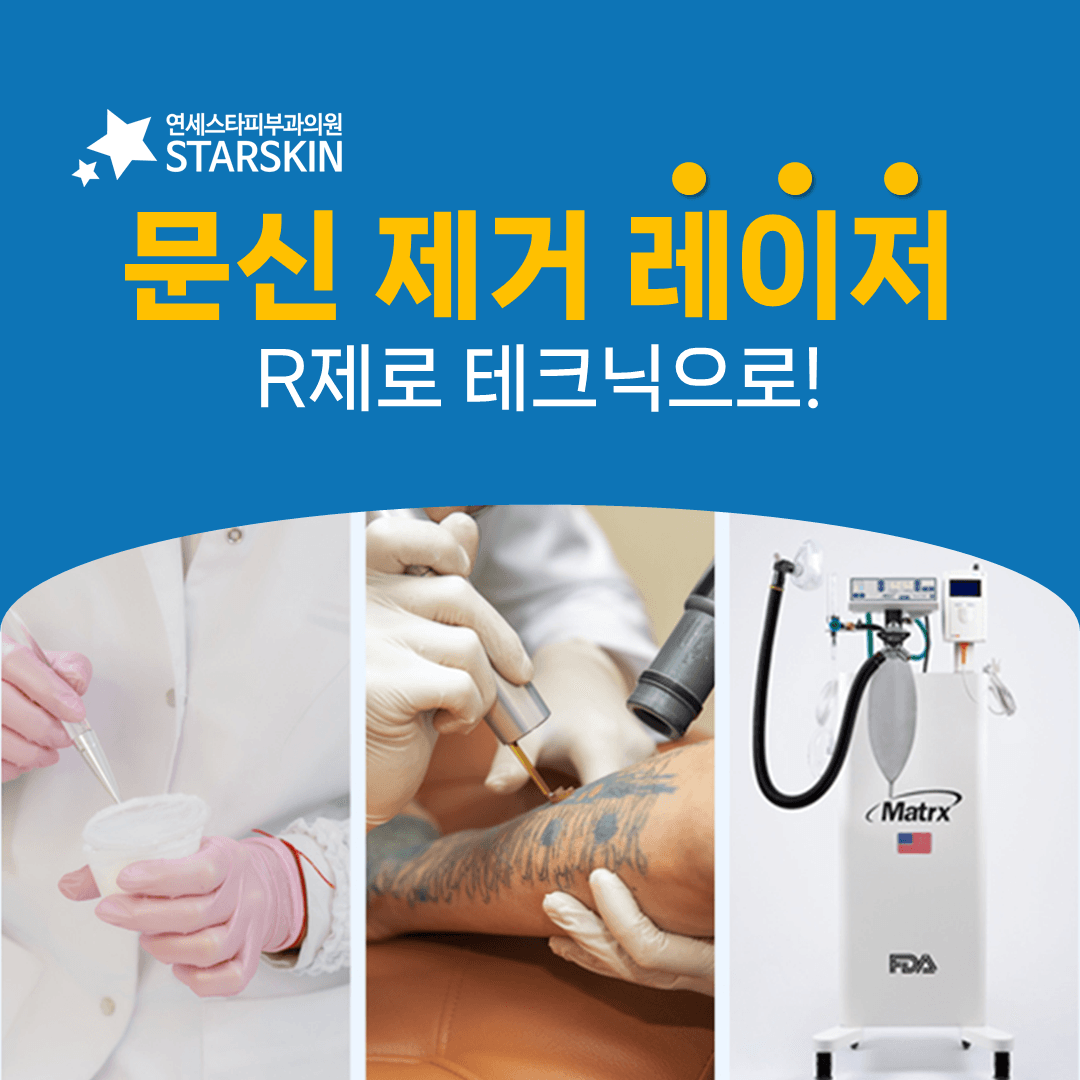
The biggest concerns when considering tattoo removal are scarring, pain, and how many sessions will be needed.
This article explains the actual sequence and what happens at each step of the R-Zero Technique, performed with a tattoo removal laser at Yonsei Star Dermatology Sinchon.
A technique combining R-Zero and Pinhole
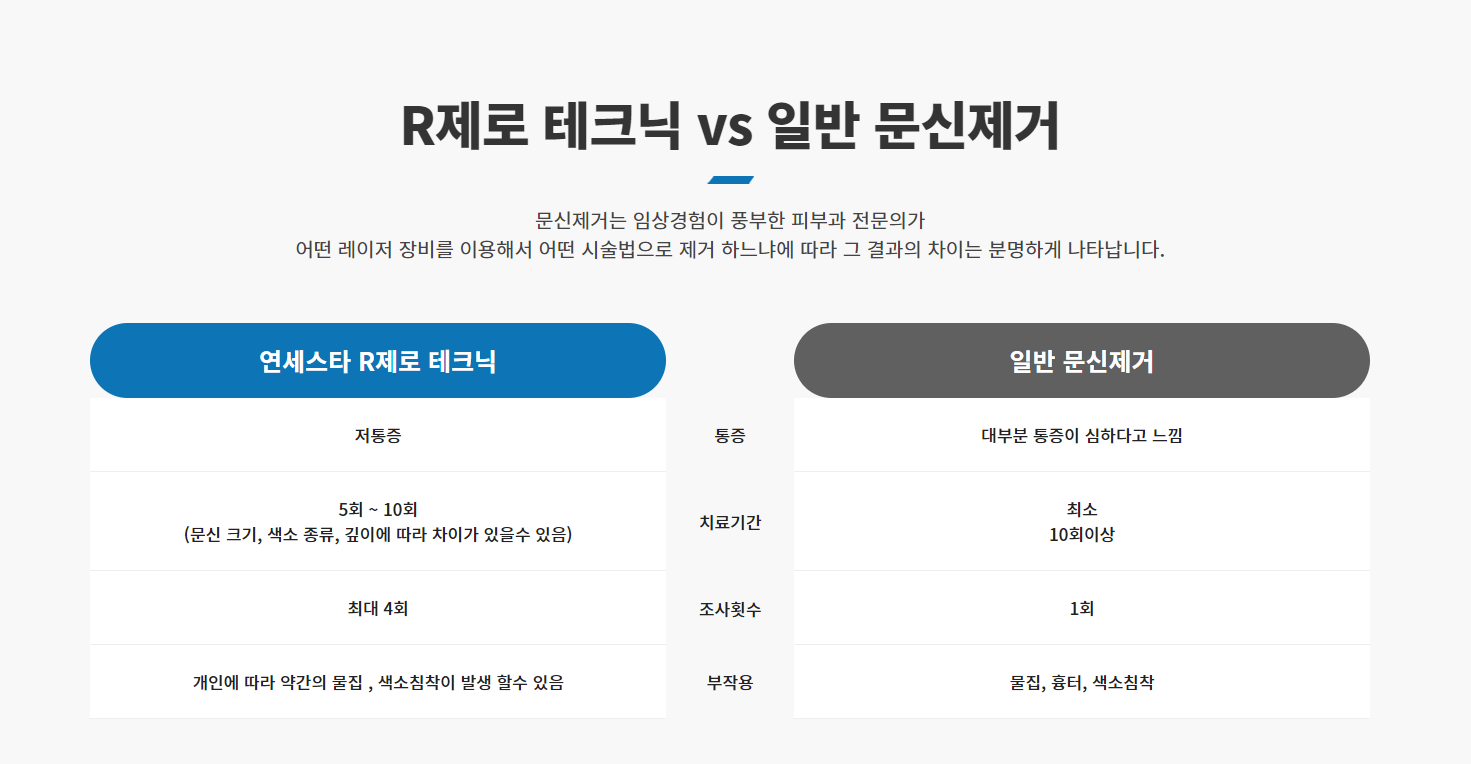
The R-Zero Technique is a method that combines R-Zero and Pinhole Technique. It allows for up to 4 laser irradiations in a single session.
Information on the equipment and application scope is separately organized in the R-Zero Pico-Frectat Tattoo Removal guide.
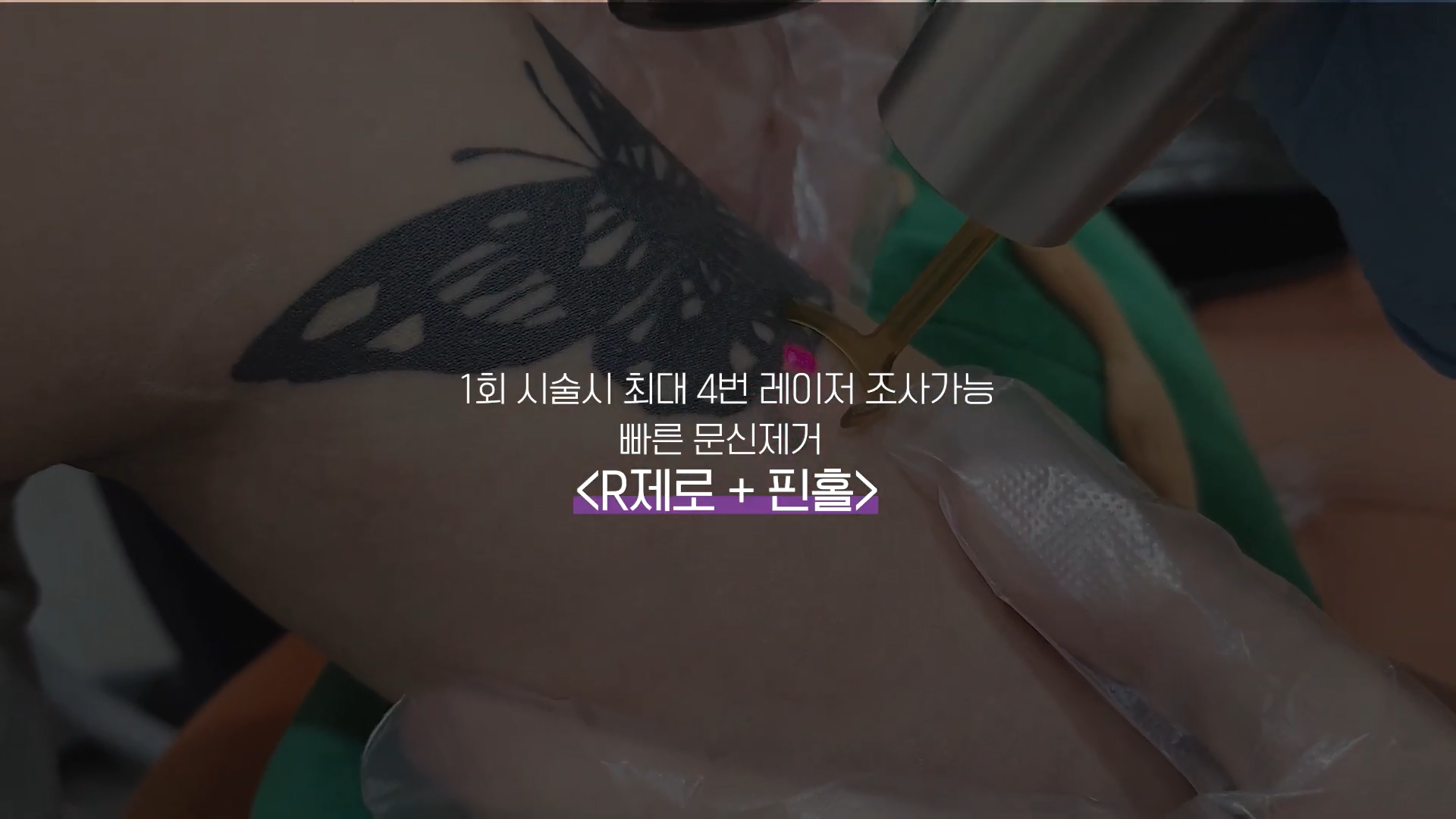
First irradiation, and white bubbles rising
First, the PicoWay Laser is used to irradiate the black and white tattoo area once with a 1064nm wavelength.
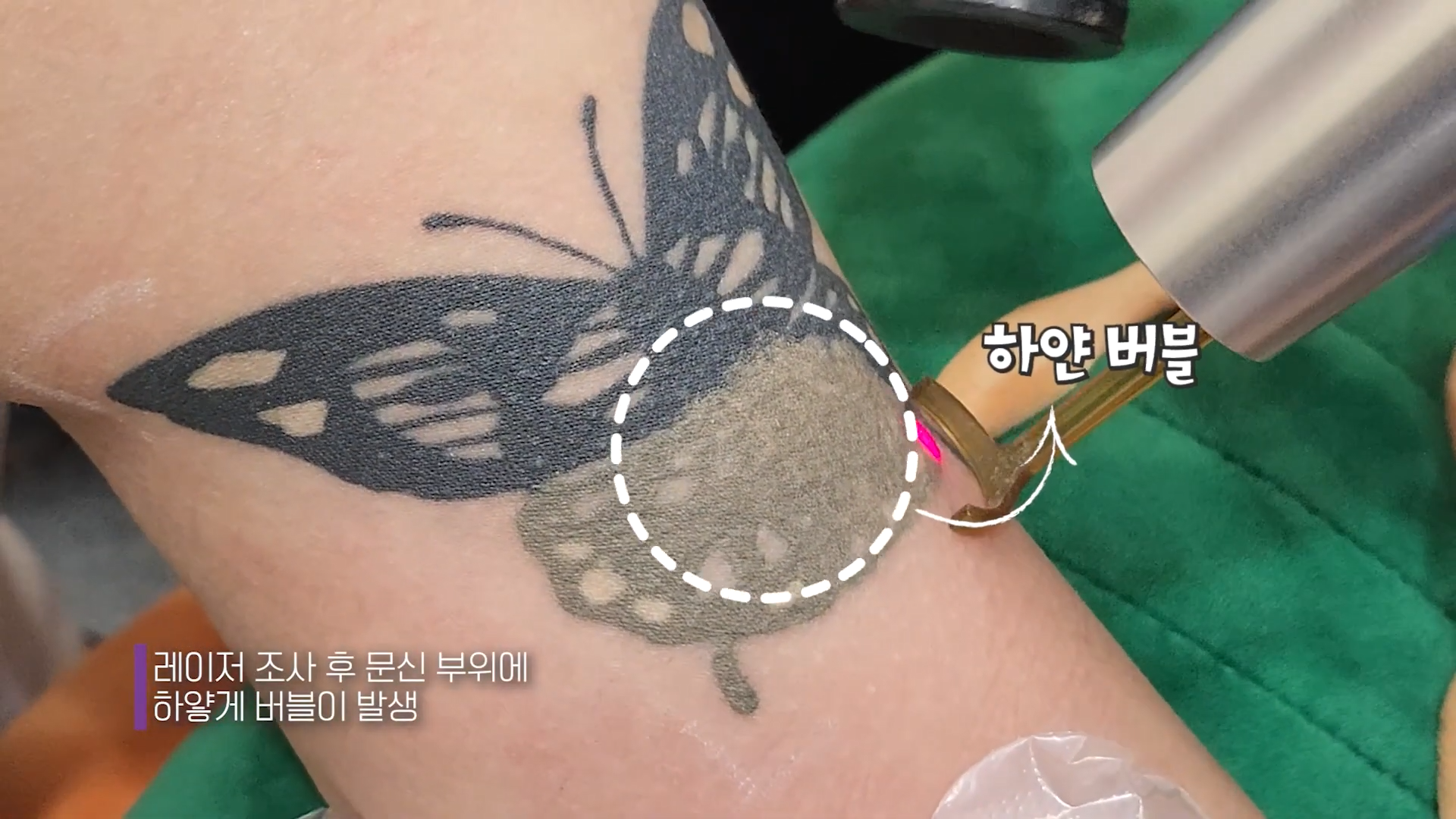
After irradiation, white bubbles appear on the tattooed area. This reaction is clearly visible.
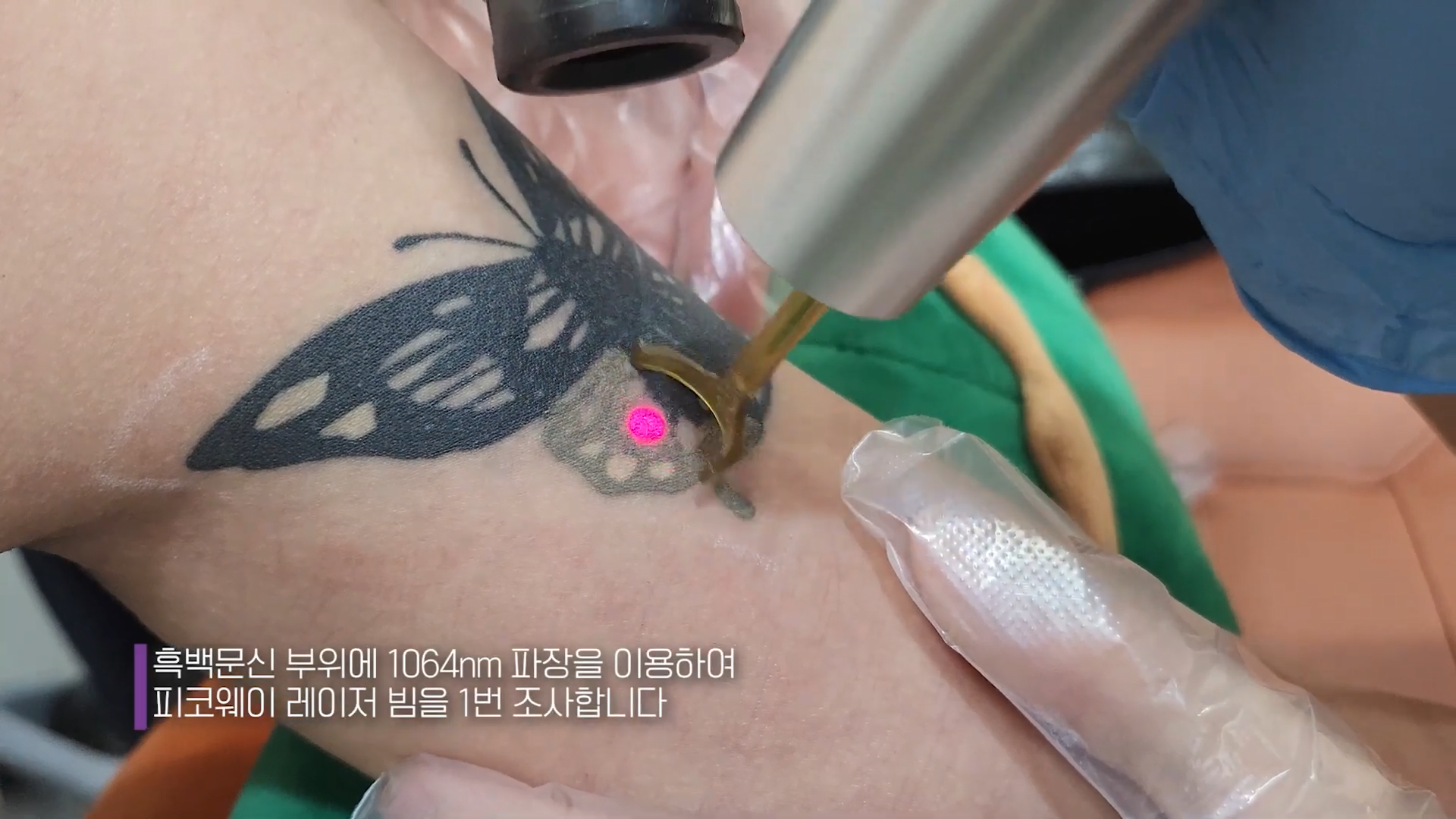
Removing bubbles and immediately a second irradiation
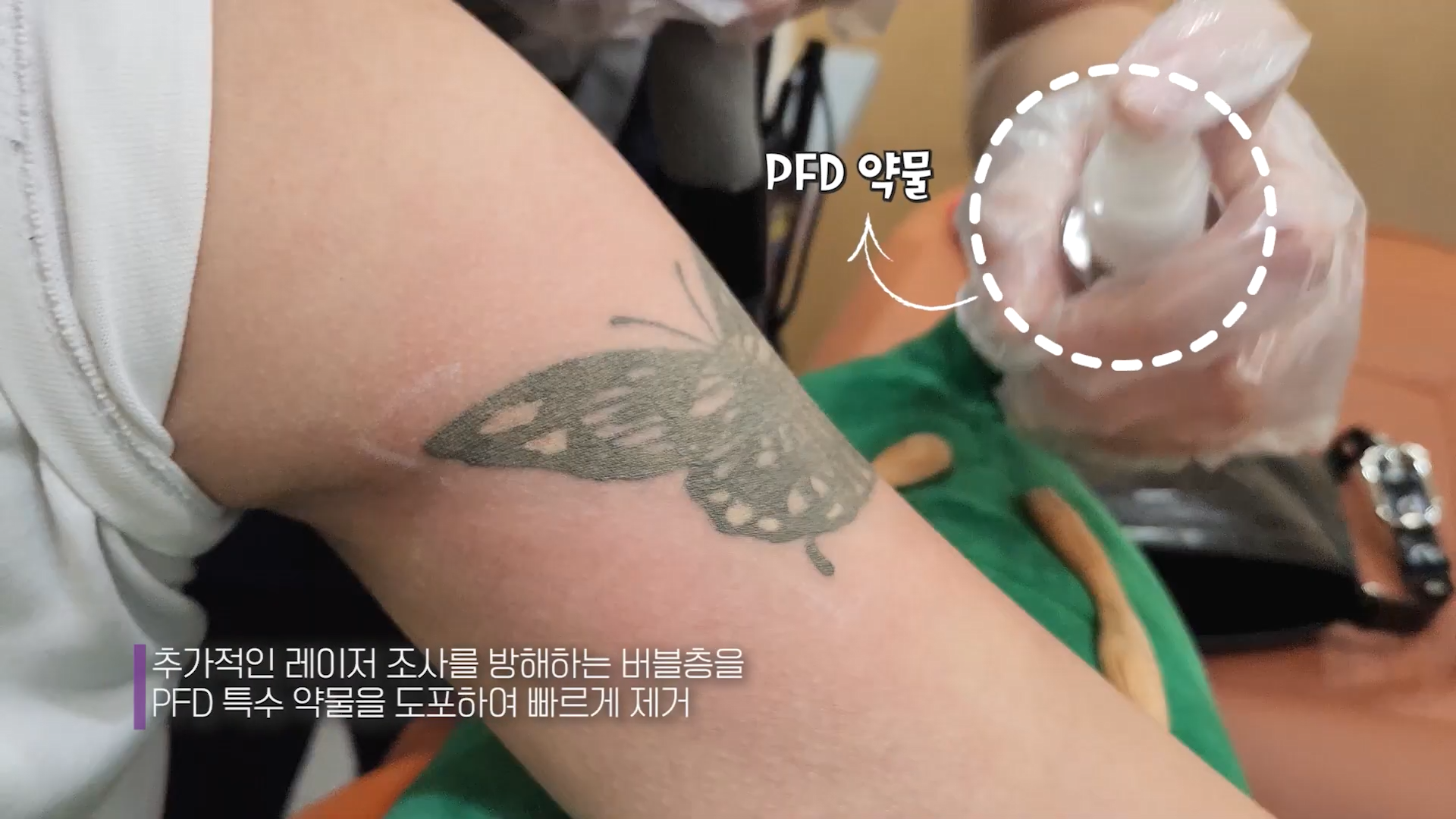
This bubble layer interferes with additional laser irradiation. Therefore, a special medication is applied to quickly remove the bubble layer.
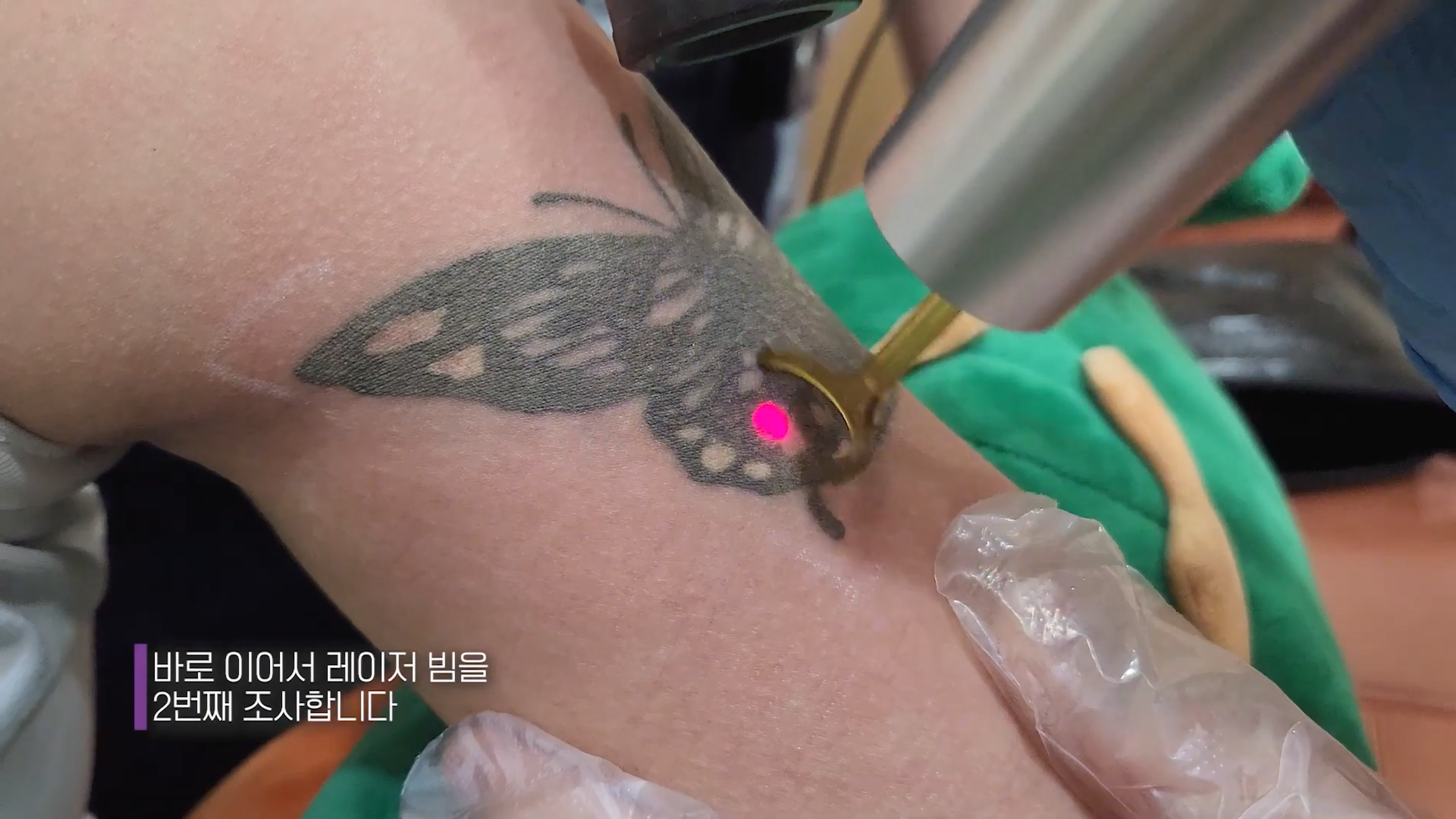
Immediately after removing the bubbles, the laser beam is irradiated a second time.
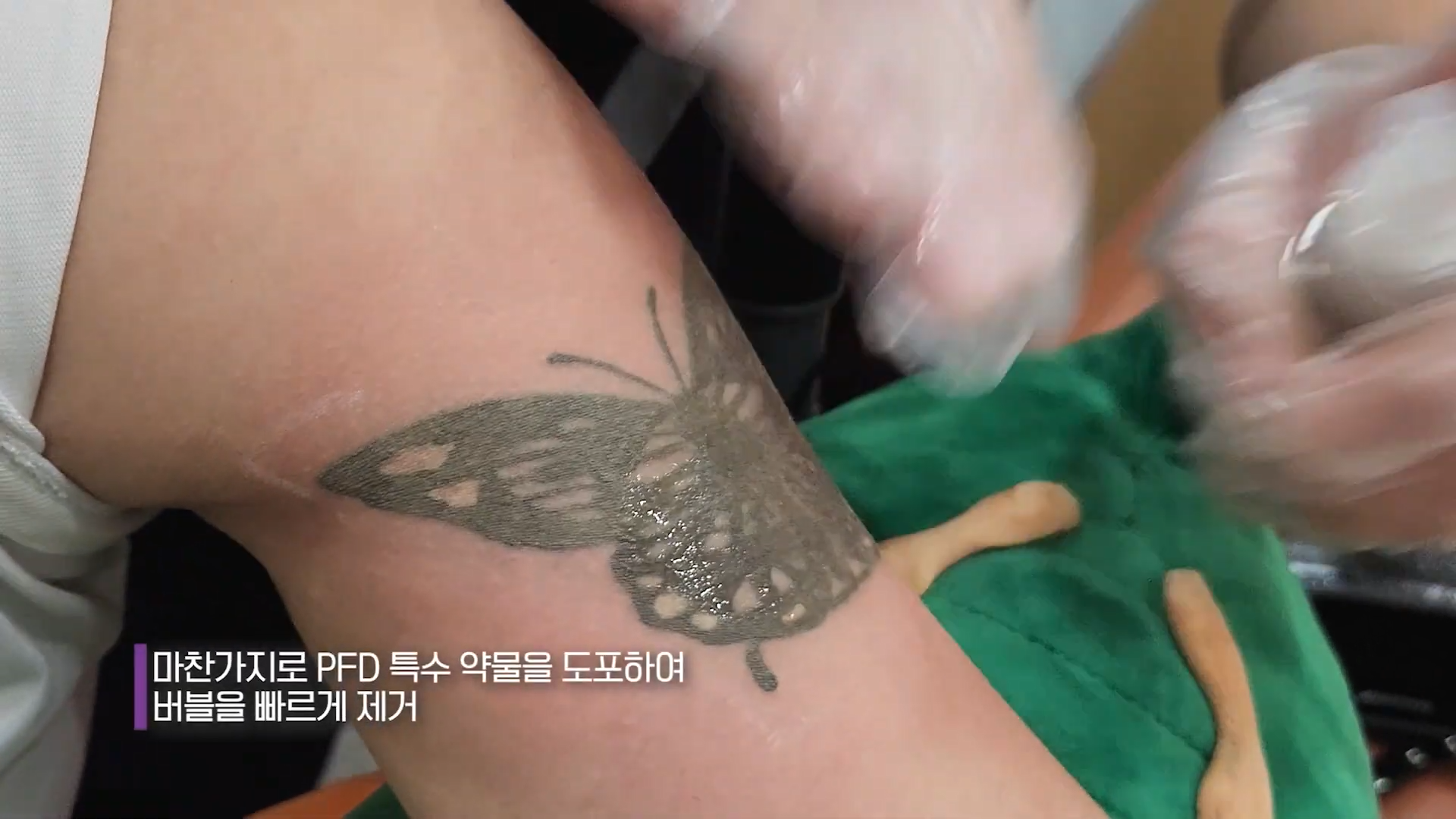
After the second irradiation, as before, a special medication is applied to quickly remove the bubbles again.
Third irradiation with cooling
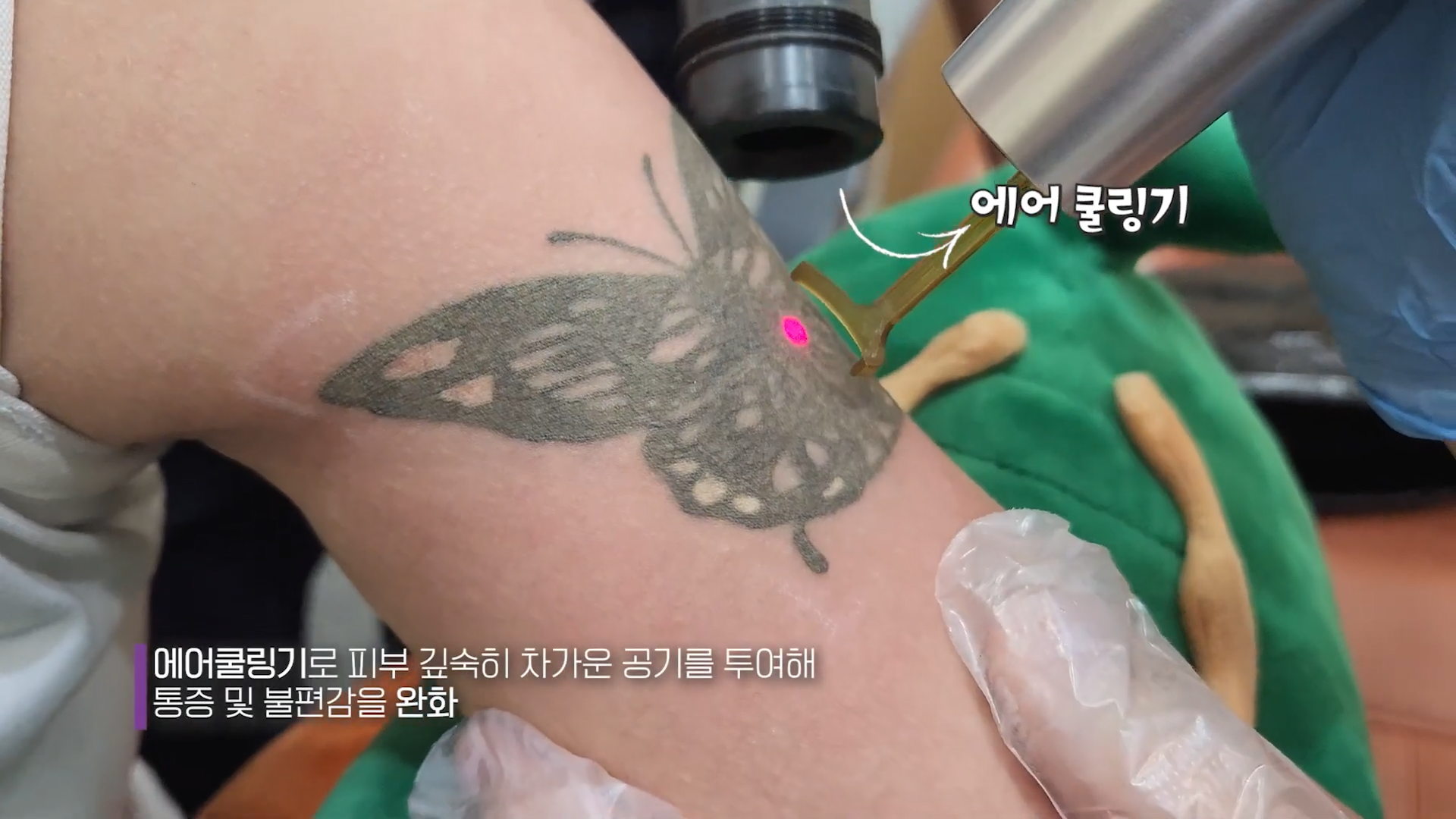
During the third irradiation step, an air cooling device is used. Cold air is delivered deep into the skin to alleviate pain or discomfort during tattoo removal while the laser is irradiated.
Since this method involves repeatedly passing over the same area, the treatment between irradiations becomes as important as the irradiation itself.
The number of repetitions is determined by skin condition
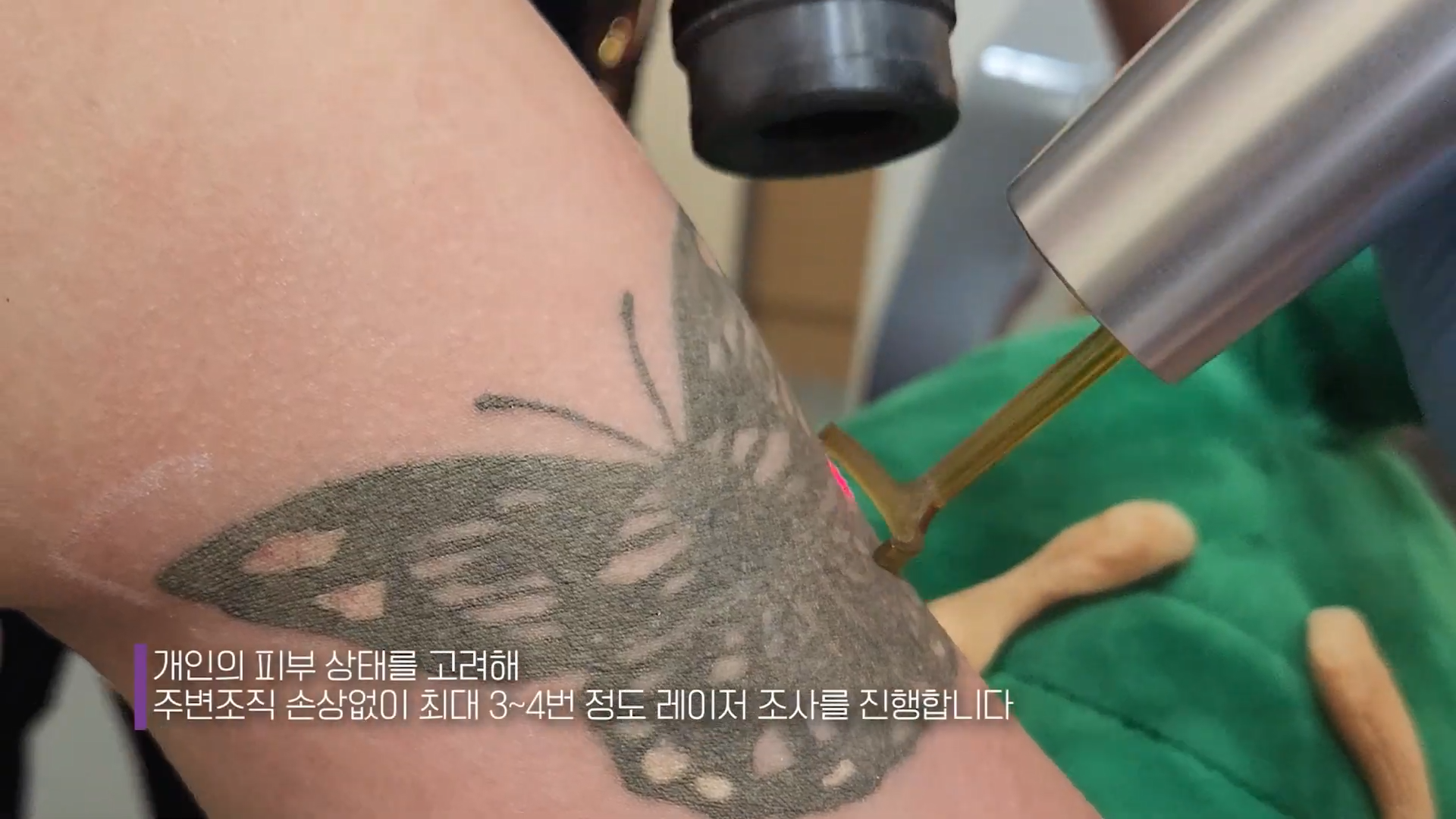
The number of passes is not predetermined. Considering the individual's skin condition, the laser is repeatedly irradiated up to 3 to 4 times, without damaging surrounding tissue.
- The criteria for determining the number of irradiations is the individual's skin condition.
- Repetition is performed only up to the point of avoiding damage to surrounding tissue.
- Bubble removal and cooling are performed between each irradiation.
The final step is the Pinhole Technique
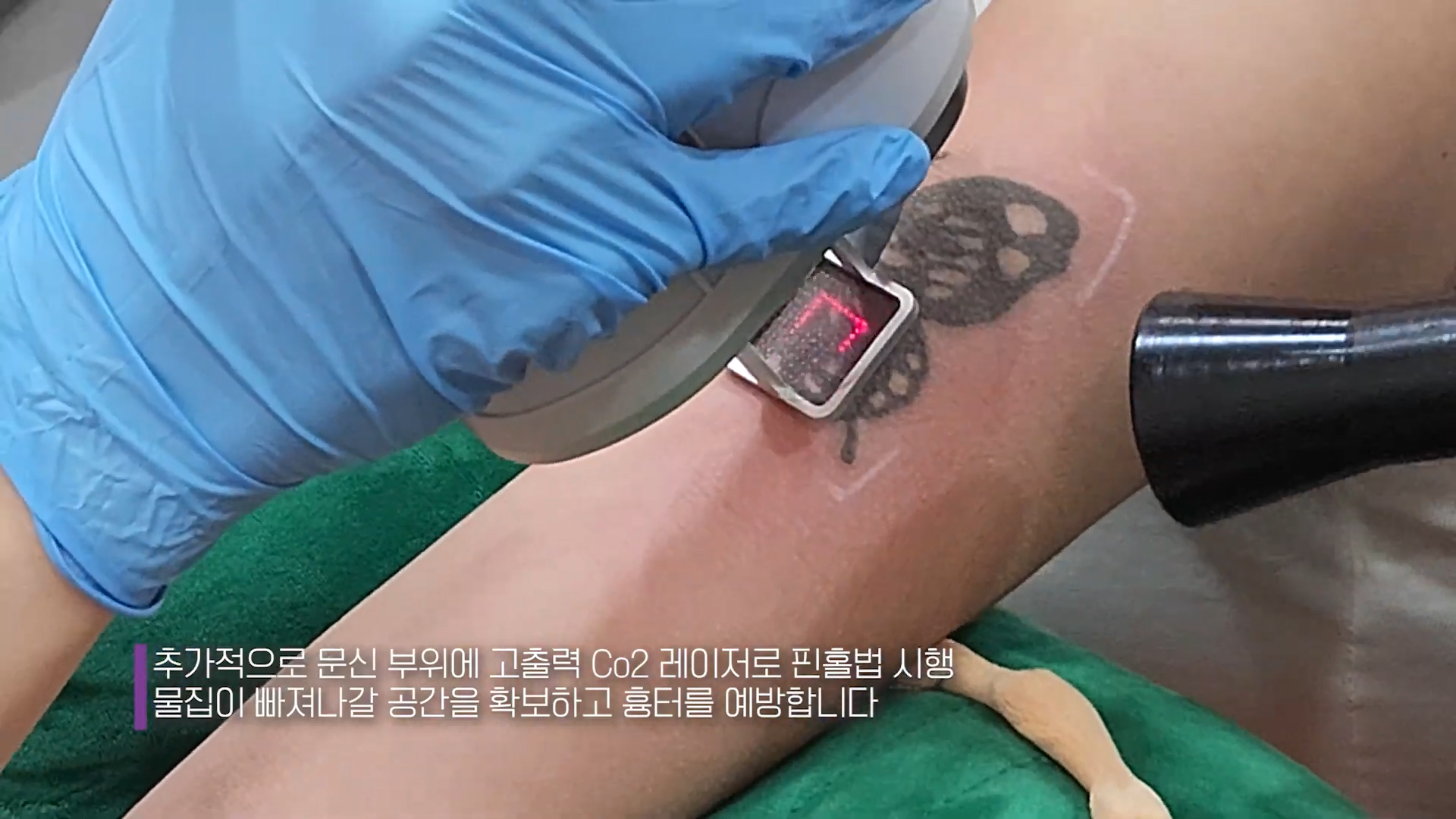
Finally, the Pinhole Technique is performed on the tattooed area using a high-output CO2 laser. This is to secure space for blisters to drain and prevent scarring.
An explanation of the Pinhole Technique itself can be found in the Pinhole for Burn & Surgical Scar guide. If you need a consultation before proceeding, please use Inquire via chat now.

Treatment process at a glance
| Step | What it does |
|---|---|
| 1st Irradiation | Irradiates black and white tattoo area with 1064nm wavelength PicoWay Laser |
| Bubble Treatment | Removes bubble layer with special medication application |
| 2nd Irradiation | Follows with a second laser irradiation, then removes bubbles again |
| 3rd Irradiation | Irradiates while cooling with an air cooler |
| Repetition | Up to 3 to 4 times depending on skin condition |
| Finish | High-output CO2 Laser Pinhole Technique |
Through this treatment process, we aim to alleviate concerns about scarring, pain, and time for those hesitant about tattoo removal.
Tattoo removal is a treatment where results can vary depending on which laser equipment and treatment method a dermatologist with rich clinical experience chooses. General information about the consultation is in the Tattoo Removal Treatment Guide, and other methods are organized in the Nd:YAG Tattoo Removal guide.

Authored·Medically Reviewed by Representative Director Dr. Lee Sang-Joo (Dermatologist) Graduated from Yonsei University College of Medicine · Ph.D. in Medicine from Yonsei University Graduate School of Medicine Resident in Dermatology at Severance Hospital · Currently Adjunct Professor, Department of Dermatology, Yonsei University College of Medicine View Medical Team Profile
First published 2024-06-05 · Last reviewed 2026-07-29
This article contains general medical information and is not a substitute for individual diagnosis and treatment. Results and recovery progress may vary from person to person.