
![Importance of Early Scar Management for Sutured Surgical Scars: How to Treat Quickly | [Yonsei Star Dermatology Sinchon]](/_next/image?url=https%3A%2F%2Fagqdgbuateknhwpocrgu.supabase.co%2Fstorage%2Fv1%2Fobject%2Fpublic%2Fsources%2Fbbf3bebe-45b6-4415-bd04-bda18b2cac0f%2Fblog-images%2F223717603993_00_ac96ee9c15ca.jpg%3Ftype%3Dw966&w=3840&q=75)
Scars remaining after suture surgery are often left untreated, with people thinking they will naturally fade over time. However, in the examination room, the biggest variable determining the shape of a scar is often whether early recovery management was performed. To answer the question, "When and how should I manage it?" it is known that the earlier the management, the more advantageous it is.
Why do sutured scars form?
There are moments when unexpected accidents or incidents occur that seemed unrelated to us. While abrasions can often be resolved with first aid, there are many situations in daily life where severe tears necessitate suture surgery.
When the skin is severely torn and separated due to trauma or an incision is made, the skin is sutured to facilitate smooth recovery. As time passes, the skin tends to return to its original position, so even after careful suturing, there remains a possibility that the area may separate again. The mark left during this process is a sutured scar.


Early management determines the outcome
Careful suturing is necessary to prevent deep scars. However, suturing itself is not something a layperson can do, so the initial choice of hospital is important, but subsequent aftercare efforts are even more crucial.
This is why early scar management after surgery is so important. It is recommended to keep the wound moist to heal well, maintaining a humid environment during recovery. While it is unavoidable that larger surgeries have a higher chance of scarring, it is reported that starting management early can lead to better treatment response, allowing the marks to fade relatively naturally.
The earlier scar management begins, the more advantageous it is. Even for the same scar, the outcome may vary depending on early intervention.

What to look for in early sutured scars
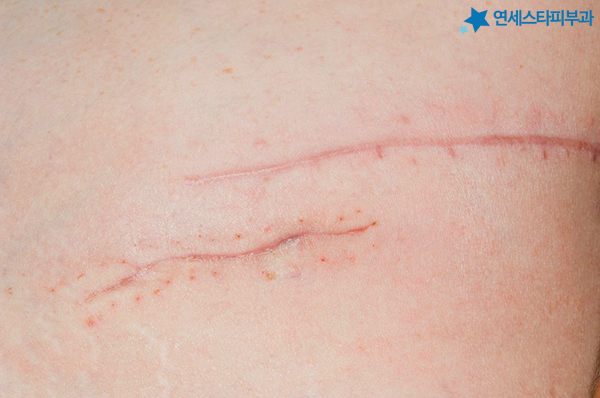
What aspects should be focused on during this period? Early sutured scars often appear reddish. This is known to be a phenomenon that occurs as the number of blood vessels in the skin increases or expands during the recovery process.
Here are some important points to consider during early recovery:
- Maintain a moist environment to prevent the wound area from drying out
- Check the scar condition when sutures are removed
- Observe changes, especially if strong redness appears
- Reduce UV exposure and avoid irritation
- Postpone aggressive treatments while blood or discharge is present
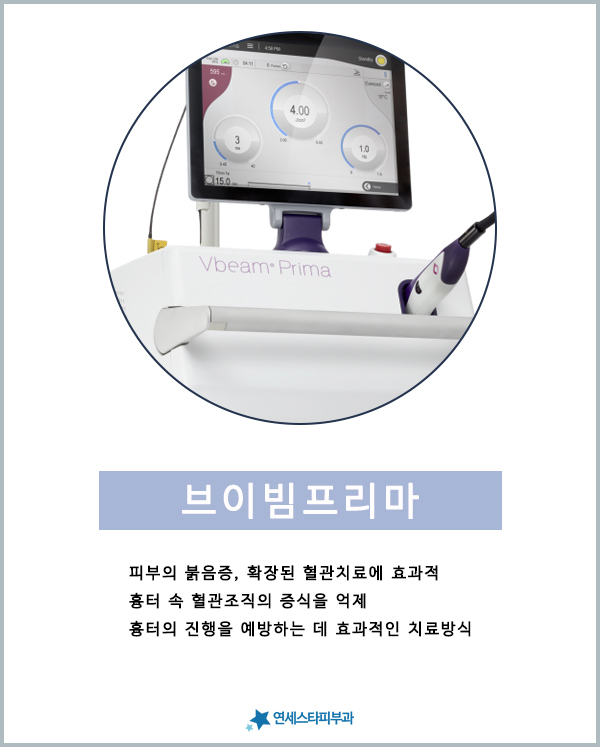
For such red scars, treatment with Vbeam Prima laser can be considered to constrict or reduce the number of expanded blood vessels.
Regeneration continues for up to 3 months
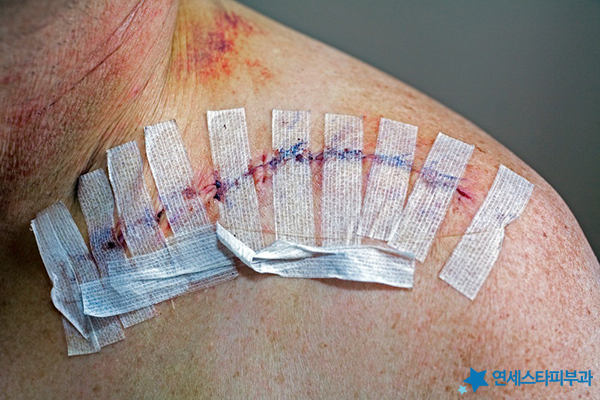
Our body's tissues constantly regenerate, so even after sutures are removed about 1-2 weeks after surgery, the skin regeneration process continues. Therefore, it is advisable to carefully monitor changes and manage the scar for at least about 3 months.
As mentioned earlier, appropriate early intervention can help reduce the progression to noticeable scars such as hypertrophic scars or keloids that appear raised and widened.
If you have any questions, inquire via chat consultation regarding sutured scar management

If you missed the treatment timing
Many people worry about missing the timing to start sutured scar treatment. First, continue managing the wound to ensure good recovery. During the period of blood or discharge, laser treatment is difficult, so it's better to continue with recovery-related treatments first. Early scar management is not too late even when the sutures are removed.
| Period | Main Management Direction |
|---|---|
| Wound healing phase (discharge period) | Maintain moist environment, focus on recovery management to prevent infection |
| Around suture removal | Check for redness, begin early scar management |
| Approximately 3 months post-surgery | Observe changes, combine with laser treatment if necessary |


If a scar has already formed
Even if a scar has already formed, there are still options. It is reported that treatment can be considered to bring the skin closer to the level of normal skin using lasers that strongly induce skin regeneration, such as Ultrapulse Encore and StarLux. Depending on the depth and shape of the scar, Surgical Scar Revision or Triamcinolone Scar Injection may also be combined.
It is essential to visit a specialized clinic for an accurate diagnosis and to establish a treatment plan appropriate for the type and location of the scar. Reviewing the characteristics and treatment directions of surgical scars beforehand can make the consultation much smoother.
In conclusion
Even just having a surgical mark is bothersome, and if it remains uneven, the stress can be considerable. Scars do not disappear all at once; they fade through accumulated management appropriate for each stage, and early management is the starting point.
Even if the location and cause differ, such as scars remaining after cosmetic surgery, the principles of early management apply similarly. If you have related concerns, it is better to have your condition accurately assessed rather than making judgments alone.
💬 Consult Now

Chief Director Lee Sang-ju (MD, PhD, Yonsei University College of Medicine and Graduate School, completed dermatology residency at Severance Hospital, President of the Korean Dermatological Association) Chief Director Lee Sang-ju's Profile First published 2025-01-07 / Last reviewed 2026-06-16 This article provides general information, and as scar progression and treatment response can vary individually, please consult with medical staff for an accurate diagnosis and treatment plan.