

Did you ever expect a mole removal site to heal quickly, only to find it red, sunken, or white months later, making it even more noticeable? If a procedure chosen for a clean impression has left another mark, the first step is to identify what kind of mark it is.
What are the biggest concerns after mole removal?
In the examination room, patients often come with similar questions after mole removal. They worry if a scab is normal, whether to remove it or wait, and if a mark that lingers too long will become a permanent scar.
When new skin doesn't form as quickly as expected, and redness persists or a sunken area remains visible for a long time, psychological distress can increase. A mark on the face is constantly on one's mind when looking in the mirror, and it can seem even more prominent.

Will an existing scar disappear on its own?
The problem is that once a scar forms, it can be difficult for it to heal perfectly naturally. This is why many people seek medical help, such as laser treatment.
Post-mole removal scars do not have a single fixed appearance. The approach varies depending on the color, shape, and timing of their formation, and better results are reported when the method is chosen to match the shape.
Viewing scars by type, rather than as a single entity, is the starting point for management. Common marks left after mole removal can be broadly categorized as follows:
- Red or pinkish erythematous marks
- Hypopigmented marks that have turned white over time
- Atrophic scars where the skin is sunken
- Complex marks where both color and texture have changed
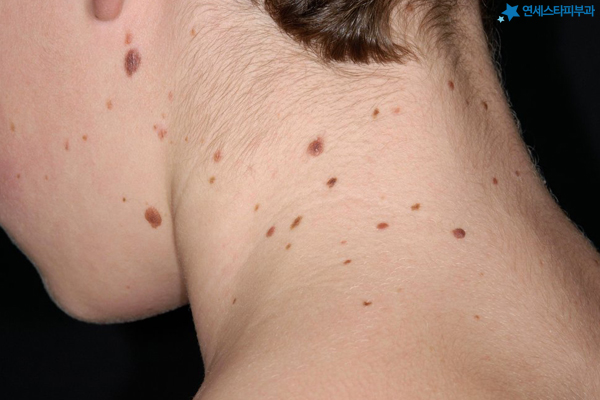
How to approach red marks
Erythematous scars, which leave a red or pinkish tint after mole removal, may fade over time, but if they persist for a long time, treatment may be considered. A representative method used in such cases is vascular laser treatment.
Vbeam Prima and similar vascular lasers selectively target blood vessels to help with red erythema and capillary dilation, and are frequently used for managing red marks in post-mole removal scar areas. The period of redness is likely an early stage of the scar; if managed relatively early during this period, the improvement speed tends to be faster, and the burden can be reduced before it hardens into a white, prominent mark.
Similarly, if overall facial redness is a concern, reviewing Facial Redness information may also be helpful.
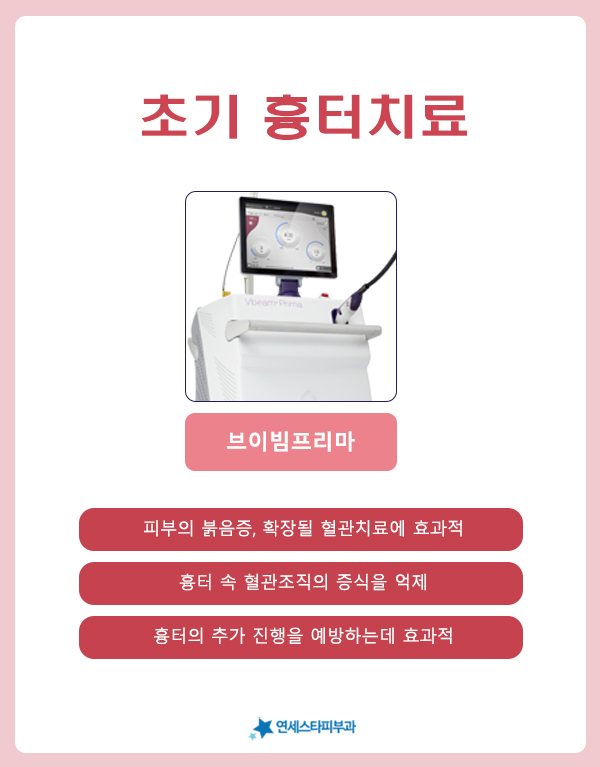
If you are confused about the color and depth of a post-mole removal scar, checking its condition is more important than self-diagnosis. You can comfortably leave any questions via chat consultation regarding post-mole removal scars.
If the mark has turned white or is sunken
If a considerable amount of time has passed and the mark has turned white or feels sunken, it may be an atrophic or hypopigmented scar resulting from insufficient skin regeneration. In such cases, laser methods that induce regeneration are considered.
CO2-based lasers like Ultrapulse Alpha are known to induce collagen regeneration and aid in the healing process. They help to improve atrophic scars that have been present for a long time and do not regenerate well, areas where color has faded to white, and rough skin texture. A key feature is their high precision, allowing selective treatment of only the desired areas.
Following the same principle, if you are curious about managing depressed scars, Atrophic Acne Scar information and Premium Customized Acne Scar Care can also be helpful references.
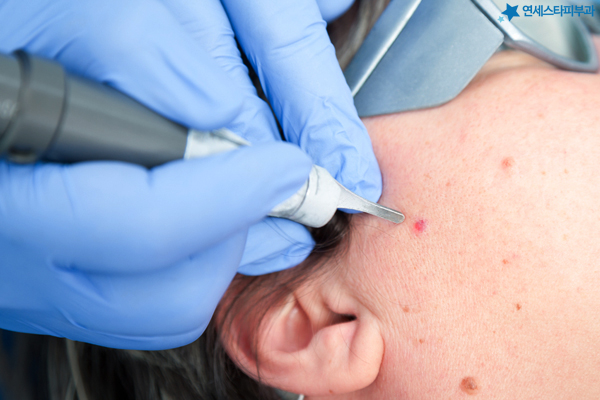
Categorized by type
Here's a table summarizing how the approach changes based on the color, shape, and timing of the mark's formation:
| Scar Type | Key Characteristics | Considered Approach |
|---|---|---|
| Erythematous Mark | Red or pinkish, likely early stage | Vascular laser type |
| Hypopigmented Mark | White color, older scar | Regenerative laser type |
| Atrophic Scar | Sunken shape, texture change | CO2-based regenerative laser |
This table is a broad categorization for understanding, and in reality, multiple characteristics often appear mixed in one spot. Therefore, rather than judging solely by shape, the method is determined by considering color, depth, and duration together.

Management tips you can follow at home
Daily care influences the outcome as much as treatment. Please pay attention to the following from immediately after mole removal until the recovery period:
- If a scab forms, do not force it off; wait for it to fall off naturally.
- During the recovery period, reduce sun exposure and use sunscreen.
- Keep the area clean and moisturized, without discharge or irritation.
- If redness or indentation persists for a long time, have the condition checked before self-diagnosing.
It can be frustrating when a small mole removal leaves a more prominent mark. What to remember at this time is that the appropriate method varies depending on the scar's shape and timing.

Check the condition first, rather than worrying alone
Since the scar's shape, color, and timing of formation must be considered comprehensively, it is important to consult with a dermatologist to find the right approach for your condition, rather than self-diagnosing. If you are also concerned about other scars from surgery or trauma, you can refer to Cosmetic Surgery Scar information.
If you are concerned about a post-mole removal scar, please feel free to leave your condition via chat consultation for post-mole removal scar laser treatment. We will help you identify the right approach based on its color and depth.

Chief Director Lee Sang-ju (MD, PhD, Yonsei University College of Medicine and Graduate School; completed dermatology residency at Severance Hospital; President of the Korean Dermatological Association) Chief Director Lee Sang-ju Profile First published 2026-03-19 / Last reviewed 2026-06-16
This article provides general information only, and individual outcomes may vary depending on skin condition. Accurate diagnosis and treatment should be determined through consultation with medical staff.