

Scratched scars and nail scars on the face or arms may seem like minor injuries, but they are traces that can easily leave marks over time. The first question people facing scars often ask is one: Will it disappear on its own over time, or will treatment be necessary? Minor scratches may alleviate to some extent, but if the dermis is torn by a sharp injury like a fingernail, indentations or color changes may remain as marks.
Why Scratches Remain as Scars
When the skin is scratched by a fingernail or foreign object, not only the epidermis but also the dermis is subtly damaged. Especially in thin and sensitive areas like the face, even if the injury doesn't appear deep, the collagen structure in the dermis can regenerate irregularly, easily leaving a scar. This is why redness, indentations, or rough skin texture can persist over time.
It is reported that scars form when damaged dermal collagen fails to recover to its original arrangement and regenerates irregularly.
In cases of sharp injuries like fingernail scratches, skin tissue can be torn, leaving indentations or discoloration. Various scars remaining on the face are particularly noticeable and difficult to conceal with makeup. In such cases, inducing skin regeneration through laser treatment may be helpful.

Treatment Direction Varies Depending on Scar Condition
Scratched scars often present with redness, indentations, and texture changes all at once. Therefore, rather than concluding with a single procedure, it is important to categorize the skin condition and approach it with combination therapy. In the examination room, even with the same nail scar, the treatment order differs for individuals whose primary concern is indentation versus those whose primary concern is redness.
| Main Problem | Treatment Direction | Applicable Procedure |
|---|---|---|
| Depressed scars | Separation of compressed fibrous tissue | Subcision |
| Rough skin texture, old scars | Dermal collagen reorganization | Regenerative laser |
| Redness, early erythematous scars | Alleviation of residual blood vessels | Vbeam Prima |
Subcision is a procedure that incises the fibrous tissue around depressed scars to release areas where the skin has pulled down. If the skin is indented due to a scratched scar, separating the skin layers can promote collagen regeneration and lead to a gradual elevation of the scar. If the indentation is deep or wide, it may be planned in conjunction with Surgical Scar Revision.
Regenerative lasers (Ultrapulse Alpha, StarLux, etc.) deliver microscopic heat deep into the dermis to reorganize damaged collagen structures and induce new tissue formation. They are suitable for rough skin texture and old scars accompanied by indentations, and are used to improve overall skin texture and regenerative capacity, similar to the principle of Staged Management for Depressed Scars.
Vbeam Prima is used for early scars with residual redness or pigmentation, and erythematous scars. It selectively acts on vascular lesions to reduce residual blood vessels in the skin and alleviate inflammatory redness, approaching the natural restoration of scar color. If facial redness persists even after the scar has healed, this stage becomes important.

Why One Procedure Is Not Enough
Scratched scars are often not just a problem of depressed scars, but also involve redness, pigmentation, and changes in skin texture. Therefore, we approach it by first resolving structural issues with Subcision, then simultaneously refining skin texture and color with Ultrapulse Alpha and Vbeam Prima. Dividing the treatment into stages like this can help achieve smoother and more natural skin recovery.
The treatment order or combination varies depending on the depth, color, and age of the scar, so it is safer to determine it after directly examining the skin condition. If you are curious about which stage your scar falls into, you can check by inquiring via chat consultation for scratched scar treatment direction.
Post-Procedure Care
After laser treatment, the skin is in a regeneration process, so care influences the results. Taking the following steps in your daily life can aid recovery:
- Avoid strong UV rays and consistently use sun protection when outdoors.
- Do not scratch with fingernails or forcibly remove scabs.
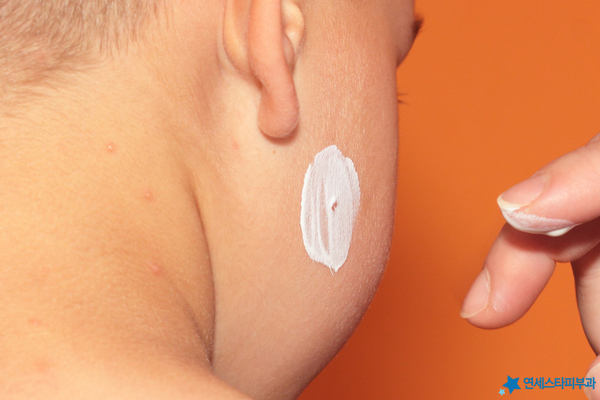
- Regularly apply regenerative cream or moisturizer prescribed by the clinic.
- Temporarily postpone irritating cleansing and exfoliation until the skin barrier recovers.
- Observe changes in redness or indentations gradually over time.
The speed of recovery and results may vary depending on the scar condition and individual skin.

Even Small Scars Don't Have to Be Given Up On
Many people are stressed by nicks on their face, scratches from somewhere, or nail scars caused by pets. Because the face is so visible, even small scars can affect one's impression. Rather than dismissing it as unavoidable and giving up, one can consider gradually filling in the indented and scratched marks through laser treatment and other methods.
If you are concerned about nail scars or facial scratches that do not heal over time, you can refine skin texture and tone together with Customized Scar Treatment combining Subcision, Ultrapulse Alpha, and Vbeam Prima laser.

Chief Director Lee Sang-joo (MD, PhD, Yonsei University College of Medicine and Graduate School; completed dermatology residency at Severance Hospital; President of the Korean Dermatological Association) Chief Director Lee Sang-joo's Profile First published 2025-11-11 / Last reviewed 2026-06-16 This article is for general informational purposes only, and the condition and recovery of scars may vary by individual. Please consult with medical staff for an accurate diagnosis and treatment plan.