
![Hyperbaric Oxygen Therapy Hospital: Why it's Effective When Combined with Scar Treatment | [Yonsei Star Dermatology Sinchon]](/_next/image?url=https%3A%2F%2Fagqdgbuateknhwpocrgu.supabase.co%2Fstorage%2Fv1%2Fobject%2Fpublic%2Fsources%2Fbbf3bebe-45b6-4415-bd04-bda18b2cac0f%2Fblog-images%2F224221082461_00_1fe0dfb5e51f.jpg%3Ftype%3Dw966&w=3840&q=75)
Many people worry when their scars heal slowly or marks linger for a long time after scar treatment. While researching scar treatments, you might often encounter the term 'Hyperbaric Oxygen Therapy' these days. When first introduced to it, questions like "What does this have to do with scars, do I really need it?" often arise. To give you the conclusion first, Hyperbaric Oxygen Therapy is not a treatment that directly erases scars, but rather an auxiliary method used to aid recovery after scar treatment.
What Exactly is Hyperbaric Oxygen Therapy?
After receiving scar treatments like lasers or surgery, a process of new skin tissue regeneration follows. For our bodies to recover quickly, sufficient oxygen must be supplied to the area, and the final appearance of the scar can vary depending on how smoothly regeneration proceeds.
Hyperbaric Oxygen Therapy (HBOT) is, as its name suggests, a method that intensively increases oxygen supply. It is performed by inhaling high concentrations of oxygen in a special chamber with increased atmospheric pressure.

Generally, the air we breathe contains about 21% oxygen. Inside a Hyperbaric Oxygen Chamber, you receive a much higher concentration of oxygen. This increased oxygen is delivered throughout the body's tissues via the bloodstream, and it is particularly characterized by reaching areas where blood flow is typically poor.
As a means to support the recovery environment after scar treatment, its use has been reported in clinical papers in the United States and Europe.
For these reasons, it is gaining attention as an auxiliary means to enhance the completeness of scar treatment, and the number of hospitals operating Hyperbaric Oxygen Chamber in conjunction with it is gradually increasing.
What to Expect When Combined with Scar Treatment
The following are the auxiliary benefits that can be expected when Hyperbaric Oxygen Therapy is performed alongside scar treatment. Please note that these are for reference only, as individual results may vary.
- Assisting Recovery Speed: By creating an environment that aids tissue regeneration, it can help shorten the recovery period for both early scars and older, established scars.
- Alleviating Swelling and Erythema: It assists the process of reducing swelling and redness after the procedure.
- Potential for Scar Minimization: It can support healthy tissue regeneration, helping scars heal more smoothly.
- Assisting in Preventing Excessive Scarring: In individuals with a keloid scar predisposition or a tendency for hypertrophic scars, it is sometimes used as an adjunct to suppress recurrence.
- Assisting in Reducing Infection Risk: An oxygen-rich environment can help inhibit certain bacteria, thus assisting in preventing post-procedure infection.

However, it is good to remember that all effects can vary individually, and it is always an auxiliary role to aid recovery after receiving essential scar treatment.
If you have any questions, please contact us for a chat consultation regarding scar recovery and Hyperbaric Oxygen Therapy.
What Types of Scars Can It Be Used With?
Hyperbaric Oxygen Therapy is used not as a standalone treatment, but rather to support the recovery phase of existing scar treatments. It is considered in various situations requiring recovery after laser or surgical procedures, but its significance only arises after the primary treatment for the specific scar type has been established.
| Scar Type | Primary Treatment Direction | Role of Hyperbaric Oxygen Therapy |
|---|---|---|
| Traumatic/Surgical Scars | Surgical Scar Revision, etc. | Assisting incision site recovery |
| Depressed Scars | Acne Scar Laser Treatment, etc. | Creating a recovery environment for the regeneration process |
| Keloid/Hypertrophic | Triamcinolone Scar Injection | Auxiliary management during recovery |
| Burn Scars | Burn Scar Treatment | Assisting the tissue recovery phase |
In the clinic, it is not uncommon for the outcome of scars in the same area to differ significantly depending on how the recovery environment is managed.
Important Things to Check Before Receiving Treatment
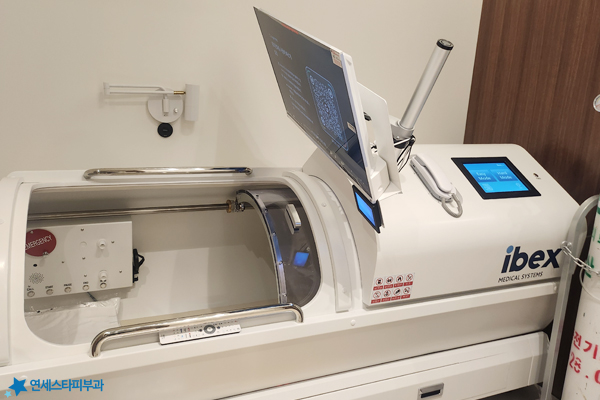
Hyperbaric Oxygen Therapy is a treatment performed under the guidance of medical professionals in a medical institution. We recommend checking the following before receiving it:
- Hospital Qualification Check: Confirm that it is performed under the guidance of a doctor in a medical institution (hospital/clinic level).
- Pre-treatment Health Status Check: If you have lung diseases (e.g., pneumothorax), otitis media, eardrum damage, severe colds, or claustrophobia, you must inform the medical staff before the procedure.
- Check Medications Being Taken: Some anticancer drugs, steroids, etc., may interact with the hyperbaric oxygen environment, so you must inform us in advance if you are taking any medications.
- Prohibited Items in the Chamber: Mobile phones, electronic devices, metal accessories, hearing aids, synthetic fiber clothing, etc., are prohibited due to fire risk, so you will change into a hospital gown.
- Pregnancy Confirmation: If you are pregnant, you must consult with the medical staff about safety before the procedure.
When the pressure inside the chamber increases, you may feel a stuffy sensation in your ears. At this time, adjust the pressure by swallowing saliva or pinching your nose and gently exhaling air through your nose.
Treatment is Combined, Not Standalone
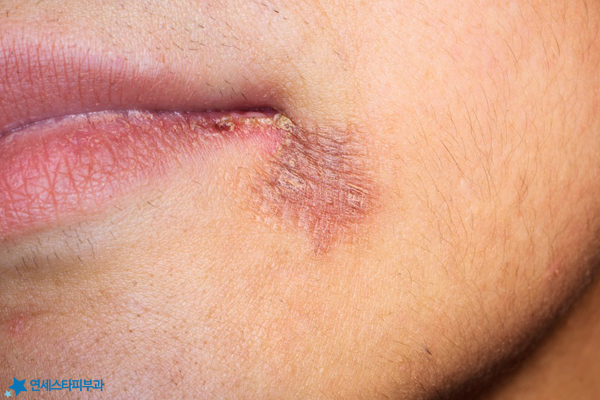
Hyperbaric Oxygen Therapy is not a treatment that directly removes scars. It plays an auxiliary role in supporting the recovery of existing scar treatments, so it is meaningful when performed in conjunction with the scar treatment itself. After treatment, a mild dizziness or fatigue may be temporarily felt, but most people recover quickly.
However, flexible responses may be necessary depending on the situation, so we recommend receiving treatment safely at a hospital with resident medical staff.
What to Look for When Choosing a Hospital

The number of dermatology clinics and hospitals offering Hyperbaric Oxygen Therapy is increasing. Interest in it as an auxiliary means to aid recovery after scar treatment is also growing.
However, the core is not the presence or absence of auxiliary equipment, but the experience and know-how of scar treatment itself. It is most important to jointly check whether there are any precautions before receiving auxiliary care, and what aspects to be careful about for synergy.
In summary, we recommend considering the following order:
- 1st Priority: Whether the clinic has experience and technology in scar treatment itself
- 2nd Priority: Whether auxiliary care to aid recovery can be combined
- 3rd Priority: Whether precautions before and after treatment and safety management are thorough
Please feel free to ask any questions using the button below.
💬 Chat for Consultation Now
Chief Director Lee Sang-ju (MD, PhD, Yonsei University College of Medicine and Graduate School; Completed Dermatology Residency at Severance Hospital; President of the Korean Dermatological Association) Chief Director Lee Sang-ju's Profile First Published 2026-03-18 / Last Reviewed 2026-06-16
This content is for general information purposes only, and treatment effects and recovery patterns may vary for each individual. Please consult with medical staff for an accurate diagnosis and treatment plan.