
There are individuals who have felt frustrated by slow recovery despite consistently receiving scar treatment.
When laser procedures don't improve as quickly as expected, the underlying cause might be insufficient skin regeneration. One of the factors determining the outcome of scar treatment is how quickly and efficiently the skin recovers. In such cases, Hyperbaric Oxygen Therapy (HBOT) is often mentioned. Let's calmly review how oxygen contributes to the body's recovery environment and why its combination with scar treatment is gaining attention.
How Does Hyperbaric Oxygen Therapy Work?
Hyperbaric Oxygen Therapy (HBOT) involves inhaling high concentrations of oxygen in a special chamber pressurized to 2-3 atmospheres. Normally, the air we breathe contains about 21% oxygen, and most oxygen is delivered to tissues by binding with hemoglobin in red blood cells.
When high-concentration oxygen is inhaled intensively in a hyperbaric chamber, the amount of oxygen directly dissolved in plasma and tissue fluid increases, in addition to the hemoglobin-bound oxygen. This oxygen-rich blood can then be delivered to peripheral tissues and cells that are usually difficult to reach, thereby assisting oxygen supply to tissues with slow recovery.
Why Oxygen Supply is Involved in Scar Recovery
Scar recovery is not achieved merely by stimulating the skin surface. After scar treatment with lasers or other methods, sufficient oxygen must be supplied for cells to function and create new collagen during the tissue regeneration process. However, scar tissue often has poorer blood circulation and oxygen supply than healthy skin, and in an oxygen-deficient environment, the rate of cell regeneration itself can slow down.
In clinical practice, when scar treatment is progressing well but recovery feels slow, it's sometimes necessary to examine the skin's regenerative environment as a whole.
In such cases, supplementing the oxygen supply environment within the scar tissue with Hyperbaric Oxygen Chamber can help create favorable conditions for tissue regeneration. It can also act as an auxiliary measure to reduce temporary swelling or erythema that appears after laser procedures.
Four Points Where Hyperbaric Oxygen Assists Recovery
- Assisting oxygen supply environment: Creates conditions to help deliver oxygen to scar tissue with reduced blood circulation
- Supporting cell regeneration: Sufficient oxygen aids in collagen production and tissue regeneration processes
- Assisting inflammation control: Increased oxygen supply can help reduce inflammatory reactions within tissues
- Post-procedure care: Used as an auxiliary means in the recovery process of swelling and erythema after scar treatments like lasers
From Emergency Conditions to Skin Regeneration Support
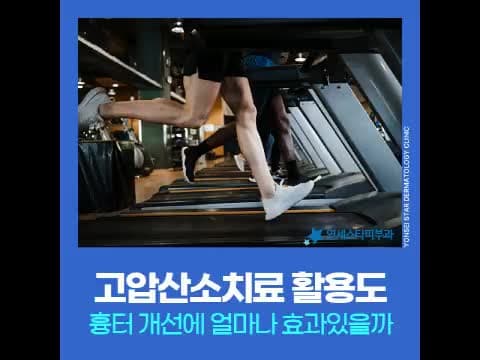
Hyperbaric Oxygen Chamber was originally used for emergency conditions such as decompression sickness and carbon monoxide poisoning. Recently, its application has expanded to include supporting tissue recovery, skin regeneration, and athlete conditioning.
| Application Area | Representative Examples |
|---|---|
| Original Application Fields | Emergency conditions such as decompression sickness, carbon monoxide poisoning |
| Recently Expanded Fields | Tissue recovery support, skin regeneration, athlete conditioning |
| Dermatology Combination | Laser scar treatment, post-surgical recovery, post-procedure swelling and erythema management |
However, the expanded scope of application does not mean that Hyperbaric Oxygen Chamber is a panacea for all problems. It is merely a method to support the body's recovery environment and does not replace primary treatments such as scar lasers or Pinhole for Burn & Surgical Scar.
If you are concerned about the speed of scar recovery, you can start by reviewing the treatment you are currently receiving. Ask via chat if your current treatment is right for you
Diagnosis First, Hyperbaric Oxygen as an Adjunct
For Hyperbaric Oxygen Chamber to be beneficial, an accurate diagnosis of the scar itself and appropriate laser procedures must first be established.
No matter how much the oxygen supply environment is supported, if you are receiving treatment that is not suitable for your scar type, the recovery speed is unlikely to improve.
It is paramount to first consult with a dermatologist who can accurately assess your scar type and skin condition and develop a treatment plan. Primary treatments tailored to the scar type, such as Multi-Laser Scar Treatment using multiple wavelengths or Surgical Scar Revision that directly addresses the tissue, should be central, with Hyperbaric Oxygen Chamber added on top for more meaningful results. The same principle applies to cases of deep tissue damage, such as burn scars or surgical scars.
Points to Check Before and After Hyperbaric Oxygen Chamber
If any of the following apply, the procedure may be restricted, and prior consultation is necessary:
- Untreated pneumothorax
- Intraocular gas (e.g., recent retinal surgery)
- Glaucoma
- Wearing a hollow ocular prosthesis (needs to be removed before treatment)
- Implanted medical devices such as internal defibrillators or pacemakers
- Pregnancy
Avoid carbonated drinks one hour before the procedure, and if you have hypoglycemia, it is recommended to have a light snack or candy before entering the chamber.
If recovery feels slow after scar treatment, it's necessary to examine the skin's regenerative environment itself. Hyperbaric Oxygen Chamber supports the tissue regeneration environment by assisting oxygen supply, and its complementary value is realized when laser procedures tailored to the scar type are at the core. We recommend consulting with a dermatologist to determine if combination therapy is suitable based on the type and condition of your scar and your current treatment. Consult via chat to see if combination therapy is right for your scar
Written and supervised by: Dr. Sang-Joo Lee, Chief Director · Dermatologist. He is the chief director of Yonsei Star Dermatology Sinchon and continues to practice in the fields of pigmentation and scars as the president of the Korean Dermatological Association in 2026 and an adjunct professor at the Department of Dermatology, Yonsei University College of Medicine. His profile can be found on the Dr. Sang-Joo Lee page.
First published: 2026. 6. 16. / Last reviewed: 2026-07-23
This article is for general medical information purposes only, and the suitability and results of combination therapy may vary for each individual depending on the scar condition and recovery extent. Please consult with a dermatologist for actual treatment decisions.