
![How to Minimize Thyroid Scarring from Surgery, Expected Laser Effects for Old Scars | [Yonsei Star Dermatology Sinchon]](/_next/image?url=https%3A%2F%2Fagqdgbuateknhwpocrgu.supabase.co%2Fstorage%2Fv1%2Fobject%2Fpublic%2Fsources%2Fbbf3bebe-45b6-4415-bd04-bda18b2cac0f%2Fblog-images%2F223778294606_00_b296ad901886.jpg%3Ftype%3Dw966&w=3840&q=75)
Many people are concerned about the long horizontal scar left on the lower neck after thyroid surgery. The first questions that come to mind are often, "Will this scar fade over time, or should I do something about it now?" To answer directly, the earlier a scar is managed before it settles, the better the expected changes, and even old scars still have room for improvement.
Why are thyroid surgery scars particularly noticeable?
According to national cancer registration statistics, thyroid cancer has ranked quite high among cancers frequently diagnosed in Koreans over the past decade. When surgery is necessary, an incision is made in the lower neck, which leaves a noticeable mark. As a result, many patients feel stressed and try to cover the scar with scarves.

Scars from surgical incisions typically form a horizontal line on the lower neck. While incisions may follow neck wrinkle lines to make them less conspicuous, for those with fewer neck wrinkles, the scar can inevitably stand out. The neck is a highly mobile area, so it can naturally become irritated, redden, or swell.
Areas Prone to Hypertrophic Scars and Keloids
Compared to the face, the neck is an area where scars tend to form easily. For individuals with a keloid predisposition, the risk of the scar becoming more prominent is higher, and even if it doesn't develop into a keloid, it may result in a raised hypertrophic scar.

If you feel a bulging sensation in the incision area after thyroid surgery, checking your condition at the hospital as soon as possible is the first step in scar prevention.
In the clinic, we often find that patients who notice and visit early for bulging scars have a wider range of management options later on. However, treatment cannot begin while stitches remain in the surgical area, so it is best to start after a sufficient recovery period of about 1-2 weeks immediately following surgery.
At-Home Care You Can Do First
Immediately after surgery, the quickest and most common at-home method is to use ointments or patches. Silicone patches help protect the incision area from external irritation, foreign substances, and bacteria, promoting clean recovery. Basic at-home care can be summarized as follows:
- Protect the incision area with silicone patches or ointment
- Reduce excessive neck movement or stretching
- Minimize sun exposure during outings to reduce pigmentation stimulation
- If you notice swelling or redness, do not neglect it; check your condition
- Start management after stitch removal and recovery

However, for thyroid surgery scars, using patches alone may not yield the desired changes. Therefore, lasers are often added as a complementary method. Lasers can be performed consistently without significantly disrupting daily life, and positive improvements are gradually reported even in scar management, which can be challenging to achieve changes in the short term.
When internal bulging occurs, Triamcinolone Scar Injection, which helps reduce skin height, may be combined with laser treatment. If you are curious about the overall management direction for incision scars, it may also be helpful to review Surgical Scar Revision.
For questions, inquire via thyroid scar management chat consultation
Can Old Scars Also Be Managed?
Many people wonder if management is possible even for scars that have firmly settled a long time after surgery.
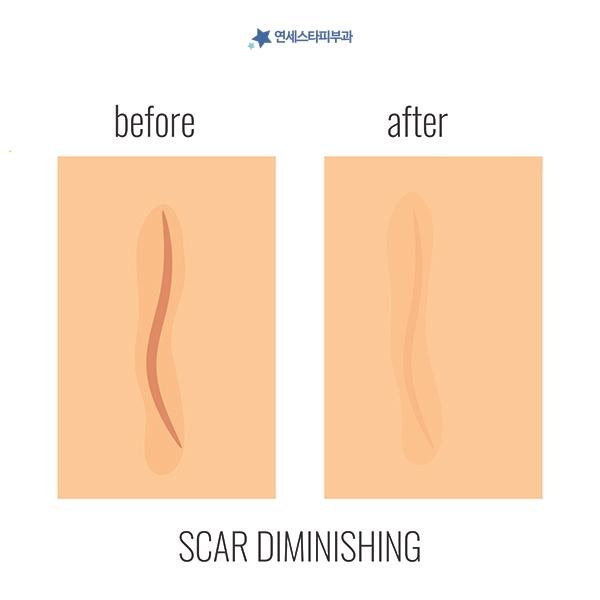
It is true that it requires more effort and time compared to managing scars immediately after surgery. Furthermore, because constitutional factors play a significant role in thyroid scars, lasers are used as a method to reduce the possibility of recurrence and proceed safely. However, if there is severe adhesion in the problematic area, a surgical approach to release it may be necessary, so we recommend making a decision after thoroughly understanding your condition.
Choosing the Right Method for Your Condition and Consistency
Completely erasing the traces of a scar once it has formed is not easy. Many people give up and neglect their scars because they don't see changes even after consistent management.
| Category | Considerations | Management Direction |
|---|---|---|
| Immediate post-surgical scar | Check stitch removal and recovery time | Silicone patch, early laser management |
| Bulging scar | Hypertrophic/keloid tendency | Combined laser and injection therapy |
| Old scar | Constitutional factors, presence of adhesion | Laser-focused, surgical approach if necessary |
Now, there are more management methods available, and even within lasers alone, there are many types of devices that can be utilized. Through choices tailored to the situation and condition, and consistent effort, a natural recovery that makes the scar less noticeable can be expected.

If you calmly diagnose your condition and find the method that suits you, you can significantly reduce the worries caused by scar marks in your daily life. We hope today's content is helpful for those who are stressed by prominent marks on their neck.
For questions, inquire via scar treatment consultation chat

Chief Director Lee Sang-joo (MD, PhD, Yonsei University College of Medicine and Graduate School, completed dermatology residency at Severance Hospital, President of the Korean Dermatological Association) Chief Director Lee Sang-joo's Profile First published 2025-02-28 / Last reviewed 2026-06-16
The course and degree of scar improvement may vary by individual, and accurate diagnosis and treatment direction should be confirmed through consultation with medical staff.