

Have you ever worried about acne that just won't heal? Even if you think you're managing it cleanly, if it doesn't shrink in size and feels like something hard is embedded in your skin, it might not be a simple breakout. If the mark is firm, causes little to no pain when touched, and has been swollen for a long time, you might need to suspect keloid scar.
It's a common skin problem that appears in adolescents and adults alike, so it's easy to dismiss it as just acne. However, if symptoms don't subside for more than 6 months and remain in one spot, there's a possibility it has progressed to a keloid. Today, we'll summarize the differences and distinguishing points between the two.
Why Do Keloid Scars Form?
Keloid scars can form when skin tissue proliferates abnormally during the healing process of acne. It's commonly believed to be influenced by genetics or constitution, making it easy to think "I'm not affected." However, even without congenital factors, one's constitution can change over time due to hormonal shifts.

Therefore, if a raised mark doesn't disappear for a long time, it's more accurate to visit a specialized medical institution to confirm its condition rather than self-diagnosing. The longer it's left untreated, the more difficult it may become to manage.
Where Do They Commonly Appear and How Do They Grow?
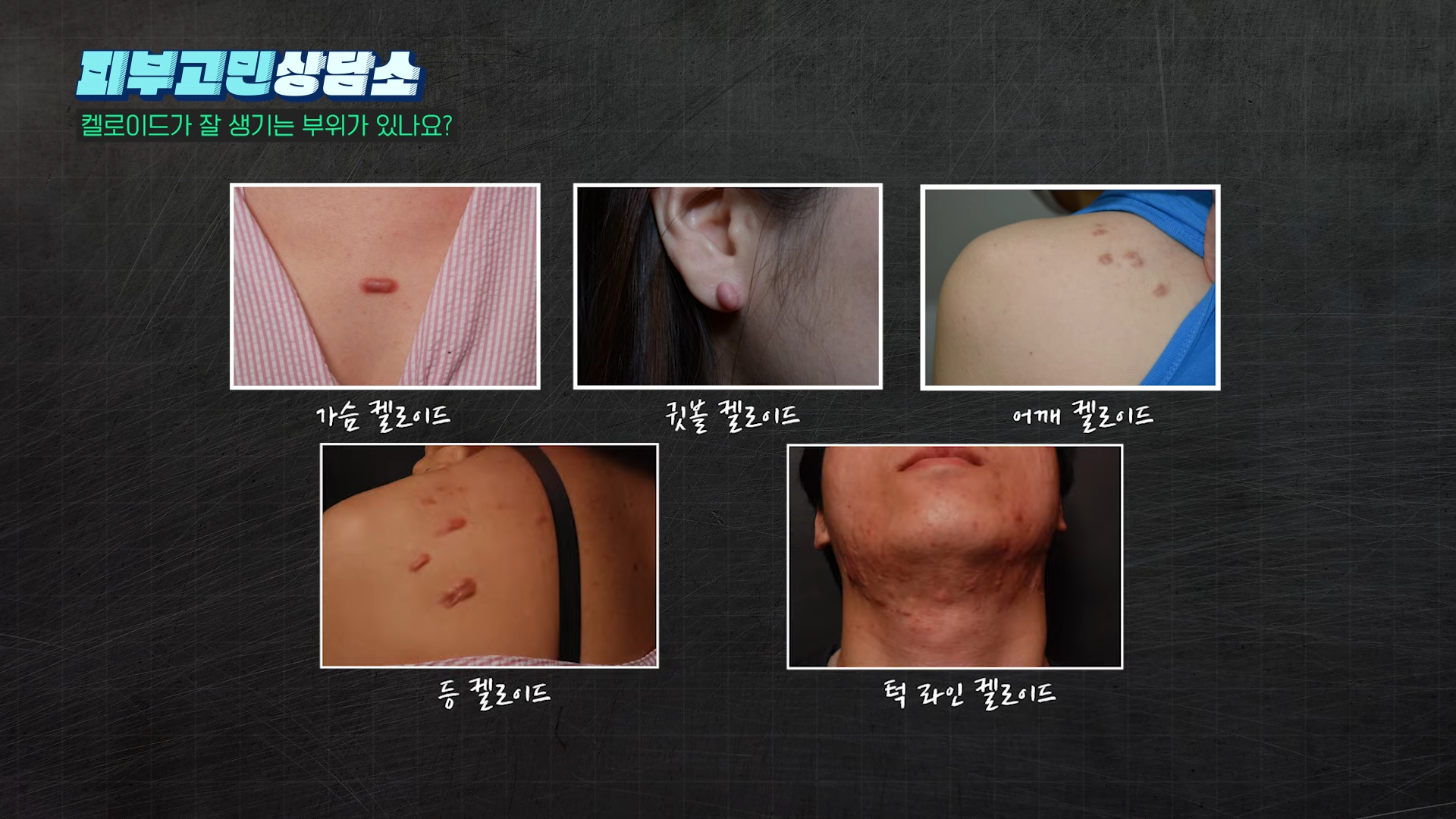
Keloids commonly occur on the chest, shoulders, back, earlobes, and jawline. Even if they start as small as a millet seed, they can gradually grow over time, so it's helpful to identify and address the condition early.
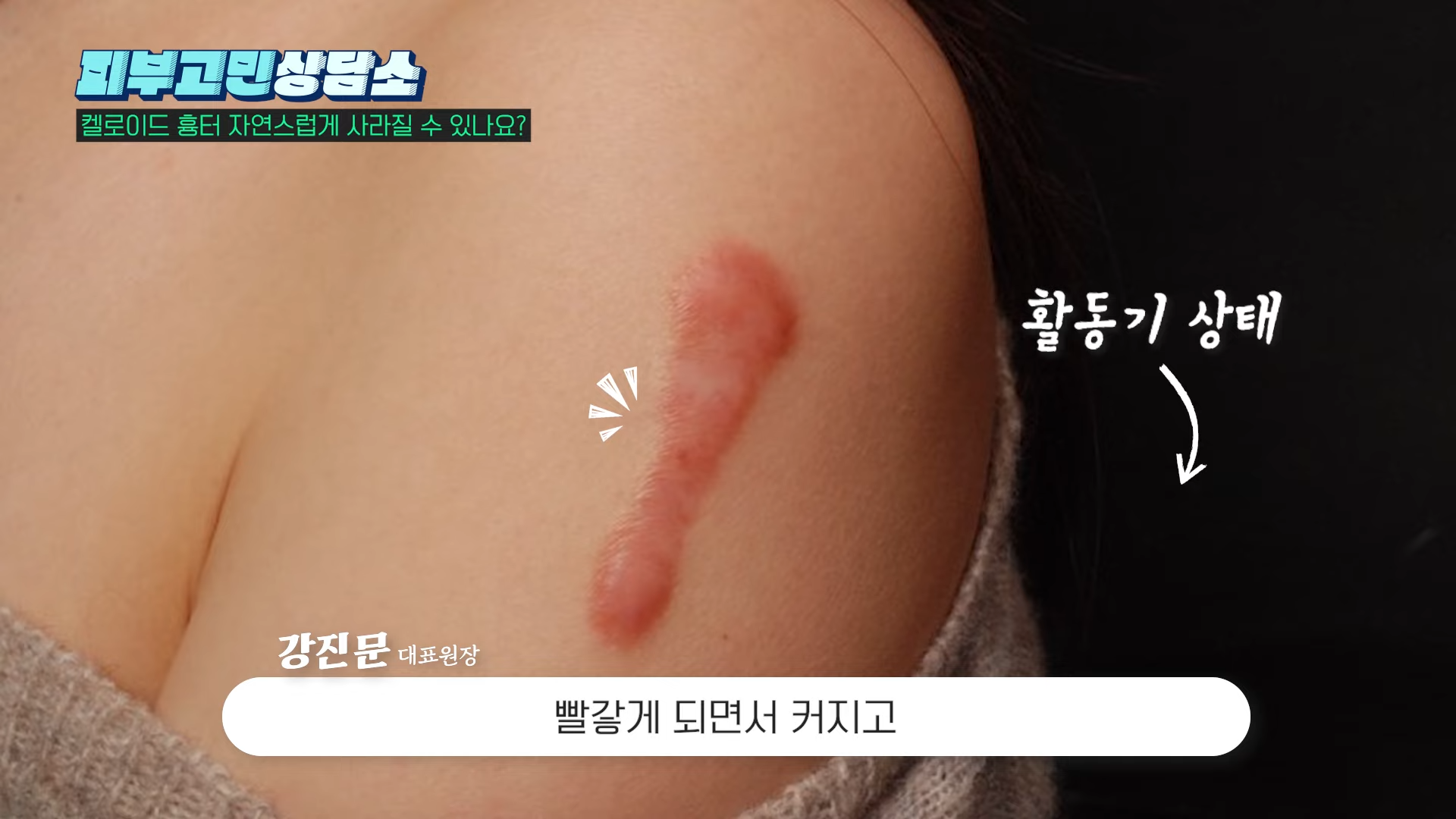

How Do Active and Stable Phases Differ?
Keloids are broadly divided into active and stable phases. In the active phase, the scar appears reddish and gradually increases in size, making it relatively quick to notice. In contrast, when it enters the stable phase, the color turns white and size changes diminish, making it easy to mistake for regular acne.
Entering the stable phase does not mean it's over. The active and stable phases are reported to fluctuate, and keloids do not resolve naturally, so consistent management tailored to the symptoms is important.
Due to the characteristic fluctuation between active and stable phases, it's not uncommon for people to miss the right timing by thinking, "It's fine now, so it'll be fine."
Acne and Keloids: They Feel Different to the Touch
In the examination room, some people can distinguish between the two conditions just by touch. The key differences are summarized as follows:
| Category | Acne | Keloid Scar |
|---|---|---|
| Texture | Soft feeling | Very hard feeling |
| Pain | Warmth and pain present | Generally little pain |
| Course | Subsides over time | Does not resolve naturally |
| Color Change | Redness, then gradually fades | Reddish in active phase, white in stable phase |

When an acne lesion is touched, there is inflammation remaining in the skin, causing warmth and pain, and it tends to be soft. On the other hand, when it progresses to a keloid scar, the skin is very hard and there is little pain even when touched. However, during the active phase, pain or itching may accompany the growth in size, so it's advisable to get an accurate diagnosis if suspected.
Confusing acne and keloids and leaving them untreated can lead to acne scars, so it's necessary to approach the distinction carefully from the outset.
If you have any questions, please contact us via chat for inquiries about distinguishing keloids and acne
How Are They Treated?

Both conditions carry a risk of recurrence, so actively managing them rather than waiting for natural improvement is reported to be a wise approach. Keloids can be surgically removed, or consistently treated with injections or lasers. However, surgical methods like Surgical Scar Revision take a long time and are decided carefully considering the possibility of recurrence.

Therefore, treatment combining injections and laser methods is often considered. Triamcinolone Scar Injection is reported to be effective in reducing scar height, but its effect may be temporary, and pain during the procedure is cited as an inconvenience. At Yonsei Star Dermatology Sinchon, we combine low-pain injection therapy with lasers to reduce the possibility of recurrence and help maintain the effect for a longer period. Treatment outcomes and satisfaction may vary by individual.

For good outcomes, not only the treatment method but also the expertise of the medical staff performing it plays an important role. Keloid scars are known to be challenging to treat, and an approach tailored to the individual's constitution and condition is said to influence the results.

How to Manage Them Daily
It's not uncommon for keloids and acne to occur simultaneously. In such cases, managing them together is recommended. Following these points in daily life can help reduce the risk of developing scars:
- Do not forcefully squeeze or irritate with hands
- Keep the area clean without creating wounds
- Seek medical attention for marks that don't subside for more than 6 months
- Separately check lesions that are hard to the touch and cause no pain
- If changes between active and stable phases are suspected, record the progress and consult
Many people confuse these two conditions and neglect them, only to seek medical attention later. More stable outcomes can be expected when professional treatment is combined with meticulous skin care.

If you are concerned about marks that don't disappear for a long time, we recommend getting an accurate diagnosis first rather than self-diagnosing and missing the right time.
If you have any questions, please contact us via chat for inquiries about keloid scar treatment

Chief Director Lee Sang-joo (MD, PhD, Yonsei University College of Medicine & Graduate School, completed dermatology residency at Severance Hospital, President of the Korean Dermatological Association) Chief Director Lee Sang-joo's Profile First published 2025-01-09 / Last reviewed 2026-06-16
The pattern of symptoms and appropriate treatment direction may vary for each person, so please confirm an accurate diagnosis through direct consultation with medical staff.