
The equipment used for tattoo removal continues to increase. Among them, interest in Pico lasers has grown, and we will examine what differences there are.
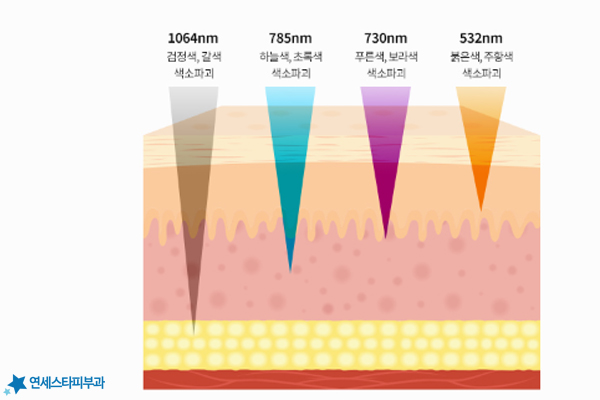
Delivering energy in picosecond units
The method of delivering energy in picosecond units is excellent at breaking down pigments into fine particles. Among them, PicoWay can utilize 4 different wavelengths.
- Tattoos with various mixed colors
- Tattoos with dense pigment that were difficult to remove previously
This allows for effective treatment even in situations that were considered challenging. As the stimulation to surrounding tissues is reduced, it can help proceed with less burden on the skin.
We consider treatment methods as much as the equipment
Tattoo removal rarely finishes with a single session. Since repeated care is often necessary, it's important to consider not only the equipment but also the treatment method applied.
R0 repeatedly irradiates with a laser to induce a quick response even in a single session.
This allows for efficient treatment planning, which might otherwise take over a year. It is particularly useful for large areas or dense tattoos with tightly packed ink. The procedure is detailed in the R-Zero Pico-Frectat Tattoo Removal guide.

Why results vary even with the same equipment
Even with the same equipment and the same medical staff, there can be individual differences in the treatment process or results.
| Variable | What changes |
|---|---|
| Type of pigment | Degree of reaction to the laser |
| Depth of pigment | Distance energy needs to reach |
| Skin condition | Conditions for enduring stimulation and recovery |
| Treatment interval | Recovery time secured until the next irradiation |
| Individual recovery response | Speed at which broken-down pigment is discharged |
Before starting removal, and even during the process, it is necessary to approach it step-by-step, checking the skin's condition and reaction.

The need for control with powerful lasers
Powerful lasers that can finely break down tattoo pigments are a positive aid in removal. However, the ability to appropriately control the intensity and treatment period is also necessary.
Applying excessively high output or performing treatments too frequently before stimulated skin has recovered can carry the risk of side effects such as burns or scars. When considering the burden of scars, please refer to the Pinhole for Burn & Surgical Scar treatment guide.
The question of where to receive treatment
The number of places offering tattoo removal is increasing. For safe results, we recommend seeking a board-certified dermatologist. The performance of the equipment is maximized when supported by the medical staff's experience.
You may have many concerns, from the clinic to the equipment and removal method. The overall treatment flow can be found in the Tattoo Removal Treatment Guide, and you can also leave any questions via Chat Now.
Authored and Medically Reviewed by Dr. Jinmoon Kang, Chief Director (Board-Certified Dermatologist) Graduated from Yonsei University College of Medicine · Completed Dermatology Residency at Severance Hospital · Former Professor at Bundang CHA Hospital Currently Visiting Professor at Yonsei University College of Medicine, Department of Dermatology · Member of the Korean Society for Medical Lasers View Medical Staff Profile
First Published 2026-03-31 · Last Reviewed 2026-07-29
This article contains general medical information and does not substitute for individual diagnosis and treatment. Results and recovery progress may vary by individual.