


Tattooing is a procedure that directly injects ink into the dermal layer. Once etched, the particles are too large for our body's immune cells, macrophages, to process, so they do not naturally disappear over time.
However, this does not mean they are impossible to remove. Recently, dermatology clinics are approaching PicoWay Laser tattoo removal by combining it with the R-Zero Technique to enhance removal efficiency.
How finely the ink is broken down
Tattoo removal lasers irradiate laser energy onto ink particles in the skin, physically breaking them down into smaller fragments. These smaller fragments are then absorbed by macrophages and expelled from the body.
So, the key is the degree of fragmentation. If the fragments are not small enough, immune cells cannot process them, and the color remains.

The difference between nanoseconds and picoseconds
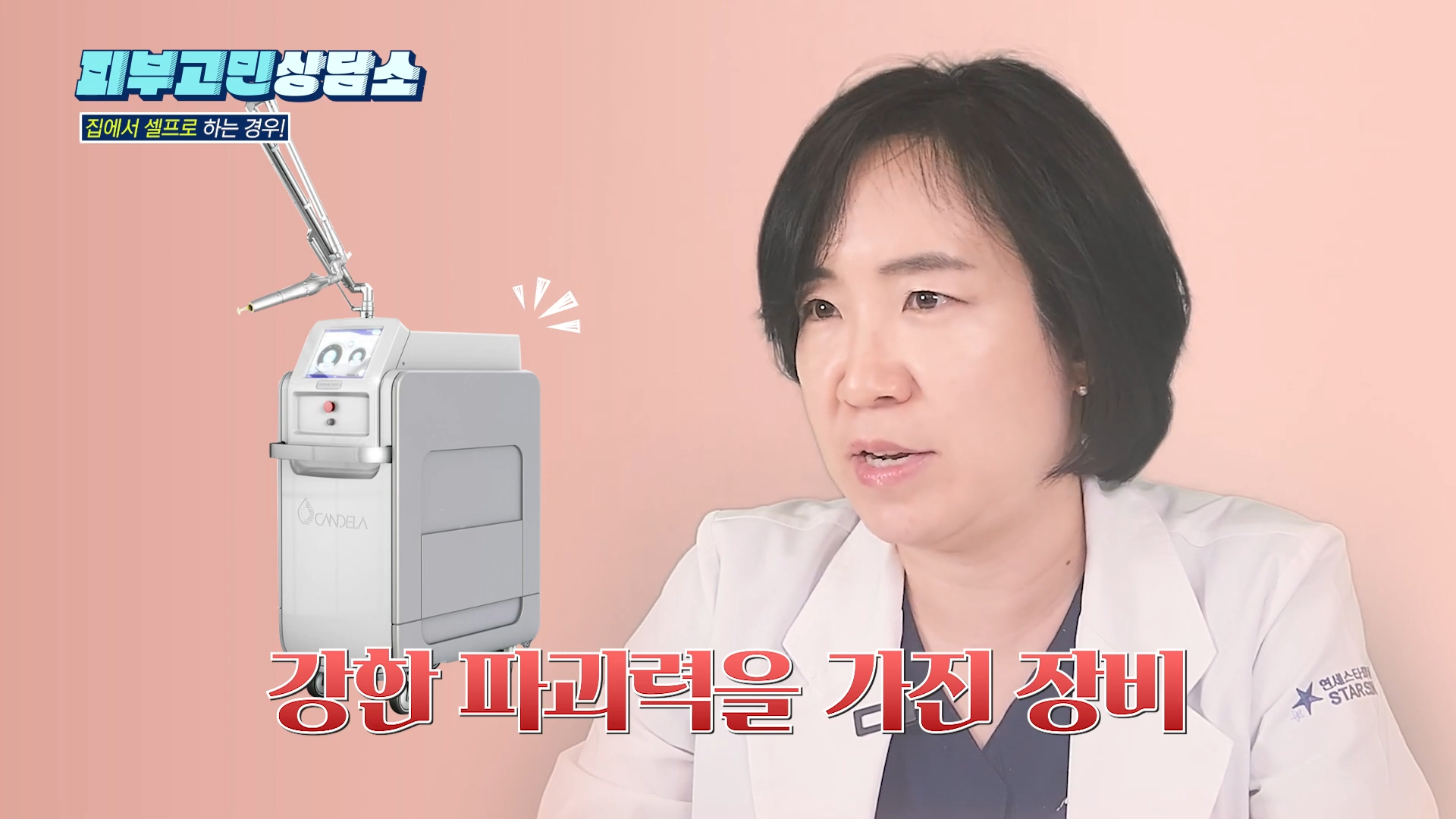
PicoWay Laser irradiates energy in picoseconds, a trillionth of a second, which is much shorter than existing lasers that operated in nanoseconds, a billionth of a second.
The shorter the irradiation time, the higher the peak power generated, and this power more finely fragments ink particles through a photoacoustic effect.
This method, which delivers the same energy in a very short burst instead of a prolonged flow, is also advantageous for reducing thermal damage to surrounding healthy tissue. The difference from the nanosecond method can be easily understood by comparing it with the Nd:YAG Tattoo Removal guide.

Why different wavelengths are needed for each color
PicoWay is an original picosecond laser from Candela, USA, and is certified by the US FDA and Korean KFDA. One reason it is widely used for tattoo removal is its ability to customize treatment for different ink colors using multiple wavelengths.
| Wavelength | Primarily reacts to ink |
|---|---|
| 1,064nm | Selectively reacts to dark inks such as black and blue |
| 532nm | Reacts to red and light-colored inks, as well as epidermal pigment |
| 785nm | Addresses intermediate colors such as green and sky blue |
Even tattoos with multiple colors or mixed inks can be approached by combining wavelengths, offering a wider range of response than single-wavelength lasers. If you also refer to the Pico·Dual·Gold-Diamond Toning guide, which uses similar equipment for epidermal pigment, the role of each wavelength becomes clear.

Why can't you re-irradiate immediately after one shot?
One long-standing challenge in PicoWay Laser tattoo removal is that when the laser fragments ink particles, a large amount of bubbles, or a white foam layer, forms within the skin.
This bubble layer then obstructs the penetration of subsequent laser beams. This is why, with conventional methods, only one irradiation can be performed per treatment session.

R-Zero Technique to clear the bubble layer
To address this issue, the R-Zero Technique is utilized. By applying a special solution to the treatment area, the bubble layer generated after laser irradiation is quickly removed, creating an environment where the laser can be irradiated up to 4 times within the same treatment time.
However, it is not equally applicable to all tattoos. Suitability varies depending on the type and depth of the tattoo, ink type, and skin condition, so a specialist's judgment is required. The details are summarized in the R-Zero Pico-Frectat Tattoo Removal guide.
Factors determining removal duration
Even for tattoos of the same size, the removal duration and number of treatments can vary for each individual. Generally, the following factors influence the difficulty of removal:
- Tattoo color
- Location of the tattoo
- Depth of ink penetration
- Individual skin condition
Therefore, rather than pre-determining the number of sessions, it is more realistic to assess these conditions together during a consultation and then create a plan.
It's better to start with a plan
PicoWay Laser tattoo removal is expanding its approach with technological advancements in PicoWay Lasers and supplementary techniques like R-Zero. Nevertheless, the number of treatments and methods may vary depending on the conditions mentioned above, and individual results may differ.
The overall treatment flow can be found in the Tattoo Removal Treatment Guide. If you are curious about which method is right for your tattoo, please leave a consultation via chat with a photo.

Authored · Medically Reviewed by Dr. Jinmoon Kang, Chief Director (Dermatologist) Graduated from Yonsei University College of Medicine · Current Adjunct Professor, Department of Dermatology, Yonsei University College of Medicine Member of the Korean Society for Medical Lasers · Member of the Korean Dermatological Association · Author of "Medical Body Care" View Medical Staff Profile
First Published 2026-05-19 · Last Reviewed 2026-07-29
This article contains general medical information and is not a substitute for individual diagnosis and treatment. Results and recovery may vary individually.