
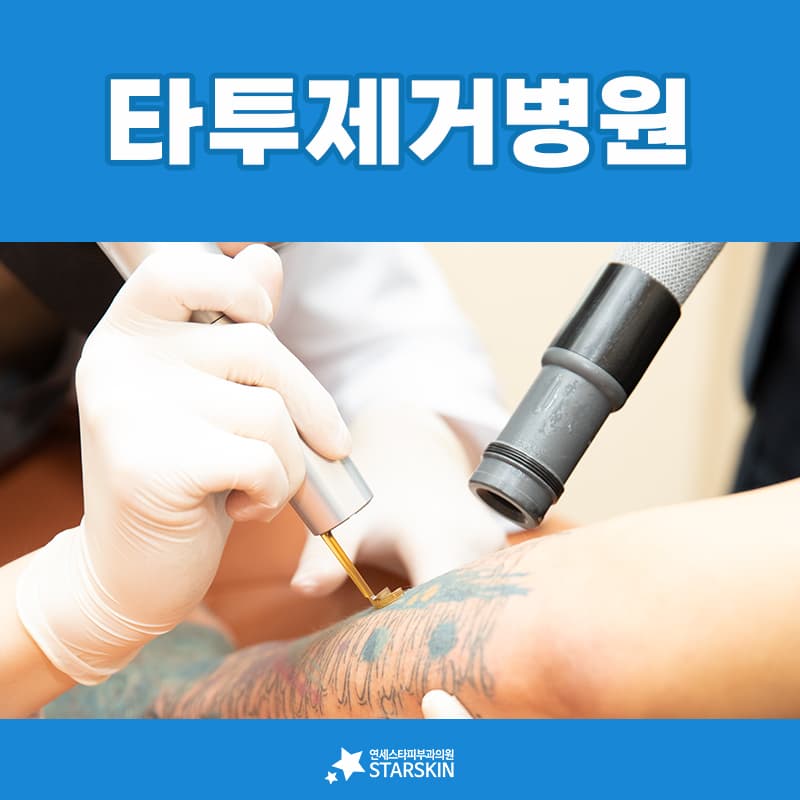
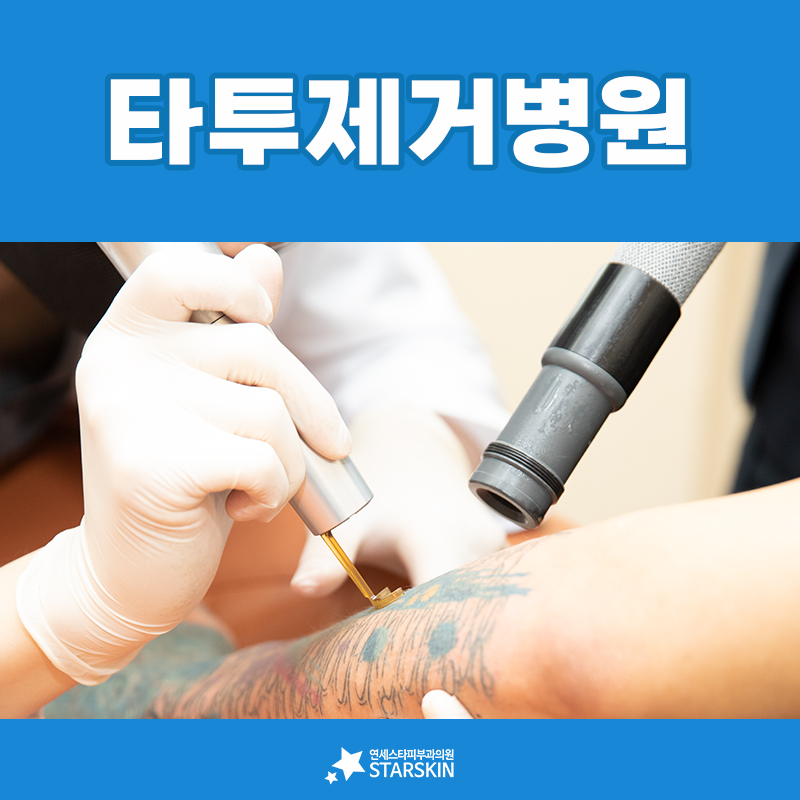
For tattoo removal, the shorter the laser irradiation time, the more finely the tattoo pigment can be broken down. In the past, nano lasers were used for removal, but with technological advancements, picosecond lasers, which irradiate in units of one trillionth of a second, are now widely used.
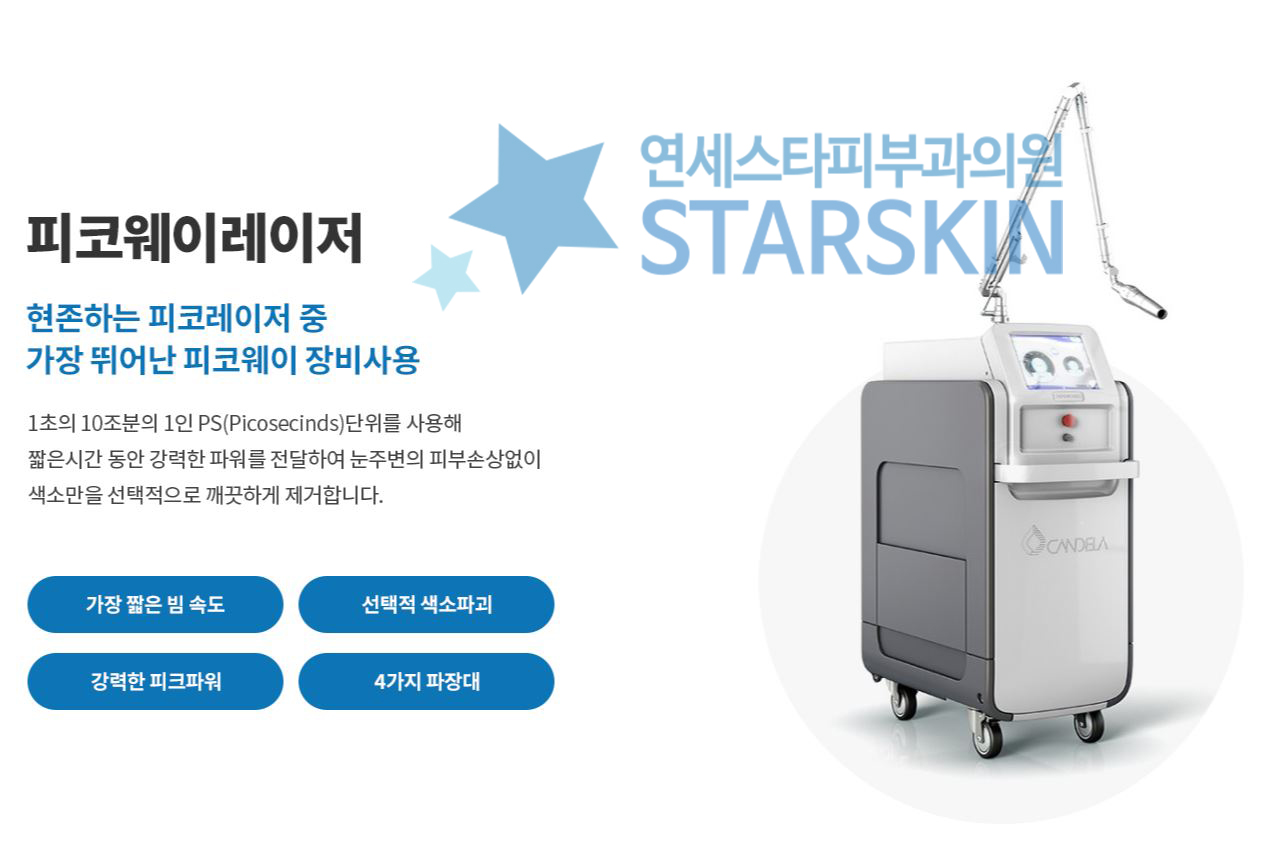
Yonsei Star Dermatology Sinchon Tattoo Removal Center uses Candela's PicoWay Laser.
Pigment size determines removal speed
The reason for breaking down pigment finely is simple. If the pigment particles are large, immune cells have difficulty moving them, making removal less effective.
In the past, removal cycles were long, requiring hospital visits once every 2 to 3 months.
The standard of pulse width
The key to tattoo removal is to break down the pigment more finely, and what determines this is the laser's pulse width.
The shorter the pulse width, the more finely the pigment can be broken down, and among picosecond lasers, PicoWay is considered to have a short pulse width.
When pigment is broken down finely, immune cells can move and eliminate it more quickly. This has allowed the removal cycle to be shortened to 1-month intervals, reducing the overall treatment period. The equipment configuration is summarized in the R-Zero Pico-Frectat Tattoo Removal guide.
Color tattoos require specific wavelengths
Some people visit the clinic for color tattoo removal. The PicoWay Laser used at Yonsei Star Dermatology Sinchon is known to be highly effective for color tattoo removal.
It has four wavelengths, allowing for customized removal by color. If pigmentation remains, it can be addressed with Pico·Dual·Gold-Diamond Toning.
What comes before the equipment
When choosing a clinic, laser equipment is important, but most importantly, the experience and skill of the practitioner are crucial. Yonsei Star Dermatology Sinchon has five board-certified dermatologists who directly conduct consultations and treatments.
With the accumulated know-how from removing countless tattoos, we perform tattoo removal in a way that minimizes scarring.
R-Zero Pinhole Technique beyond bubbles
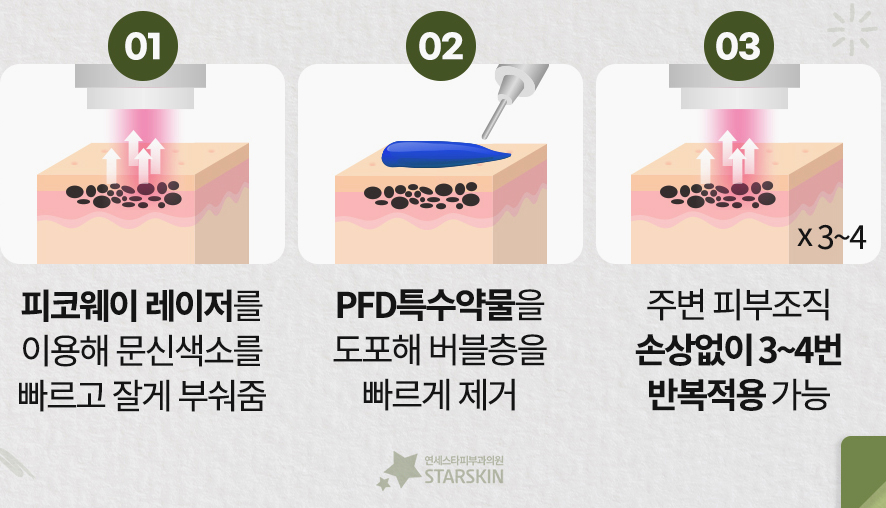
While breaking down pigment finely is key, a bubble layer forms over the pigment area after a picosecond laser irradiates it. This bubble layer interferes with repeated irradiation, making it possible to irradiate only once.
Our clinic uses PFD (Perfluorodecalin) specialized medication to enable up to four repeated irradiations in a single session. The procedure is as follows:
- Repeated irradiation is performed within a range that does not strain the skin.
- Finally, the Pinhole Technique is performed to secure space for blisters to drain.
- This process helps prevent scar formation.
| Category | Past Method | Current Method |
|---|---|---|
| Laser Used | Nano Laser | Picosecond Laser |
| Irradiations per Session | 1 time | Up to 4 times |
| Visit Cycle | 2 to 3 months | 1 month |
| Scar Management | Separate | Combined Pinhole Technique |
You can find more about scar prevention methods in the Pinhole for Burn & Surgical Scar procedure guide.

In summary
As equipment has changed, the size of pigment that can be treated at once and the number of irradiations have changed, which is reflected in the visit cycle. However, there may be individual differences in recovery progress.
If you have any questions, please contact us via chat now.

Authored and Medically Reviewed by Representative Director Dr. Jin-Moon Kang (Board-Certified Dermatologist) Graduated from Yonsei University College of Medicine · Resident in Dermatology at Severance Hospital Currently Adjunct Professor, Department of Dermatology, Yonsei University College of Medicine · Author of "Medical Body Care" View Medical Staff Profile
First Published 2023-11-16 · Last Reviewed 2026-07-29
This article contains general medical information and is not a substitute for individual diagnosis and treatment. Results and recovery progress may vary by individual.