


Tattoos are a way to express individuality, but over time, many people consider removal if they dislike the design or due to changes in circumstances like employment or marriage. With advancements in laser technology, more people are choosing removal procedures.
However, information found online or through acquaintances can sometimes be exaggerated or incorrect, leading to confusion.
Starting with where the pigment is located
Tattoos involve pigment injected into the dermal layer of the skin. Therefore, once done, it is difficult to remove them at home.
Most removals are performed by breaking down pigment with laser devices, which also requires multiple sessions. Even with the same equipment, individual responses can vary depending on the tattoo's color, density, and skin characteristics, so sufficient consultation and skin condition assessment should precede treatment.
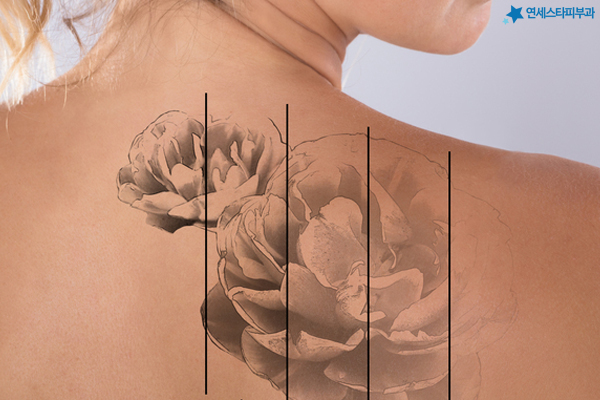
The claim that it disappears in one go
Tattoo removal usually takes multiple sessions. Even if the laser breaks down the pigment into tiny particles, the body needs time to naturally expel them.
The number of sessions varies depending on the color and depth. Using excessively strong energy in one session to reduce the total number of treatments could increase the risk of skin damage, so caution is necessary.

The claim that lettering is easier to remove
Lettering tattoos often appear simple with less color, leading people to believe they can be removed quickly. In reality, ink is often densely packed to create clear lines.
This means there is a large amount of ink pigment to break down, making lettering tattoos relatively challenging to remove.

The claim that it can be removed with ointments or home remedies
Creams, peeling products, and self-treatment methods circulating online can potentially increase the risk of skin damage and infection. Tattoo pigment is in the dermal layer, not the epidermis, so one should not only consider what is visible on the surface.
General cosmetics, which are difficult to fully absorb into the skin, tend to yield unsatisfactory removal results.
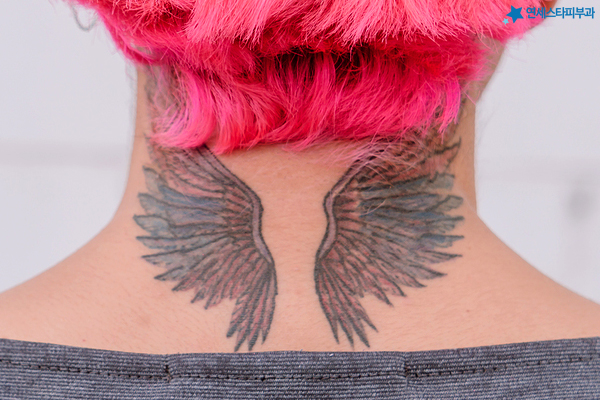
The claim that the R-Zero Technique increases the likelihood of scarring
Scarring during the removal process is often due to excessive energy being applied in a single laser session. Some people worry that the R-Zero Technique, which allows up to four laser passes in one session, might increase the chance of scarring.
This depends on how the energy is controlled and applied.
- Maintain a laser intensity that does not irritate the skin.
- Apply the Pinhole Technique concurrently to prevent scarring.
Even with the same removal method, the results can vary significantly depending on such detailed management and expertise. Each method is detailed in the R-Zero Pico-Frectat Tattoo Removal guide and the Pinhole for Burn & Surgical Scar treatment guide.
Four points summarized in one line
| Common Statement | Points to Check |
|---|---|
| It disappears in one go | Time is needed for pigment expulsion, so it usually takes multiple sessions. |
| Lettering is easy to remove | Ink is often densely packed for clear lines, making it rather challenging. |
| Ointments or home remedies work | Pigment is in the dermis, so general cosmetics yield low satisfaction and carry a risk of damage. |
| The R-Zero Technique causes scars easily | This depends on energy control and whether the Pinhole Technique is used concurrently. |
It's more about preserving than erasing
Tattoo removal is not simply a process of eliminating pigment, but rather a treatment process of gradually improving while protecting skin tissue.
Treatment plans may vary depending on an individual's skin condition and tattoo characteristics. Carefully checking precautions and choosing a board-certified dermatologist who can ensure safe treatment can help reduce long-term skin damage and achieve desired results.
The overall process can be seen in the Tattoo Removal Treatment Guide. If you are curious whether the information you've heard applies to your case, please contact us via chat now.
Authored · Medically Reviewed by Representative Director Dr. Sang-Joo Lee (Board-Certified Dermatologist) Graduated from Yonsei University College of Medicine · Resident in Dermatology at Severance Hospital President of the Korean Dermatological Association in 2026 · Author of Medical Skincare View Medical Staff Profile
First Published 2026-02-27 · Last Reviewed 2026-07-29
This article contains general medical information and does not substitute for individual diagnosis and treatment. Results and recovery progress may vary from person to person.