
![Eyelid Scarring, Double Eyelid Surgery Scar Laser Treatment & Management | [Yonsei Star Dermatology Sinchon]](/_next/image?url=https%3A%2F%2Fagqdgbuateknhwpocrgu.supabase.co%2Fstorage%2Fv1%2Fobject%2Fpublic%2Fsources%2Fbbf3bebe-45b6-4415-bd04-bda18b2cac0f%2Fblog-images%2F224164347743_00_f241e5f8ddc6.jpg%3Ftype%3Dw966&w=3840&q=75)
Many people are concerned about traces left after double eyelid surgery, such as a bulging or hard lump on the eyelid. Scars usually fade gradually over time, but some may remain as thick, flesh-like eyelid scarring. So, is this change a simple recovery process, or does it require separate management? To conclude, the approach varies depending on the form and progression of the scar, so checking your current condition is the starting point.
Eyelid Scarring and Double Eyelid Scars: What's the Difference?
In the clinic, many people consider these two to be the same, but their causes and forms are different.
Double eyelid scars refer to cases where lines or color changes remain on the skin surface. Eyelid scarring, on the other hand, refers to a condition where fibrous tissue forms relatively thickly during the wound healing process, feeling like flesh. Even if they appear to be the same double eyelid surgery scar, the causes are different, so the management direction may also differ.

Double eyelid surgery scars vary in thickness, color, hardness, and location. Double eyelid scars with persistent redness and eyelid scarring formed by tissue clumping require different approaches, so it is important to accurately determine which type of scar you have.
Two Paths Depending on Scar Condition
| Category | Main Aspect | Considered Direction |
|---|---|---|
| Eyelid Scarring | Thick fibrous tissue formation, hard to the touch | Lasers suitable for managing thick tissue |
| Double Eyelid Scar | Surface changes mainly with redness and color | Check for accompanying vascular changes |
As such, even in the same area, if the tactile sensation and color are different, the points to examine change. Rather than ignoring this difference and applying only one method, it is more reasonable to plan according to the form.

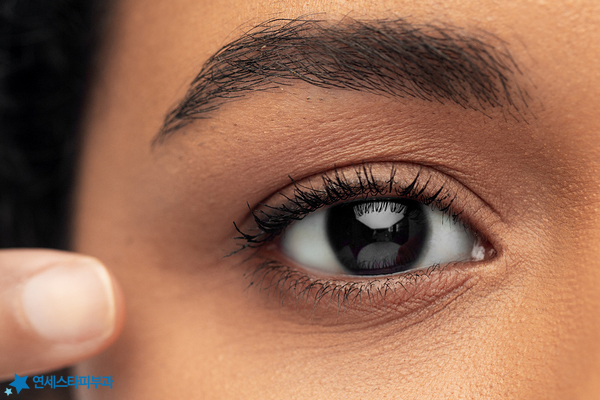
Why Ultrapulse Alpha is Considered for Thick Scarring
Ultrapulse Alpha is one of the lasers considered for managing eyelid scarring with excessively formed tissue and relatively thick double eyelid scars. It is selectively applied depending on the condition of the scar tissue, and its suitability may vary depending on individual skin characteristics and recovery progress.
Rather than a specific procedure being the answer, it is more important to establish a management plan that suits the current pattern of the double eyelid surgery scar.
If you are also concerned about other depressed or hardened marks in addition to thick scars, examining Cosmetic Surgery Scar: Types and Management can help in understanding your condition.
Approaching Scars with Persistent Redness with Vbeam Prima
If a double eyelid scar has persistent redness after double eyelid surgery, we first check for accompanying vascular changes. In such cases, a vascular laser like Vbeam Prima may be considered as one of the management methods and is used for managing double eyelid scars primarily focused on color.
Scars with prominent redness are similar to the progression of general Surgical Scar Recovery and Management, so it is good to observe changes over time.
For inquiries, contact us via chat for eyelid scarring laser management

Combination Tailored to Form, Rather Than a Single Method
Eyelid scarring and double eyelid scars can appear simultaneously. Therefore, rather than sticking to one method, lasers may be applied differently depending on the form and progression of the scar.
Here are the frequently considered approaches in scar management:
- If the focus is on thick tissue, lasers that refine the surface are considered first.
- If redness is strong, vascular changes are checked first.
- If the form is hard and raised, Triamcinolone Scar Injection for keloid and hypertrophic scars may also be considered.
- If there are depressed or sunken areas, approaches like Mild Pinhole are also reviewed.
- If the scar shape is complex, Surgical Scar Revision may be an option.
Some people consider revision surgery due to eyelid scarring, but surgery is not necessary in all situations. Laser management can be an option depending on the scar condition, and individual differences exist in results and recovery processes.

Things to Check Before Consultation
Before visiting and examining your scar condition, it helps to check these points yourself to better understand the explanation.
- How long has passed since the surgery?
- Is the scar primarily reddish in color, or is it hard to the touch?
- Has there been any change over time, or has it remained stagnant?
- Do you usually scar easily?
Organizing this information will allow you to receive a thorough explanation based on your current condition and collaboratively plan the management direction.
Conclusion
If you are concerned about eyelid scarring and double eyelid surgery scars, accurately understanding your current condition is the first step. As the shape of the eyes affects the overall impression, laser management can help with scars that hinder a cleaner result. However, we recommend carefully checking your condition before proceeding.
If you are curious about the appropriate management direction for your current scar condition, you can receive detailed guidance through a medical consultation to check the direction of treatment.
💬 Consult Now
Representative Director Lee Sang-joo (MD, PhD, Yonsei University College of Medicine and Graduate School, completed dermatology residency at Severance Hospital, President of the Korean Dermatological Association) Representative Director Lee Sang-joo's Profile First published 2026-01-29 / Last reviewed 2026-06-16
Since scar patterns and recovery speeds vary from person to person, please confirm an accurate diagnosis and management direction through a medical consultation.